Give Now


Category Archives: M&G Furniture Collection

Object of the Month: February 2020

Savonarola Chair

Walnut

Florentine, early 16th century 
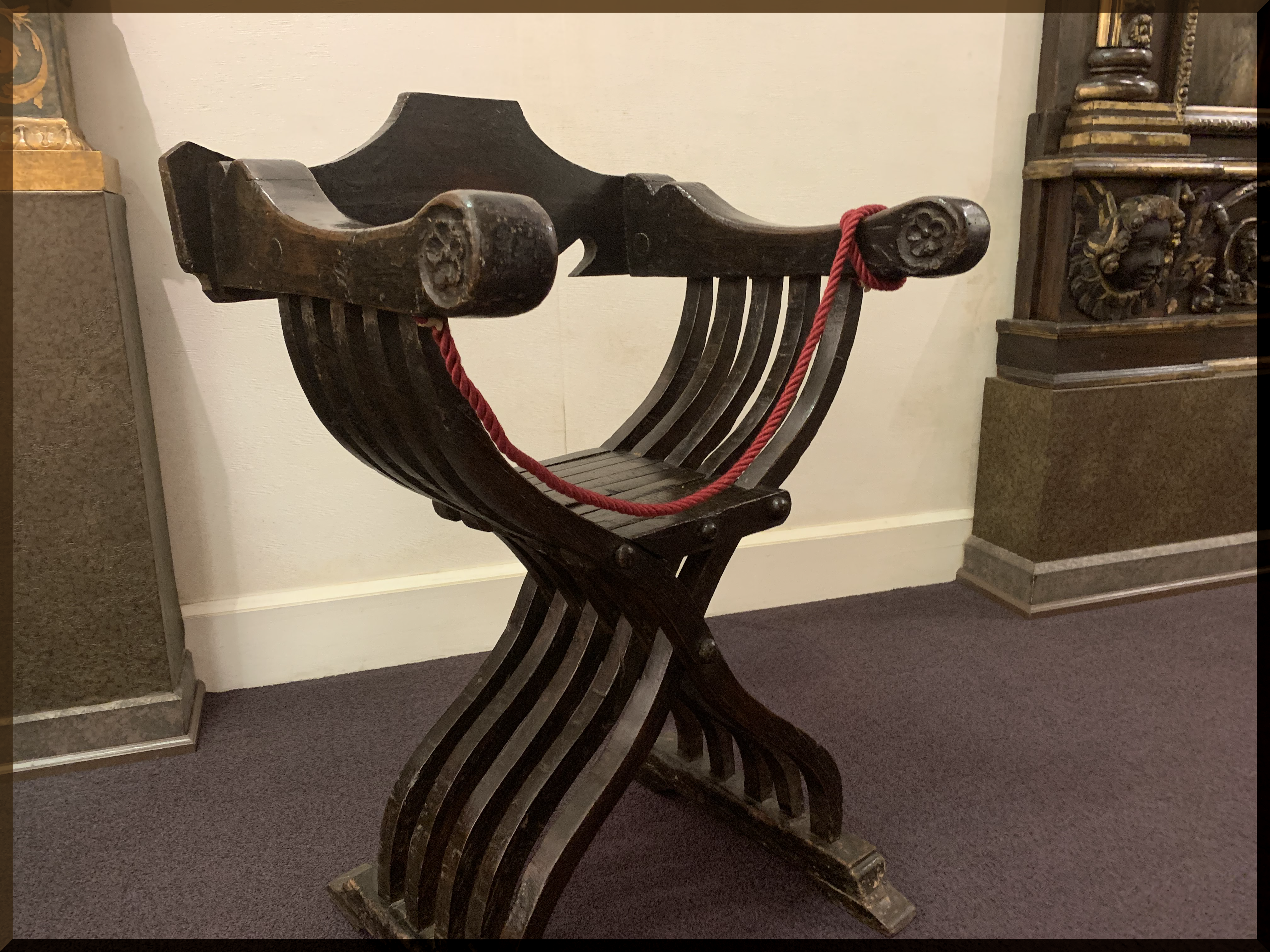
 

For a mundane piece of furniture with such a simplistic design as to be easily transportable, this folding chair bears the name of a big personality and has allowed countless VIPs to rest and rule simultaneously.

Girolamo Savonarola was a monk and religious reformer in Florence, Italy. He came to the Medici’s city in 1481 to serve at the Dominican monastery and church of San Marco (St. Mark).  He proved to be honest and sincere, and he studied and memorized Scripture, which he applied practically to everyday living for himself and in his teaching. His preaching was passionate and dramatic, and he spoke against corruption in the church and papacy. His influence for morality and reform held popular support for a while, even garnering respect from Lorenzo, the Magnificent. Eventually, however, Savonarola was bitterly opposed by Rome. The pope enforced excommunication, suspension of the sacraments from the faithful, and a ban of trade, which affected Florence’s prosperous economy. Ultimately, the Florentines turned on him too, and Savonarola was sentenced to death. He was hanged and his body burned in the town square in 1498—just seventeen years after his arrival.

Shaped in the frame of an X, this Italian Renaissance Savonarola Chair is one of a few in M&G’s collection. The chair is constructed of walnut and is considered “unusual” by furniture expert Joseph Aronson because it only has five pairs of the thick, pivoted S-shaped strips of wood to hold the hinged seat. Normally, a chair like this might have six, eight, or even twelve pairs. However, these five rung pairs are each held together at the floor with a trestle for sturdiness, and the pairs are joined at the top by heavy arms with carved rosettes. The back of the chair is a modest board, which is attached loosely—easily removed when the chair needs to be folded. 

The chair style has had many names through the centuries and geographical regions including the X-chair, curule, faldstool, scissors chair, Dante chair, and Luther chair. Because of its unique design, the chair traces its roots and practical service back to antiquity. A visual record exists of Egyptian Pharoah Tut’ankhamun sitting in the chair. Roman senators and consuls used a backless version of these portable seats, and in Romanesque and Gothic illuminations the kings of France are perched on it.  

With Italy’s interest in Greek and Roman culture and thought, the Renaissance also revived awareness in the architecture and design from antiquity including furniture. One writer explains the era as “an exhibition of emancipated modern genius fired and illuminated by the masterpieces of the past.” During the awakening, the chair’s status of power continues in the pictorial records of seated bishops, emperors, and popes. Artists also rendered respected religious individuals in the chair such as St. Ambrose and Christ’s mother Mary. 

The Museum of San Marco preserves and features the fifteenth-century Dominican monastery where Fra Angelico was Prior and who decorated many of the monk’s cells and interior spaces with beautiful frescoes. Girolamo Savonarola became the monastery’s Prior in 1491 and occupied three cells that today still display a few of his personal items, including a folding X-chair in his study and similar chairs in other parts of the museum.

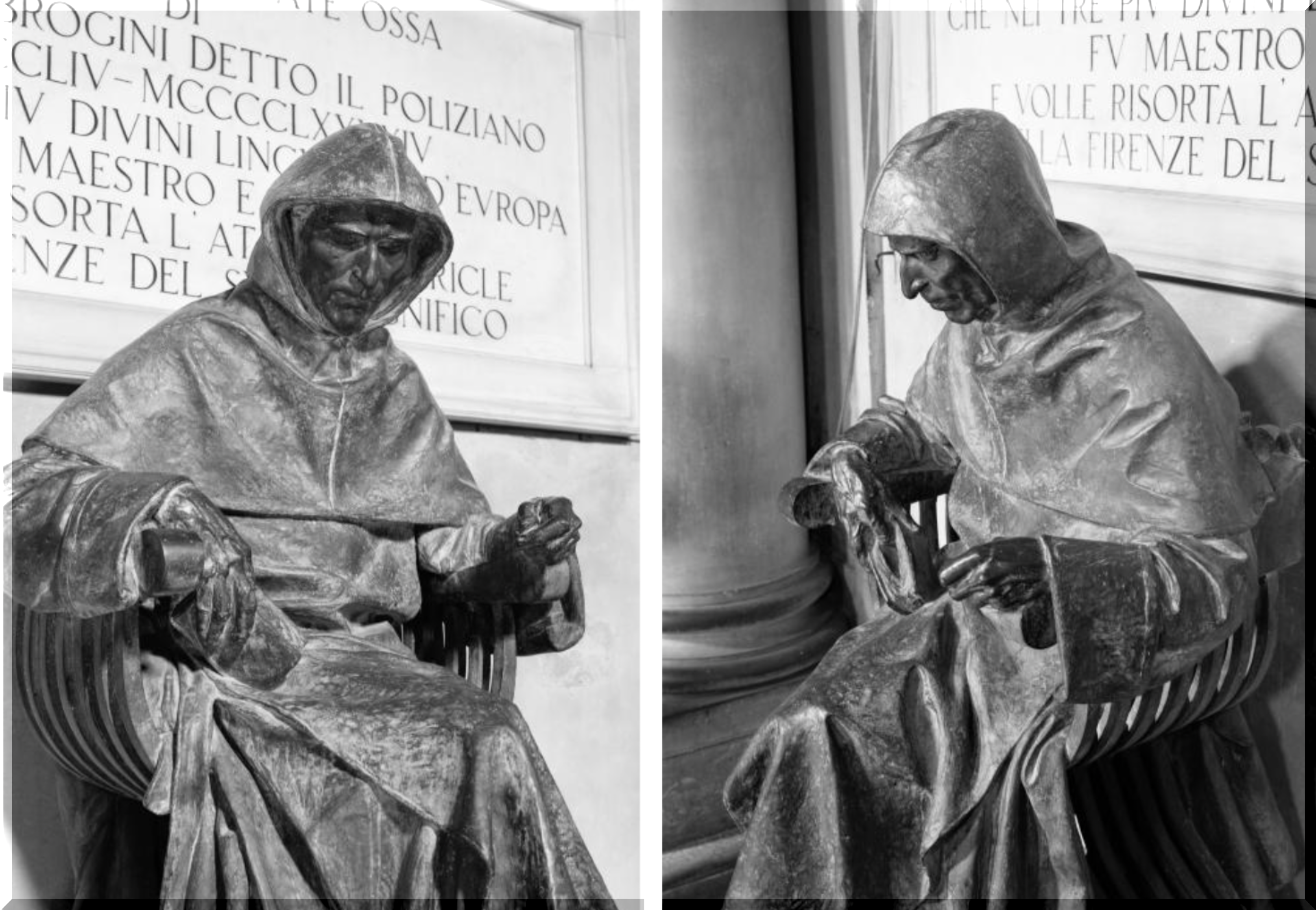
However, it wasn’t until nearly 400 years after his torturous death that the chair became associated with Savonarola specifically. In 1878, Florentine sculptor Giovanni Biggi created for the church at San Marco a bronze statue of the monk sitting pensively in an X-shaped chair.
Erin R. Jones, Executive Director


Additional Reading: 

Furniture of the Italian Renaissance, Walter A. Dyer

Michelangelo and Seats of Power, Eric Denker and William E. Wallace

Faith of Our Fathers: Scenes from Church History, edited by Mark Sidwell

Anatomy of A Design Classic: The Savonarola Chair


Published in 2020
Object of the Month: November 2019

Schrank

Walnut and pine

German, 17th century

Storage has been one of humanity’s challenges through the ages.  “Where do I put this?” is a question many of us may ask numerous times a day.  In the digital world it can be more challenging: “Which folder do I store this in?”

The schrank is an evolution of the storage chests from the Middle Ages. When it was discovered that chests placed on top of each other with front-opening doors were more useful, the schrank in miniature was introduced. At that time, it was called a cupboard. Later modifications of enlarging them gave us what is commonly called an armoire, which normally contained more compartments in the top section than a schrank.  

For practical purposes, both the schrank and armoire are used for storage, and the word is used interchangeably by many people. However, the difference between the two is more technical and geographical. Initially used to store armor, the French named the cabinet an armoire. The schrank  was so named by the Germans. The term is still part of several words used to describe a storage item, most notably a kuhlschrank or what is known to us Americans as a refrigerator. 

M&G’s Schrank joined the collection in 1964. It may have originated in southern Germany and was constructed in the 17th century or later.  The last owner prior to M&G was A. S. W. Rosenbach, an antique book collector and dealer living in Philadelphia during the last half of the 19th century into the mid-20th century. His aggressive skill and vast knowledge of books made him “The Terror of the Auction Room.”

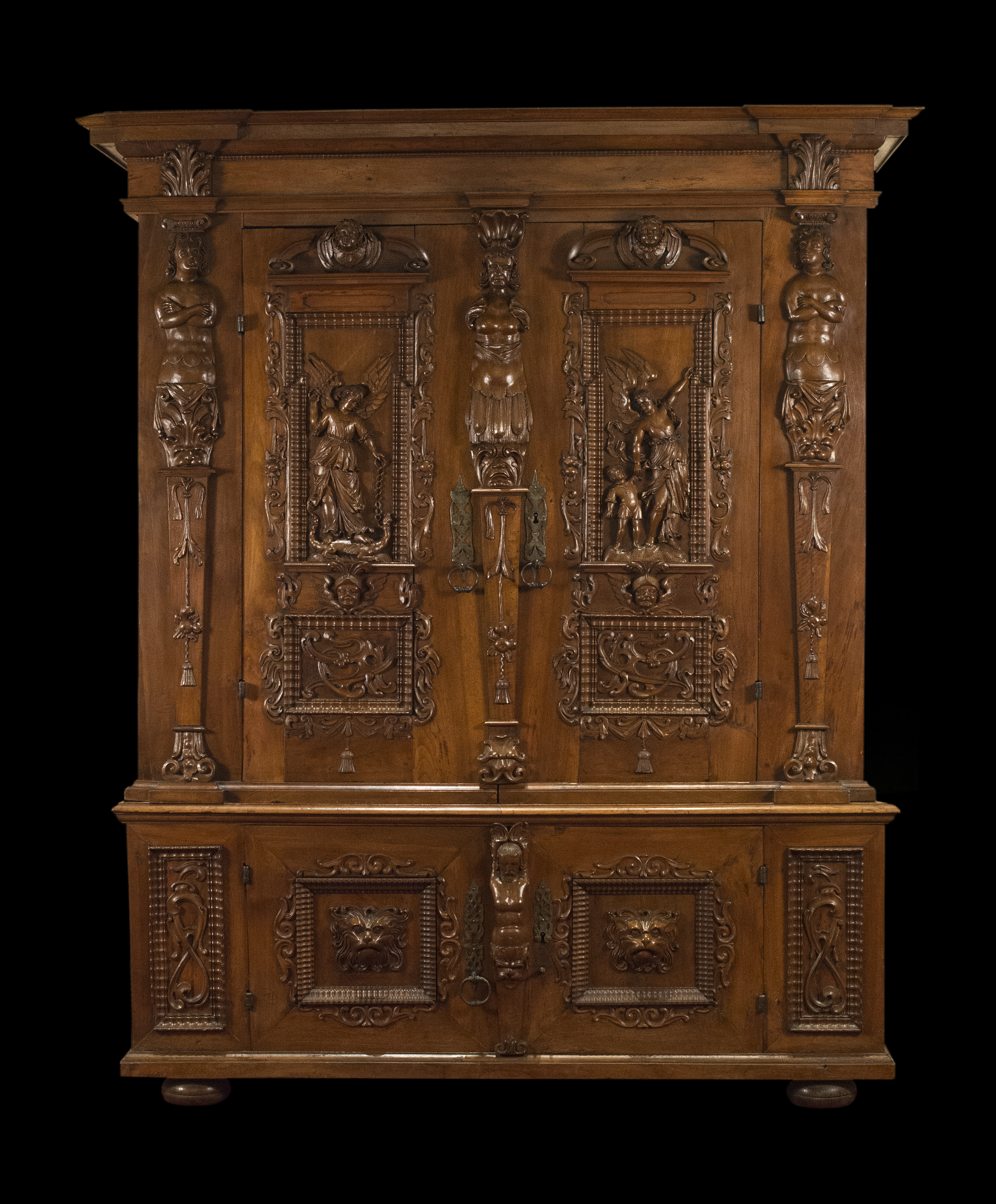
The Schrank’s upper carcass is constructed with a single pine board for each side, top, and bottom. The lower carcass uses a single pine board for each side as well as the back and bottom—the lower portion doesn’t need a top since the upper section rests on it. Finely detailed, hand-sawn dovetail joints can be seen on the top of the upper carcass. Carved walnut is used for the decorative ornamentation for the front.

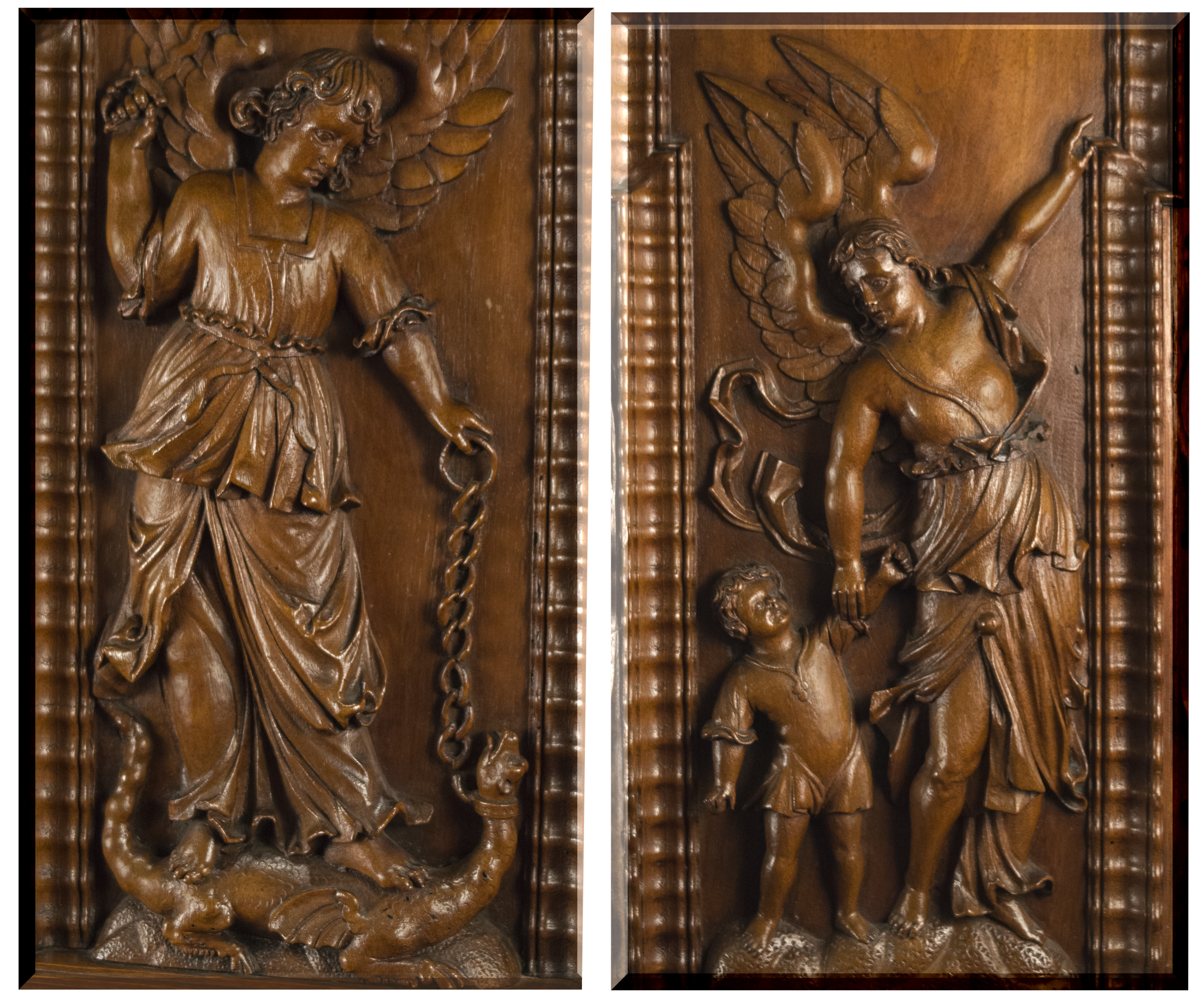
The left door panel displays a common 17th-century scene of Michael the Archangel overcoming Satan, in the form of a dragon. The other door depicts the apocryphal characters of the archangel Raphael with Tobias. The Book of Tobit from the Apocrypha gives detail to the legend presented. Other aspects of the ornamentation have been described in technical terms by Joseph Aronson in his catalog Furniture in the Bob Jones Collection. “The base cupboard features low doors paneled with wave-mouldings framing lion-heads, and its corners are embellished with panels framing scrolls. The astragal is a caryatid figure like the upper. The base mold, like the other horizontals, is quiet and rests on bun feet.”

Though the original craftsman is unknown, this piece of furniture represents well the skilled carving and furniture making from an era that no longer exists. Considering this Schrank was also part of a well-known bibliophile’s furnishings adds intrigue as to what treasures it may have stored more than a century ago.

John Good, Security Manager


Published in 2019

Object of the Month: October 2019

Choir Stalls

Oak

Jan Terwen Aertsz.

Flemish, 16th century

Churches and cathedrals throughout time have something architecturally in common: a location for the choir. Where the choir is placed differs in the various places of worship, yet the choir accentuates the central focus of the church: the altar. In many early European monasteries and later collegiate churches, the choir was positioned along the chancel which separates the nave (where the laity would sit) from the altar. The chancel is lined with rows of seating for the choir members. Every detail within Medieval and Renaissance places of worship were handcrafted, including the choir’s seating or choir stalls.

Choir stalls consist of carved, individual seats divided by armrests; these seats are attached to a long, carved dorsal panel (a short or high backrest board) and sometimes a canopy. M&G’s pair of sturdy oak Choir Stalls date to the 16th century and were designed by Gothic Flemish artist Jan Terwen Aertsz.

Little is known about Jan Terwen Aertzs. who lived a long life of 78 years. Born in 1511 and later educated at the Dordrecht School, Jan was considered a master woodcarver in Dort, also known as Dordrecht.  While the exact church in the Netherlands from which M&G’s Choir Stalls originate remains a mystery, the location of Jan’s greatest work is on view in the Grote Kerk in Dordrecht. The church’s choir stalls, made between 1538-1542, demonstrate Jan’s skill and eye for detail, and are pristine examples of Flemish woodworking in the 16th century.

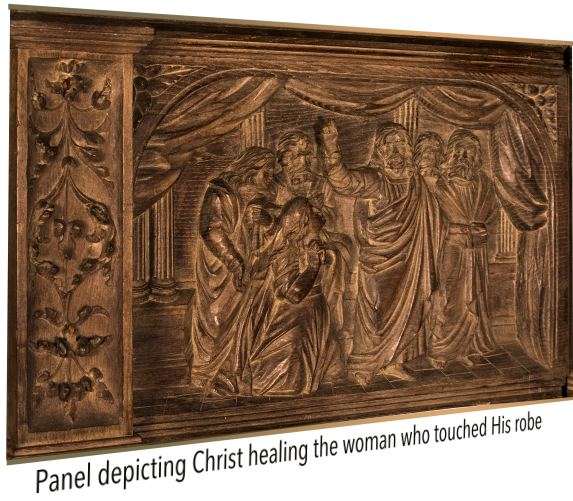
M&G’s Choir Stalls provide two sets of four seats each and are covered in finely detailed carvings. For example, the fins under the armrest are devised to look like eagles with every feather individually carved into the hard oak. The dorsal and end panels of the stalls contain images from various Biblical stories, including King Solomon displaying his God-given wisdom with the two mothers, and the believing woman healed by just a touch of Christ’s robe. Every minute design is accounted for—from the patterned hem of a character’s tunic, and the hair on Jesus’ head and beard, to the scenes’ distant mountains in the background, and the patterns in the tile underfoot. Surrounding these narratives are decorated spindles and more reliefs consisting of fruit and flowers flanked by winged, mythological creatures. 

One of the most fascinating details of the Choir Stalls are the misericords. Misericords (from the Latin word for pity and heart, literally pity of the heart or compassion of the heart) are molded brackets on the underside of a seat. Choirs or monks would stand for hours singing and participating in the worship ceremony; to provide them with a modicum of comfort and stability, these misericords or “mercy seats” were added. When the choir members would stand to sing, they could lift the seat up and surreptitiously rest against this small structure while still appearing to be standing. 

The ownership history, or provenance, of these beautiful seats is long, mysterious, and fascinating. The choir stalls survived the iconoclasm that followed the Protestant Reformation sweeping through the Netherlands as staunch Catholic Philip II of Spain fought to retain Flanders, where they remained undamaged until the early 20th century. As America entered the Gilded Age with its booming economy, many American business and factory owners became millionaires; they wished to display their newly-earned wealth and position by designing grand homes decorated in the Old-World style. Men like architect Stanford White were sent to Europe to purchase whole rooms of traditional Medieval or Renaissance décor and ship the furnishings back to America. White chose the Choir Stalls to adorn Hearst Castle built by William Randolph Hearst, the newspaper magnate. The choir stalls decorated Hearst’s home until his bankruptcy during the Great Depression. In 1941, Hammer Galleries acquired the choir stalls at auction. A later owner gifted the Choir Stalls to the Collection in 1968, where they found a home among objects and paintings of the same age. While they are not being used for their original purpose, the Choir Stalls allow M&G’s guests a glimpse into 16th-century cathedrals.

Ashley Ellis, M&G History Intern


Published in 2019

Object of the Month: January 2019

Cathedra

Walnut

Spanish, mid 15th century

A chair, from the English chaere or Latin cathedra, is one of the most common pieces of furniture and easily identified in its simplest form by its parts—back, seat, arms and legs. The chair’s specific purpose can be discerned by more descriptive names such as recliner, wheelchair, throne, etc.  Of course, the person “who takes a seat” can further outline the chair’s scope such as the Queen of England positioned in The Chair in the House of Commons to open a new session of Parliament, a ruling monarch seated on a throne to make a solemn declaration, or a bishop (such as the Pope, known as the Bishop of Rome) adopting a position in a cathedra or cathedrae apostolorum (as it occurs in early church writings) to teach with apostolic authority.

The Museum & Gallery’s furniture collection from the fourteenth to sixteenth centuries is known as the most extensive representation in America and includes several types of ecclesiastical chairs, four of which are cathedrae.  Each of the four has interesting designs and carvings, but the oldest in the collection possesses by far the most intriguing and traceable features.  

Gazing from the back panel of the Cathedra is a sculpted female figure representing St. Lucy, one of the most venerated female saints in martyrology and mentioned in the Catholic mass itself. She holds two objects: a palm frond, symbolic of victory in death and a platter with eyes, her most common and legendary attribute.

Just under the seat panel is a misericord. Since many of the medieval and early Renaissance ceremonial prayers were uttered in a standing position, the misericord acted as a place to “rest” or lean on during the long ceremony thereby allowing the bishop to obtain a type of “mercy.”

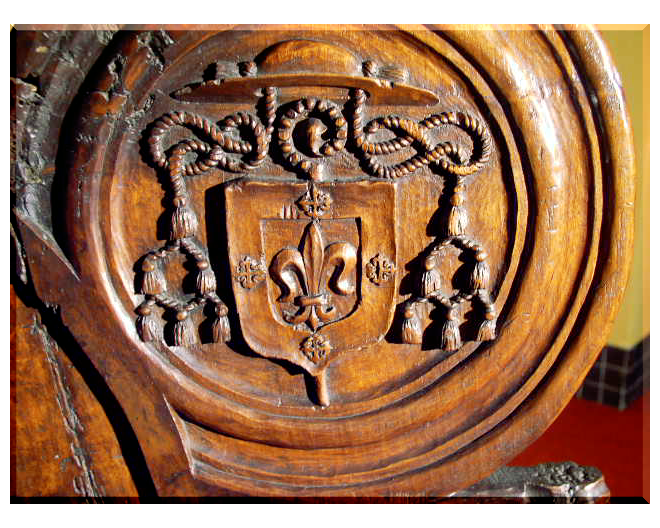
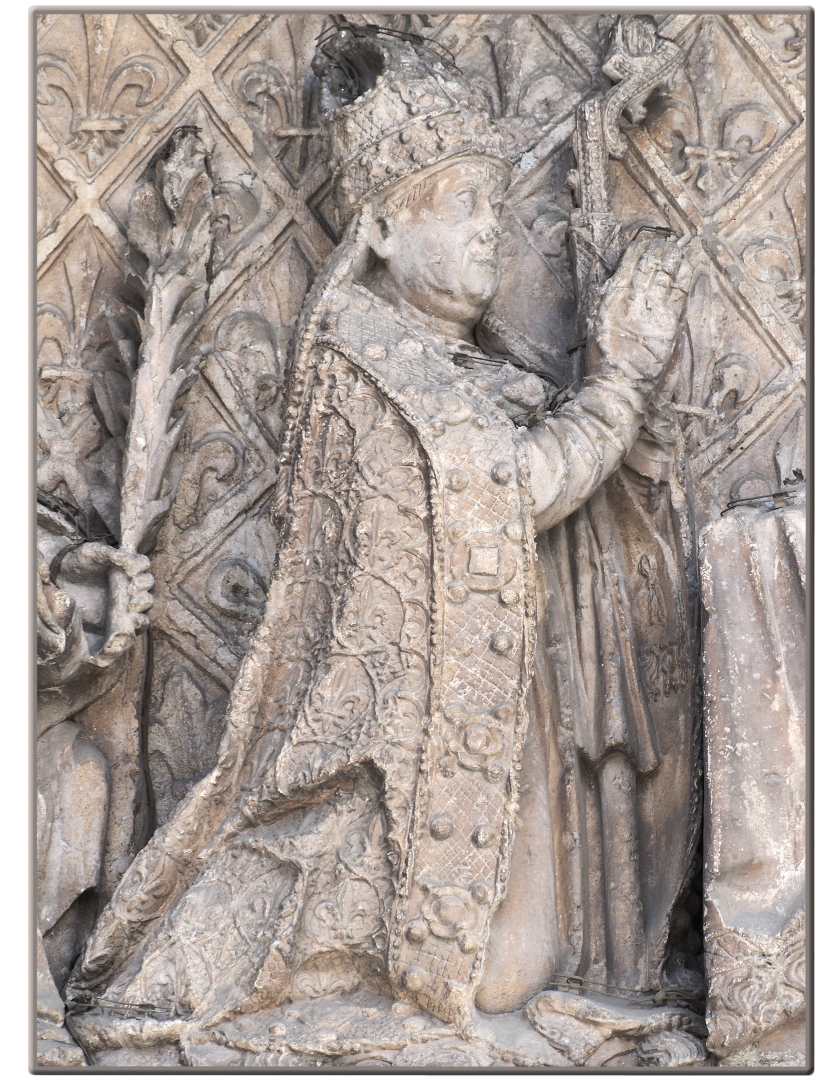
This Spanish Cathedra dates with certainty to the 1400s due mostly to the identifiable coat of arms of Bishop Alonso de Burgos, born in 1415 in Burgos, Spain, the capital of Old Castile. The galero or pilgrim’s hat and tassels were common elements of the crest of a bishop, with the center shield denoting a particular symbol of heritage or character, in this case a lily in the stylized form of a fleur-de-lis, which is a symbol of purity. Alonso’s influence as a bishop was widespread as he served in the central Spain dioceses of Cordoba, Cuenca, and Palencia. Ordained as a Dominican monk at an early age, Alonso so earnestly and diligently applied himself to his vocation as a Catholic clergyman that he was readily noticed and subsequently assigned as confessor by the renowned Catholic Monarchs, a collective term for Spanish King Ferdinand II and Queen Isabella I, under whose banner Columbus sailed.  

Beyond being instrumental in the financing of some of the voyages of the discoverer, Bishop Alonso’s influence was exhibited in founding a center for Dominican study, the Collegio de San Gregorio, an Isabelline-style building located in the city of Valladolid. Readily visible throughout the architecture is Alonso’s heraldry.  

Bonnie Merkle, M&G Docent and Database Manager


Published in 2019

Object of the Month: September 2017

Cassone

Walnut

Italian, 16th century


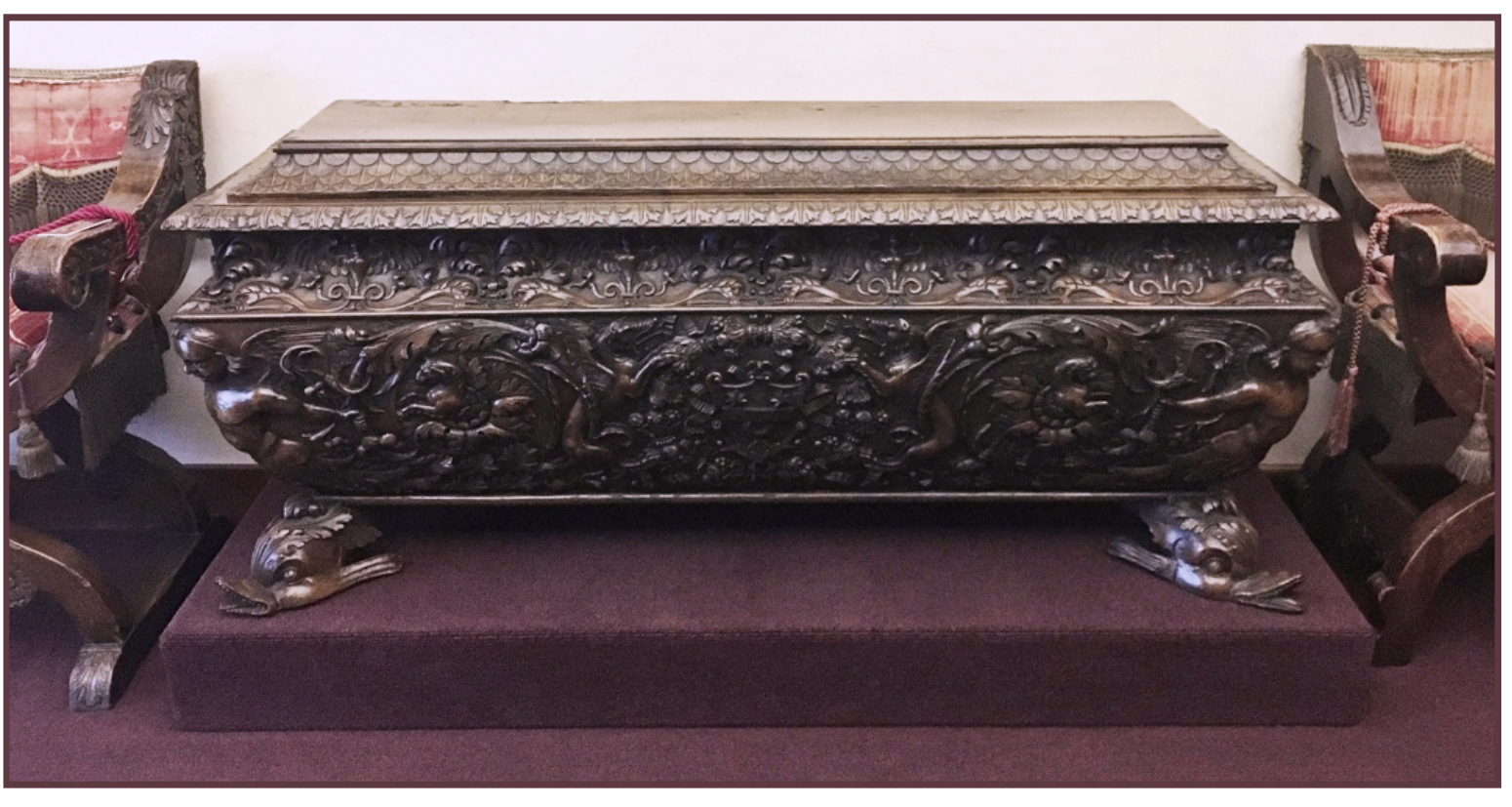
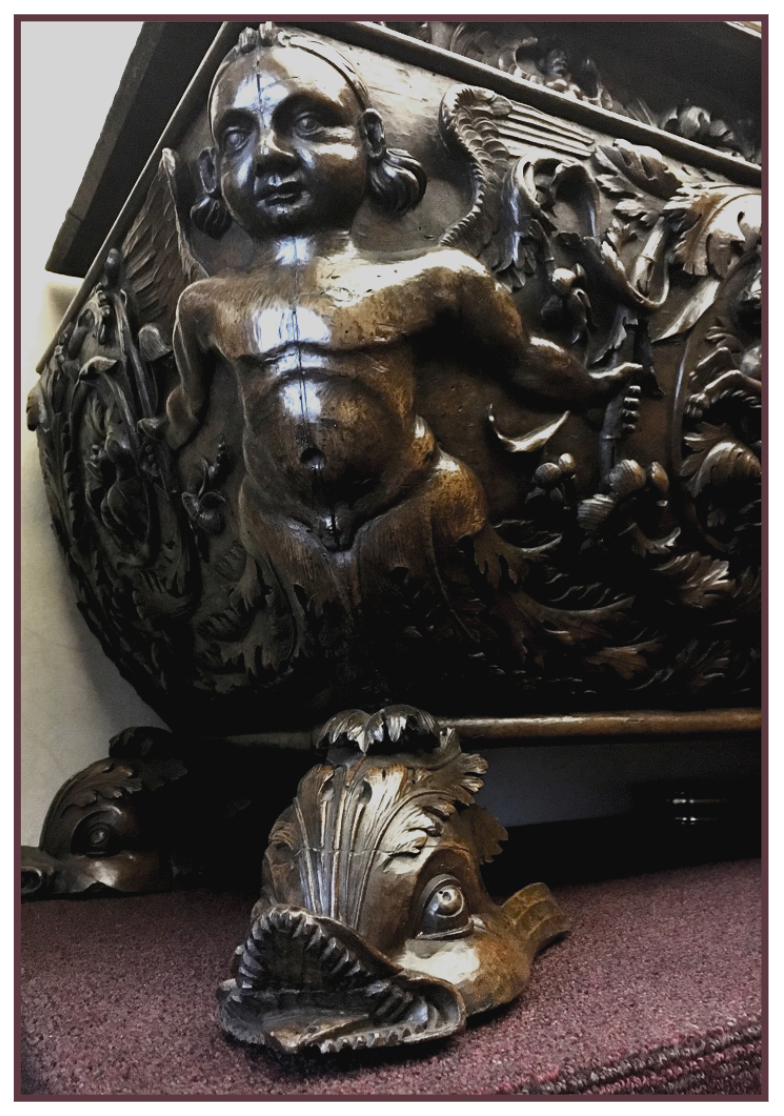
Years ago a television series aired featuring a dolphin named “Flipper.”  He exhibited the usual amount of dolphin intelligence and often saved the day. One of M&G’s pieces of furniture includes carved dolphins and takes a person to a time and place where dolphins symbolized various aspects of life.

During the 15th and 16th centuries, Italy specialized in the production of a special piece of furniture called, cassone, the Italian word meaning chest.  Of the eighteen cassoni (plural for cassone) in M&G’s collection, one is beautifully and elaborately carved; rather than a lion’s claw for feet or some other standard furniture base, this cassone rests on four carved dolphins.  In his catalog for M&G’s furniture collection, furniture connoisseur Joseph Aaronson described the chest this way, “the dynamic carving of swirling plant and grotesque animal forms, framed at the corners by winged putti figures. . . is based on Roman patterns and is unmistakably Italian in its playful freedom.”


Rome became the center of cassone production in the mid to late sixteenth century. According to the Encyclopedia of Interior Design, by this time society’s taste had shifted from the chests with painted panel scenes and portraits to a more sculptural form of decoratively carved dark walnut with little to no paint or gilding. M&G’s cassone represents the era’s preferred choice with its dark wood and ornate carvings.

However, why would dolphins be carved for the feet?  Most people at this time were familiar with the mammal due to the fact that Italy is surrounded by water.  Greek mythology presents dolphins as companions to Dionysius, a seafaring god; and they are also connected with Venus the goddess of love.  Dolphins symbolized long life and safety in travel.  Since cassoni were often given in pairs as a wedding gift by a bride’s parents, it was one way to express their support and desire that a marriage would be safe, long, and produce a healthy family. In its context, a cassone was both a practical and necessary piece of furniture, but also a status symbol in society for newlyweds.

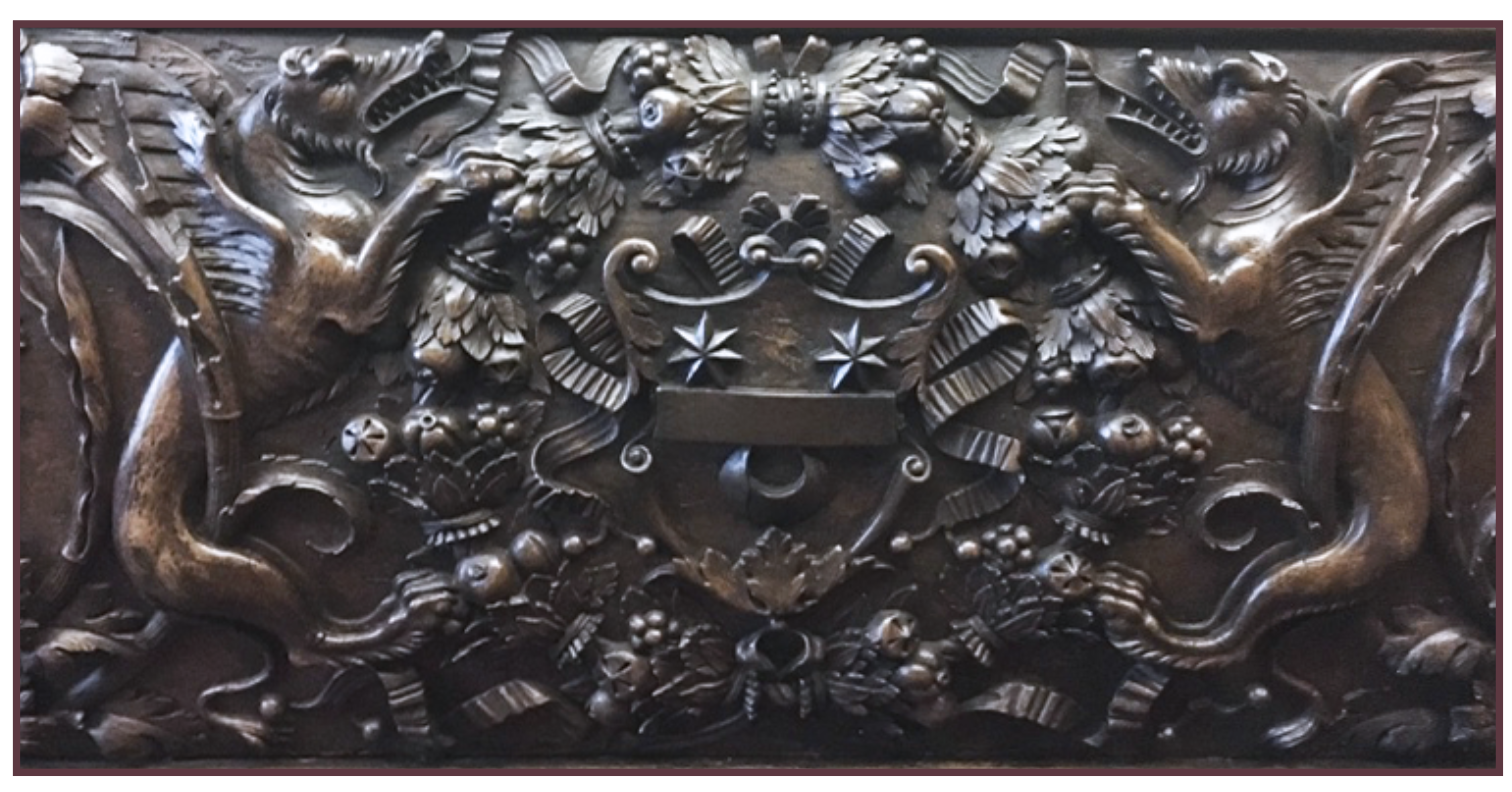
M&G’s cassone was a gift from Carl Hamilton in 1956, and remains somewhat mysterious. Its shape may indicate when it was made and its possible origin in the seaport of Genoa.  On the front is a crest, yet no further information has been found to connect it to a specific family.  As cassone production is further studied, perhaps more will be learned about M&G’s cassone in the future.

John Good, Security Manager


Published in 2017

Object of the Month: July 2017


Stipo Bambocci, walnut                                     Stipo Bambocci, walnut

Italian, 16th century                                             Italian, late 16th to early 17th century

Click on links for additional reference information.

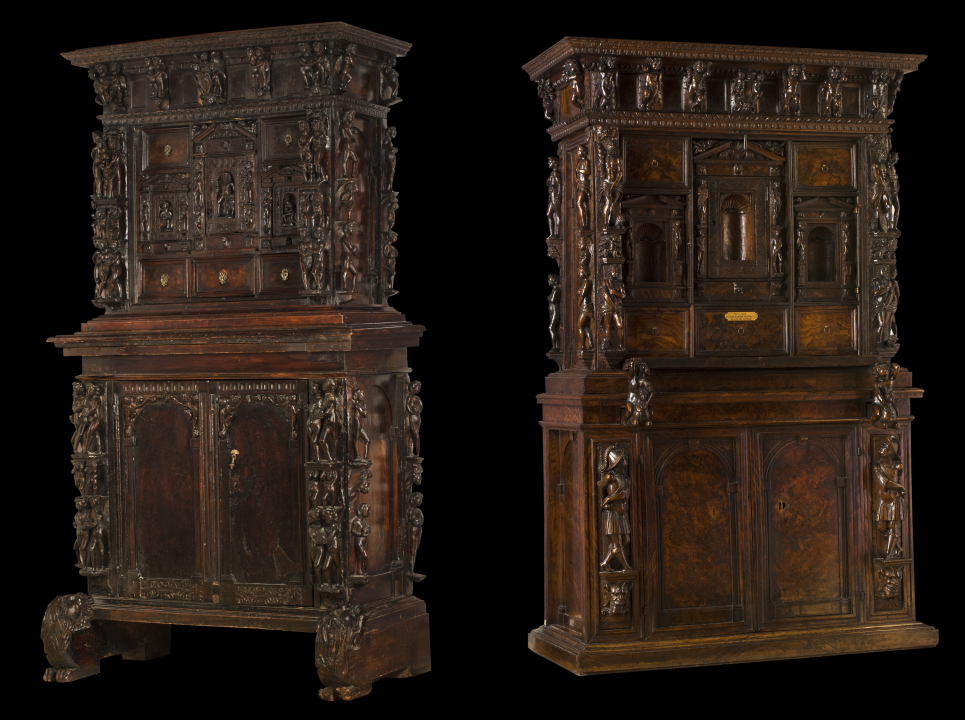
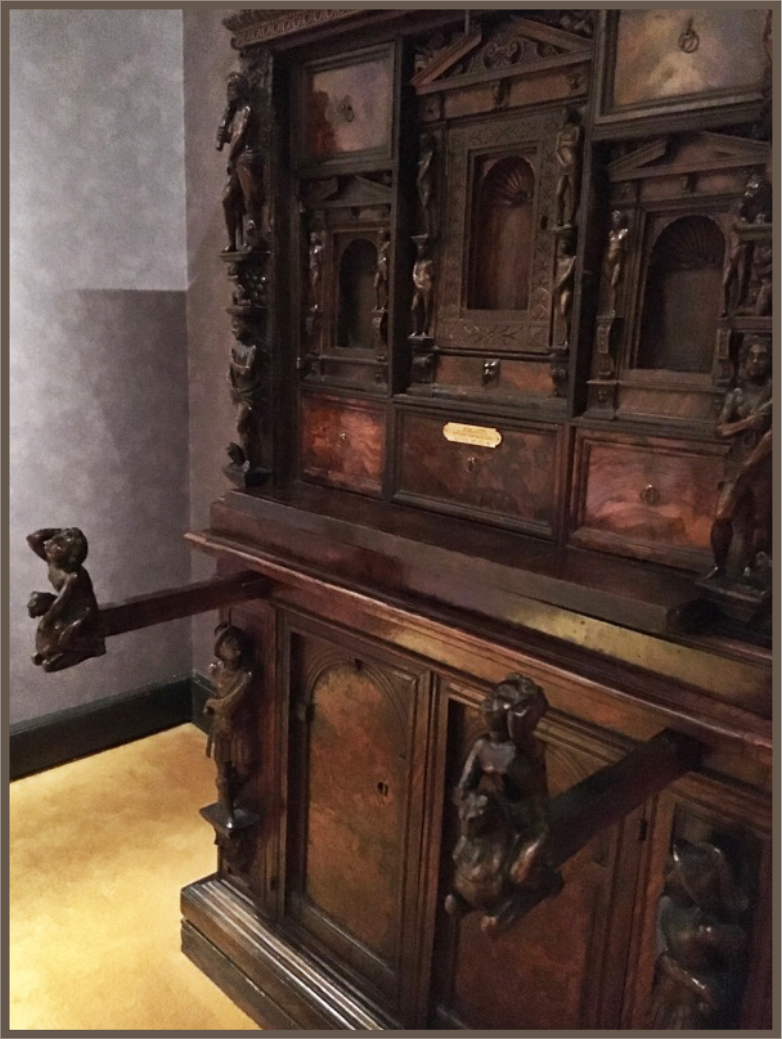
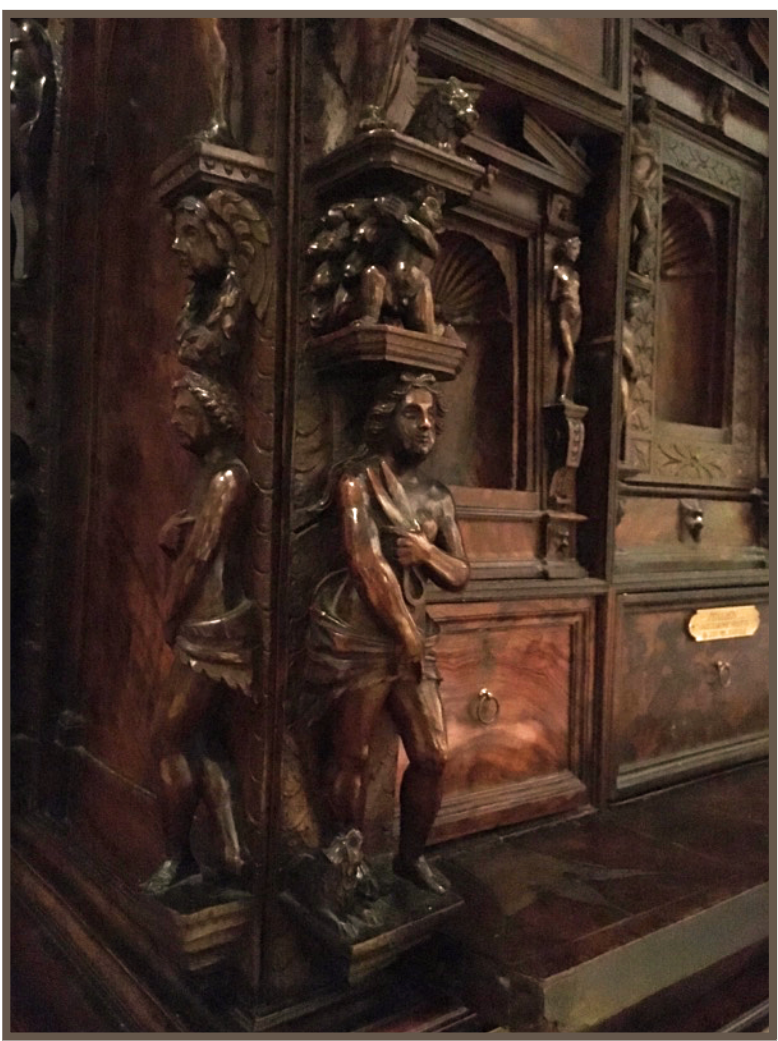
Most of us at one time or another have treasured and tucked away some poem, theme paper, or letter.  Your paper valuables may have been stashed in a simple cardboard box, but if you were living in Italy between 1560 and the early 1600s in the thriving cities of Genoa or Florence, your written mementos may have been stored in a tall, desk-like piece of furniture called a Stipo a Bambocci, loosely translated “a cabinet with carved babies.” As the style became popular, more iconographic carvings embellished the desk’s exterior, which is typical of the emerging Baroque period. Yet, the name’s association with “babies” persisted.

Beautifully fashioned out of two kinds of wood—burled-walnut and Caucasian walnut, the upper portions of the desks (not usually created at the same time as the lower cabinets) are completely removable, allowing a nobleman to tote just the top portion of his desk on his travels. The interiors, laden with multiple drawers and hidden caverns, beckon the imagination as to what might have been secretly stored within! Most often, a stipo a bambocci was secured with a lockable, fall front writing surface. Supported by lopers when lowered, the false front becomes positioned at a comfortable height for writing.


Mimicking the design of an Iberian desk called a bargueño, the production of stipi (plural for stipo) was short lived, a mere 60 to 70 years. Yet their substantial influence can be seen in a more common piece of furniture today known today as an escritoire or secretary.

Little is known about these early furniture makers; however art historian, Dr. Thomas Meyer, discovered in 2008 that Riccardo Taurini and his workshop were craftsmen of a specific stipo.  Meyer notes that the family of Taurini is considered to be the “fathers” of the stipi, blending their designs with inspiration from famous artists, architects and sculptors such as Rosso Fiorentino, Jacques I Androuet du Cerceau, Hugues Sambin, Leon Battista Alberti, Giacomo Barozzi da Vignola, and Andrea Palladio.

Almost as interesting as the desks’ construction are the various personages who formerly owned M&G’s unique pieces—the Royal Family of Savoy; an Austrian Archduke living in Lichtenstein Palace, Vienna; Myron C. Taylor, President Roosevelt’s personal representative to Pope Pius XII during World War II; and the industrialist and avid collector, Carl W. Hamilton of Philippine Refining Corporation. It is intriguing to consider what documents might have once been composed upon or stored within these beautiful pieces of furniture!

Though stipi are most often found today in house museums such as Museo Poldi-Pezzoli, Bagatti-Valsecchi and in the Castello Sforzesco, it is no surprise that M&G has two such unusual desks.  M&G’s furniture collection (which includes approximately 100 pieces predominately from the 1400s and 1500s) is almost as renowned as its collection of Old Masters. Joseph Aronson (1898-1976), an international European furniture authority, once remarked that “it is one of the finest collections of Renaissance furniture in America.” Aronson’s work, Furniture in the Bob Jones University Collection, as well as other significant volumes such as A Concise History of Interior Decoration by George Savage and A History of Italian Furniture by William M. Odom, both review these two stipi, and qualify M&G’s collection as a must-see for furniture lovers and historians everywhere.

Bonnie Merkle, Collection Database Manager and Docent


Published in 2017

Object of the Month: June 2016

Cassone

Polychrome and giltwood

Italian, 16th century

Click on the links throughout the article to view additional artists’ works and reference material.

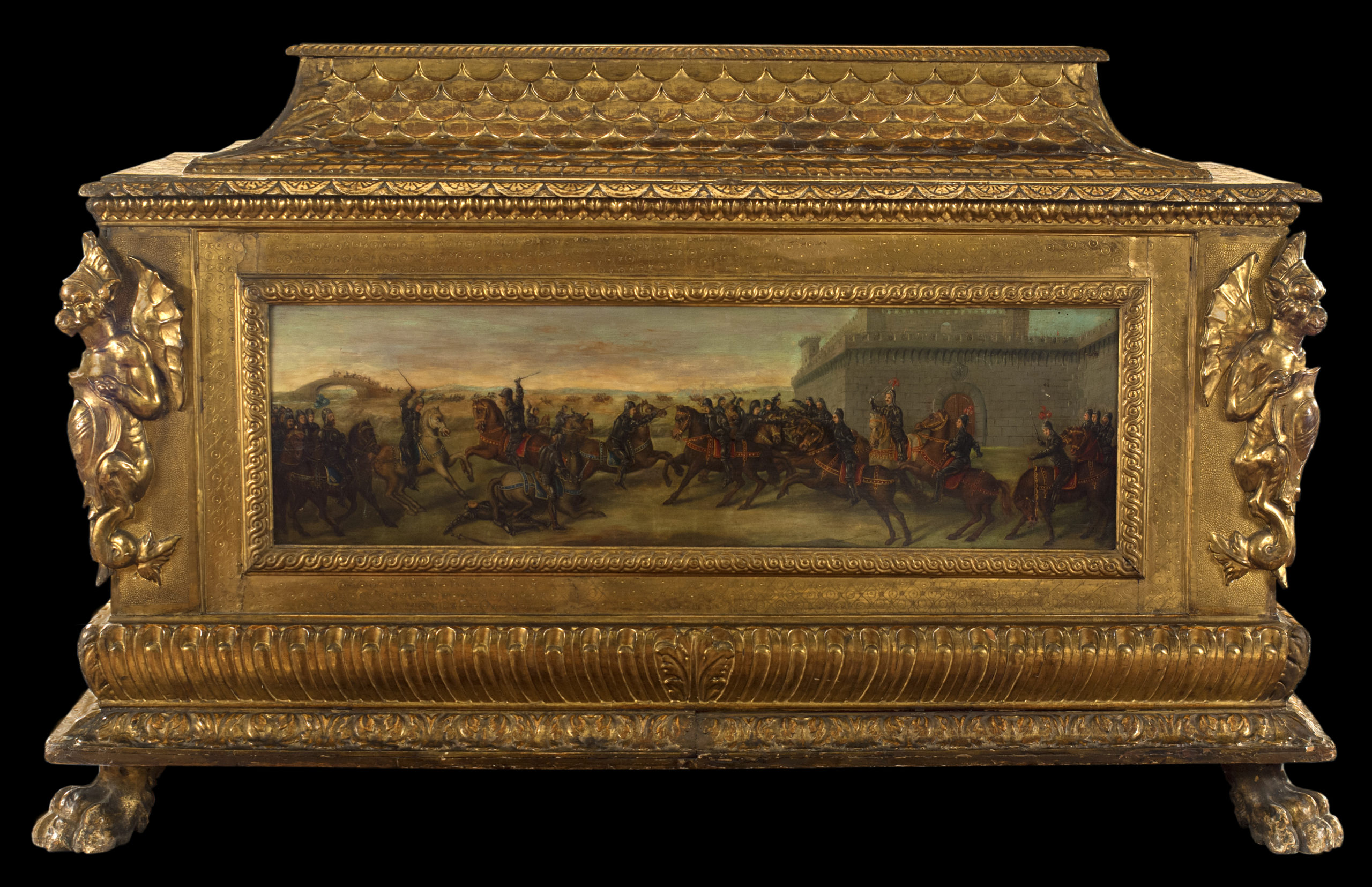
In the not-too-distant-past, young women acquired hope chests to hold clothing, linens, and other items needed to set up housekeeping after marriage. In medieval and Renaissance Italy, similar chests, called cassoni (singular, cassone) served the same purpose. The ornate chests reflected the wealth and status of the families; even the size and grandeur of the cassoni conveyed the importance of the bride’s family, which in this case must have been substantial. Part of the wedding celebrations included the parading of cassoni through the streets from the bride’s home to her new home.

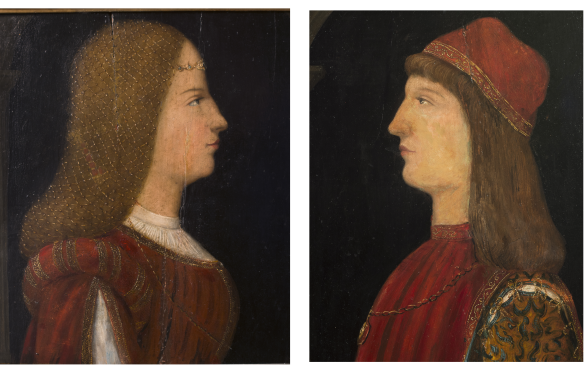
Portraits of the bride and groom are painted at each end of the Cassone.

To complete a cassone, the project required a variety of artisans—woodworkers, ironworkers, artists working in gesso for the ornate pastiglia  and gilding, and painters for the inlaid painted panels. It is probable that this cassone once had a decorative back called a spalliera, which is now missing. All of these components combined to make the cassone more impressive and expensive. The portraits of the bride and groom on each end of the cassone provide a beautiful, personal touch.

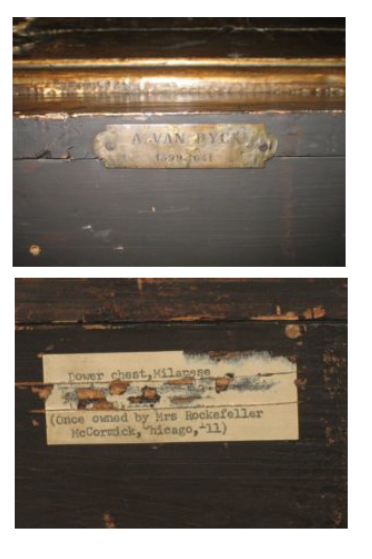
Sometimes an object of art contains clues on the back as to the history of its ownership, known as provenance. For example, a brass plate on the back of this cassone gives the information of “A. van Dyke 1599-1641.” Obviously added at a later date, there must have been some evidence to support the claim. It is known that Anthony van Dyke lived in Italy for six years (1621–1627). It seems especially appropriate that he would have owned this object which beautifully exhibits Renaissance portraiture since he became one of the best known portraitists who ever lived.

Another clue bears the name “Mrs. Rockefeller McCormick.” Edith Rockefeller McCormick was at one time one of the wealthiest women in America. She built an Italian-inspired villa on Lake Michigan and filled it with antiques. A chest such as this one would have fit in perfectly with the décor of the villa.

Anne Short, Volunteer Collection Researcher & Retired Docent

Published in 2016