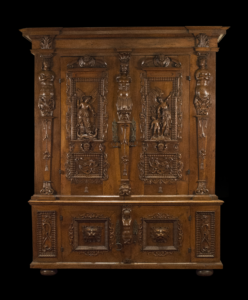
Schrank
Walnut and pine
German, 17th century
Storage has been one of humanity’s challenges through the ages. “Where do I put this?” is a question many of us may ask numerous times a day. In the digital world it can be more challenging: “Which folder do I store this in?”
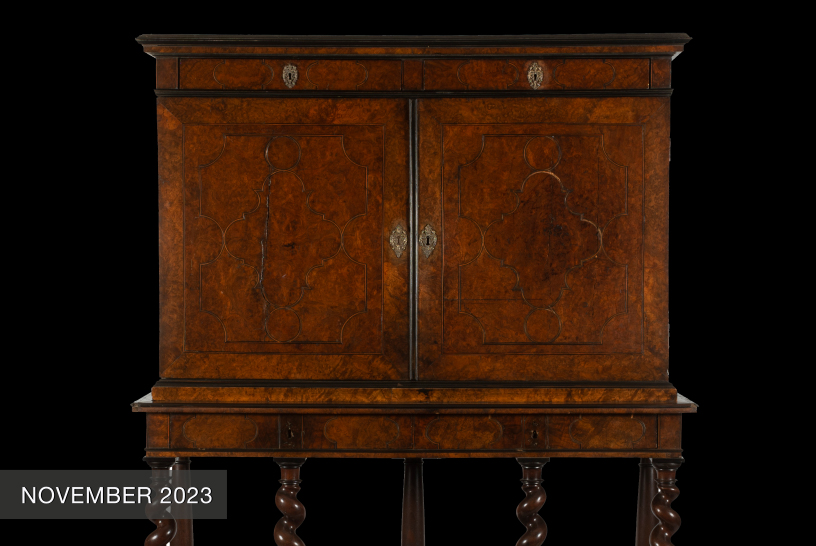
The schrank is an evolution of the storage chests from the Middle Ages. When it was discovered that chests placed on top of each other with front-opening doors were more useful, the schrank in miniature was introduced. At that time, it was called a cupboard. Later modifications of enlarging them gave us what is commonly called an armoire, which normally contained more compartments in the top section than a schrank.
For practical purposes, both the schrank and armoire are used for storage, and the word is used interchangeably by many people. However, the difference between the two is more technical and geographical. Initially used to store armor, the French named the cabinet an armoire. The schrank was so named by the Germans. The term is still part of several words used to describe a storage item, most notably a kuhlschrank or what is known to us Americans as a refrigerator.
M&G’s Schrank joined the collection in 1964. It may have originated in southern Germany and was constructed in the 17th century or later. The last owner prior to M&G was A. S. W. Rosenbach, an antique book collector and dealer living in Philadelphia during the last half of the 19th century into the mid-20th century. His aggressive skill and vast knowledge of books made him “The Terror of the Auction Room.”
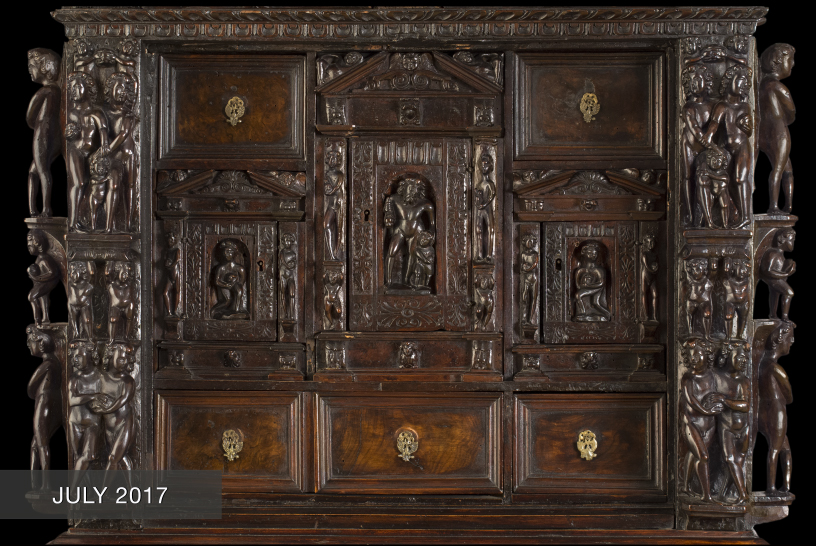
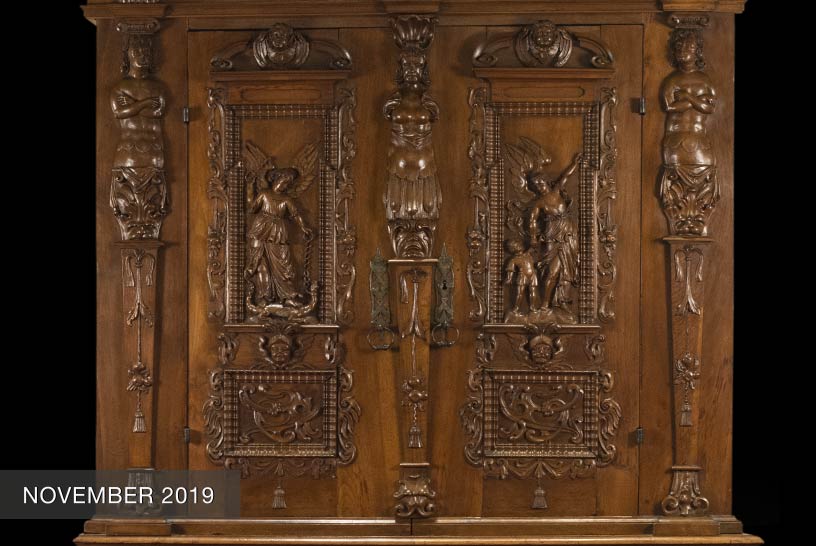
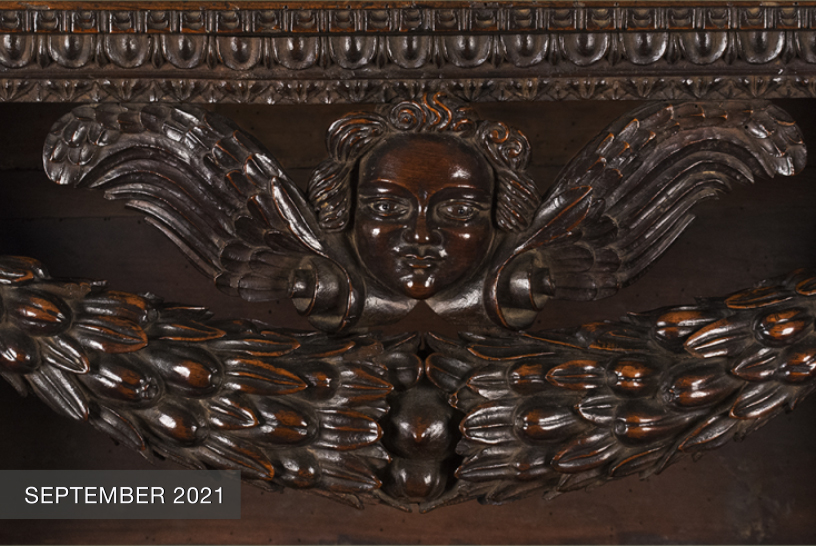
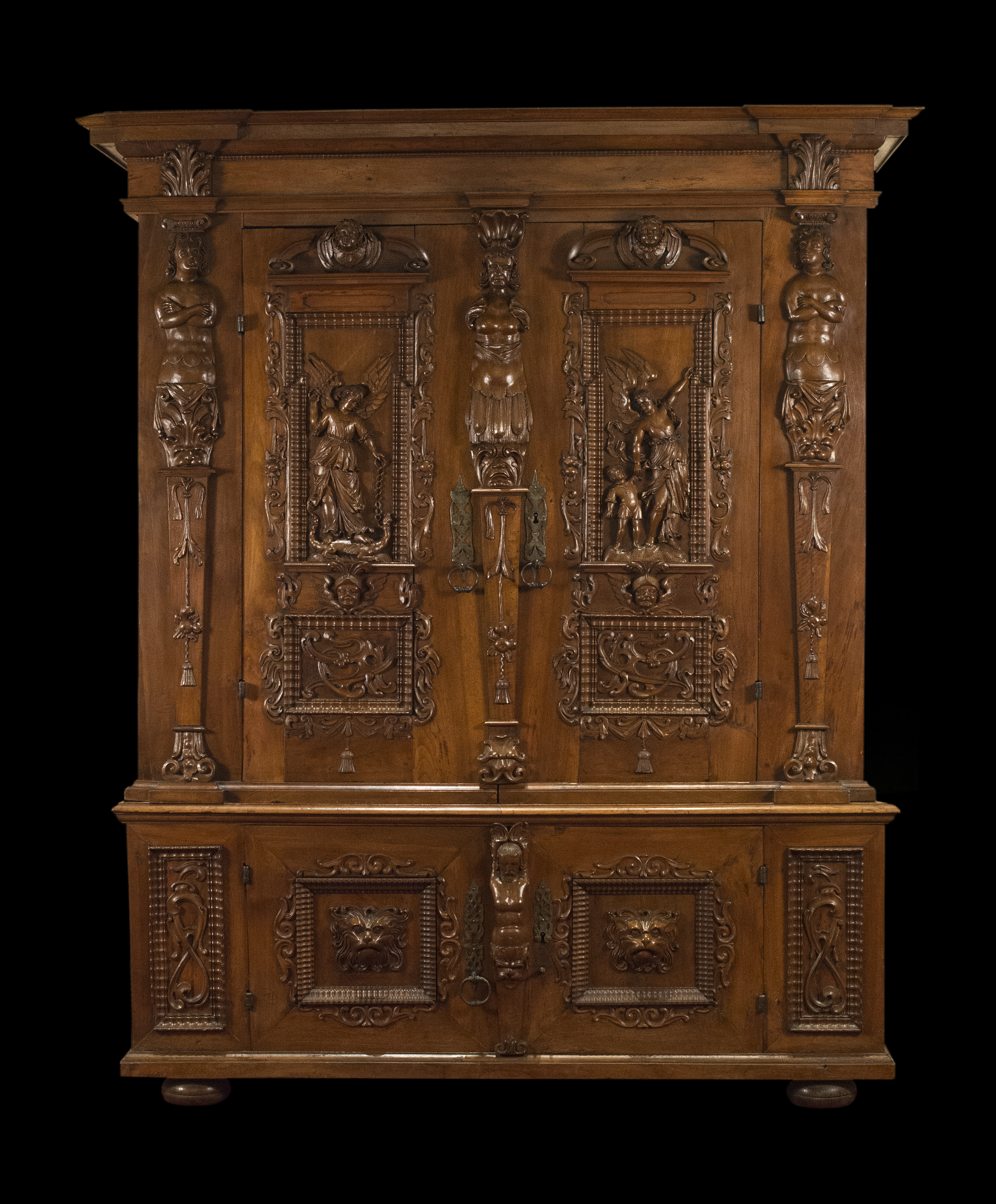
The Schrank’s upper carcass is constructed with a single pine board for each side, top, and bottom. The lower carcass uses a single pine board for each side as well as the back and bottom—the lower portion doesn’t need a top since the upper section rests on it. Finely detailed, hand-sawn dovetail joints can be seen on the top of the upper carcass. Carved walnut is used for the decorative ornamentation for the front.
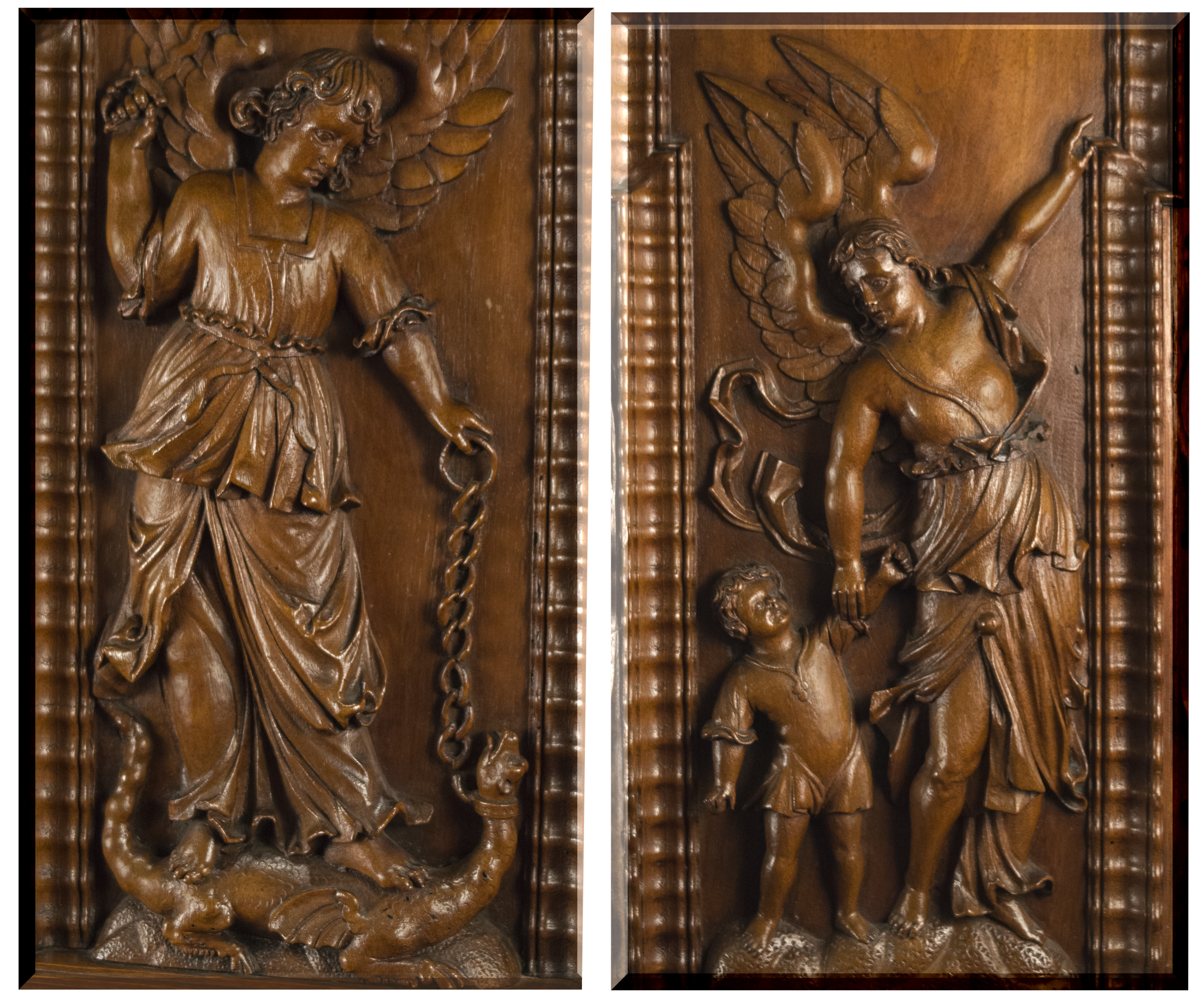
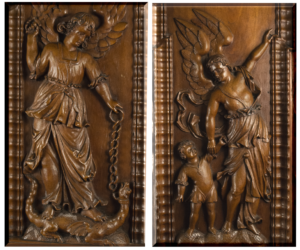 The left door panel displays a common 17th-century scene of Michael the Archangel overcoming Satan, in the form of a dragon. The other door depicts the apocryphal characters of the archangel Raphael with Tobias. The Book of Tobit from the Apocrypha gives detail to the legend presented. Other aspects of the ornamentation have been described in technical terms by Joseph Aronson in his catalog Furniture in the Bob Jones Collection. “The base cupboard features low doors paneled with wave-mouldings framing lion-heads, and its corners are embellished with panels framing scrolls. The astragal is a caryatid figure like the upper. The base mold, like the other horizontals, is quiet and rests on bun feet.”
Though the original craftsman is unknown, this piece of furniture represents well the skilled carving and furniture making from an era that no longer exists. Considering this Schrank was also part of a well-known bibliophile’s furnishings adds intrigue as to what treasures it may have stored more than a century ago.
John Good, Security Manager
Published in 2019