Give Now


Tag Archives: Russian icon

Object of the Month: January 2026

The Resurrection with Feasts

Tempera on panel

Unknown Russian

18th century
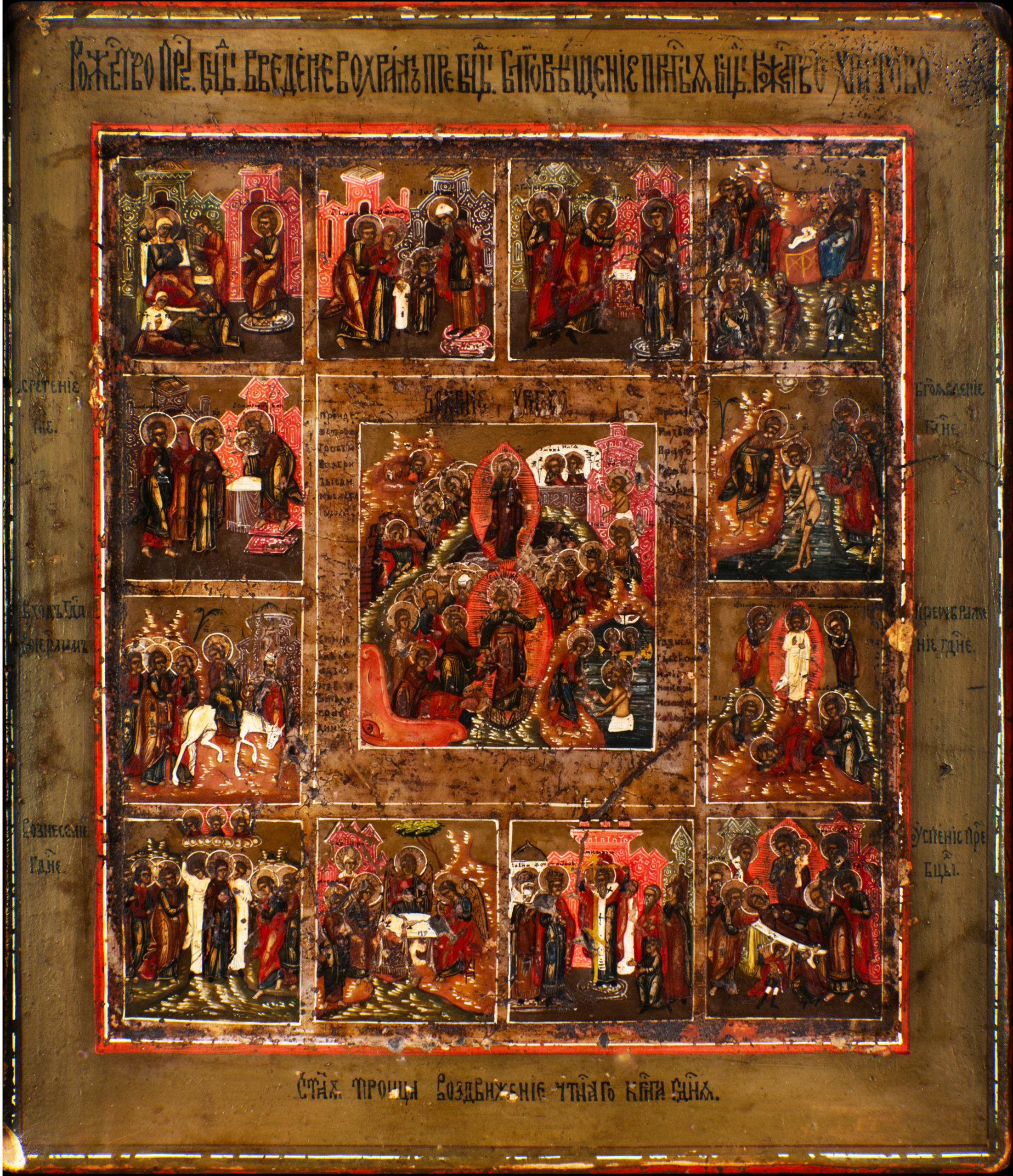
Russian icons have been part of M&G’s collection since our inaugural opening in 1951. Our founder, Dr. Bob Jones Jr., collected these uniquely symbolic works along with the Old Masters throughout the decades, including this interesting panel acquired in 1996—the year before his passing.

The central scene is surrounded by twelve smaller scenes identified by inscriptions and portraying the twelve major ecclesiastical feasts of the Eastern Orthodox Church, which are celebrated throughout the year. This type of icon is referred to as a calendar icon—a suitable focus as we turn the page on the New Year and a year in which M&G celebrates our 75th anniversary.

An image like this is read from left to right. Beginning with the top row (left corner), the illustrated events are:

  • The Nativity of the Virgin: observed September 8
  • The Presentation of Mary in the Temple: observed November 21
  • The Annunciation: celebrated March 25
  • The Nativity of Christ: celebrated Christmas Day, December 25
  • The Presentation of Christ in the Temple: celebrated February 2
  • The Baptism of Jesus: celebrated January 6
  • Entry into Jerusalem: celebrated on Palm Sunday
  • The Transfiguration: celebrated August 6
  • The Ascension: celebrated 40 days after Easter
  • The Holy Trinity (for Trinity Sunday, known as Pentecost): celebrated 50 days after Easter
  • The Exaltation of the Cross: observed September 14
  • The Dormition of Mary: observed August 15

Finally, the centerpiece features the victorious, resurrected Christ, which is celebrated on Easter Sunday. All of the other feasts lead up to or follow this great event. Additionally, the central image includes a number of elements from the Harrowing of Hell as described in the apocryphal book of Nicodemus (part II).

Observe the incredible amount of detail crowded into this central scene! Just below the risen Christ, He is shown again as standing triumphant over Hell (represented here as the realm of the dead) with the broken gates underfoot. On the left, He welcomes Adam and Eve and other Old Testament saints in a procession of people exiting the red mouth of Hell (lower left with a few visible teeth) toward the entrance of Paradise on the top right. To the right of Christ are Abel (murdered by Cain), Kings David and Solomon, and John the Baptist led by the good thief crucified with Christ, who is showing his cross to Enoch and Elijah as justification for his entrance into Paradise.

The lower right corner pictures the Biblical narrative of Jesus walking on the water to the disciples in the boat and Peter sinking after his failed attempt to stride the waves. On the top left, Peter peers into the empty tomb discovering the burial garments. Just below him are the angels led by Michael the archangel helping protect the procession of saints to Paradise.

Like the Western European audiences who viewed Old Master paintings, so the Byzantine and later Greeks and Russians were largely illiterate, relying on the pictures at church for scriptural understanding and church teachings. An icon like this one would have been made personally for the home of the devout. In a traditional Russian home, families would place their icons on a special shelf in a corner, known as the “beautiful corner.” By including an icon of the annual feasts in the display, every day would be lived in light of Christ’s victory over sin, Satan, and death.


Erin R. Jones, M&G Executive Director


Published 2026
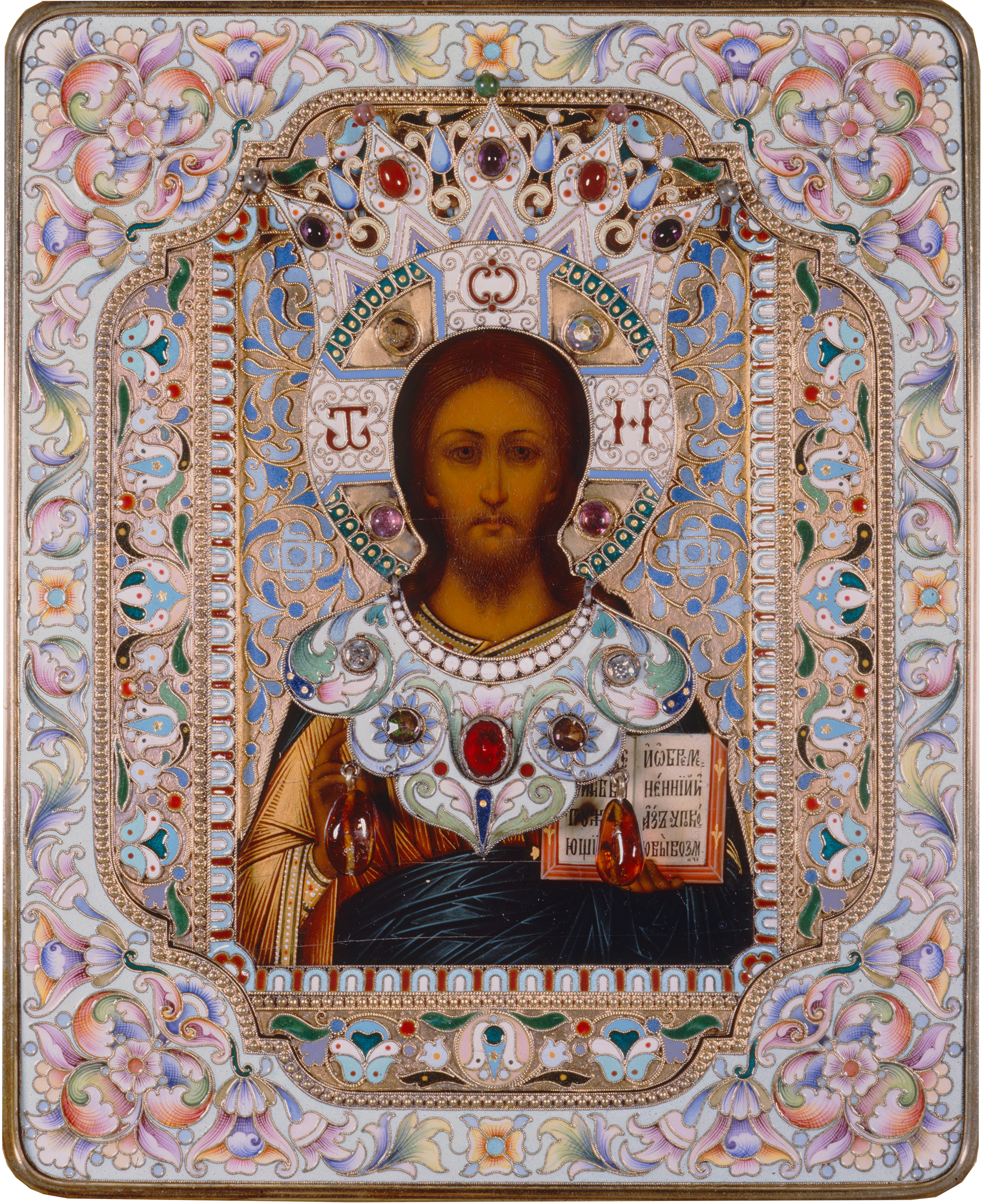
 

Pavel Ovchinnikov

Christ, the Pantocrator

Pavel Ovchinnikov

Below the image, click play to listen.


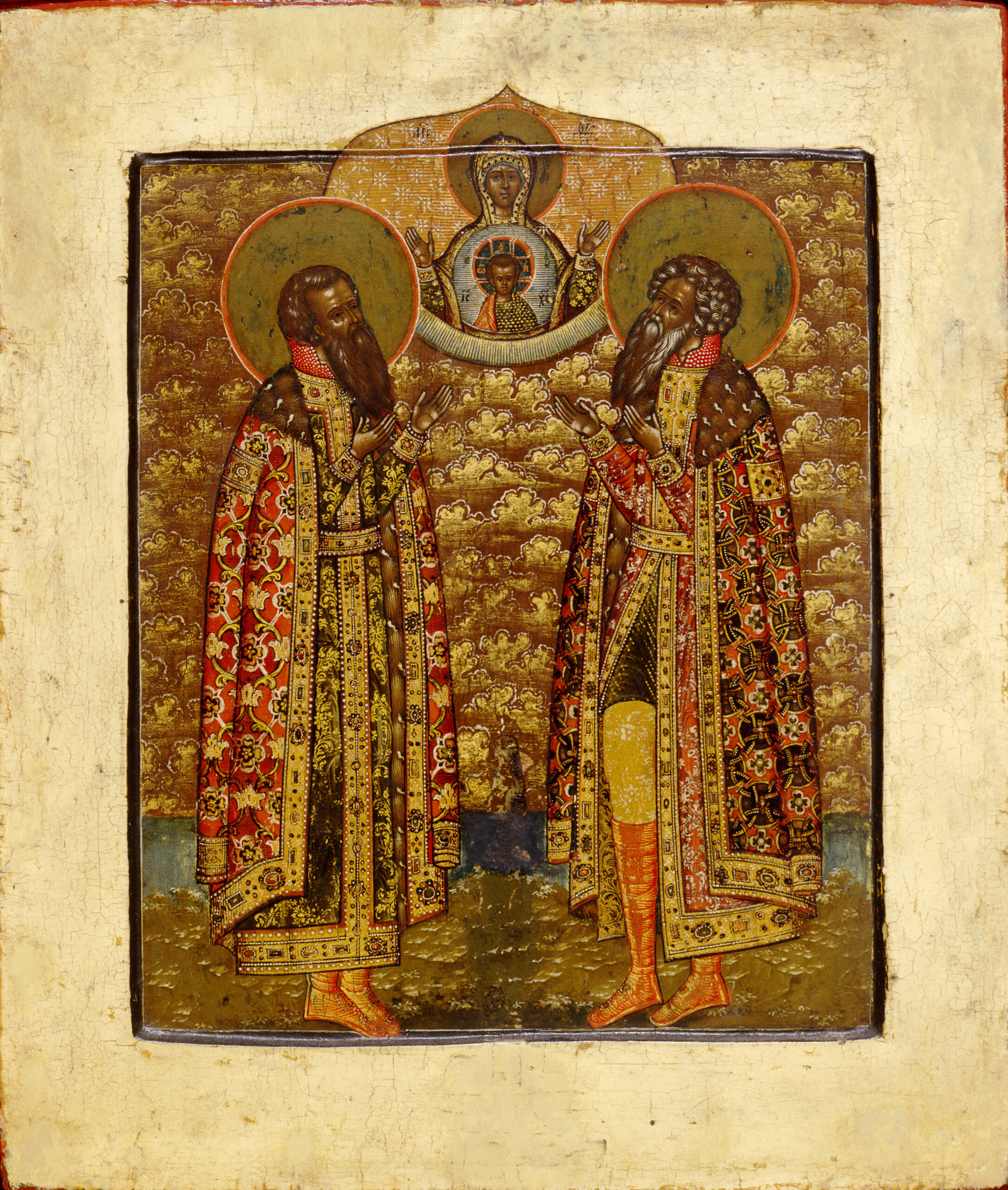
The Princes St. Basil and St. Constantine of Yaroslavl

The Princes St. Basil and St. Constantine of Yaroslavl

Yaroslavl School, 17th century

Below the image, click play to listen.

The Collection

The Old Master Painting Collection

The Museum & Gallery’s Old Master painting collection provides a rare viewer experience outside European cities and metropolitan areas with beautiful masterworks by recognized artists and their students—all of which are aesthetically exhibited with period furniture, sculpture, and tapestries to lend a period ambiance to the galleries and give patrons a panoramic view of ages past.  Of special note, M&G’s baroque paintings represent some of the most important artists and their works in the country.

The Collection is one of the largest and most interesting collections of European Old Master paintings in America. These works of art from the 14th through the 19th centuries beautifully trace the religious, artistic, and cultural history of Western Europe. Included are important works of many major artists such as Vannuccio, Botticelli, Cranach, Gerard David, Rubens, van Dyck, Reni, Domenichino, Guercino, Murillo, Ribera, Honthorst, and Doré. For a glimpse, view this virtual tour.

Patrons can also enjoy M&G’s Bowen Collection of Antiquities with artifacts that span 37 centuries and represent every day life from ancient Egyptian, Roman, and Hebrew cultures; and the Benjamin West Collection, a series of paintings housed in the War Memorial Chapel (on the campus of Bob Jones University).

M&G’s Russian Icon Collection, which dates from the 14th through 20th centuries and includes several icons once owned by members of the Romanov family, the last tsars of Russia.

While not all of the collections are available online, we continue to add more monthly. You can see some of the individual works and objects through articles, short video clips, and audio stops. OR view the variety of Collection objects currently available online here.

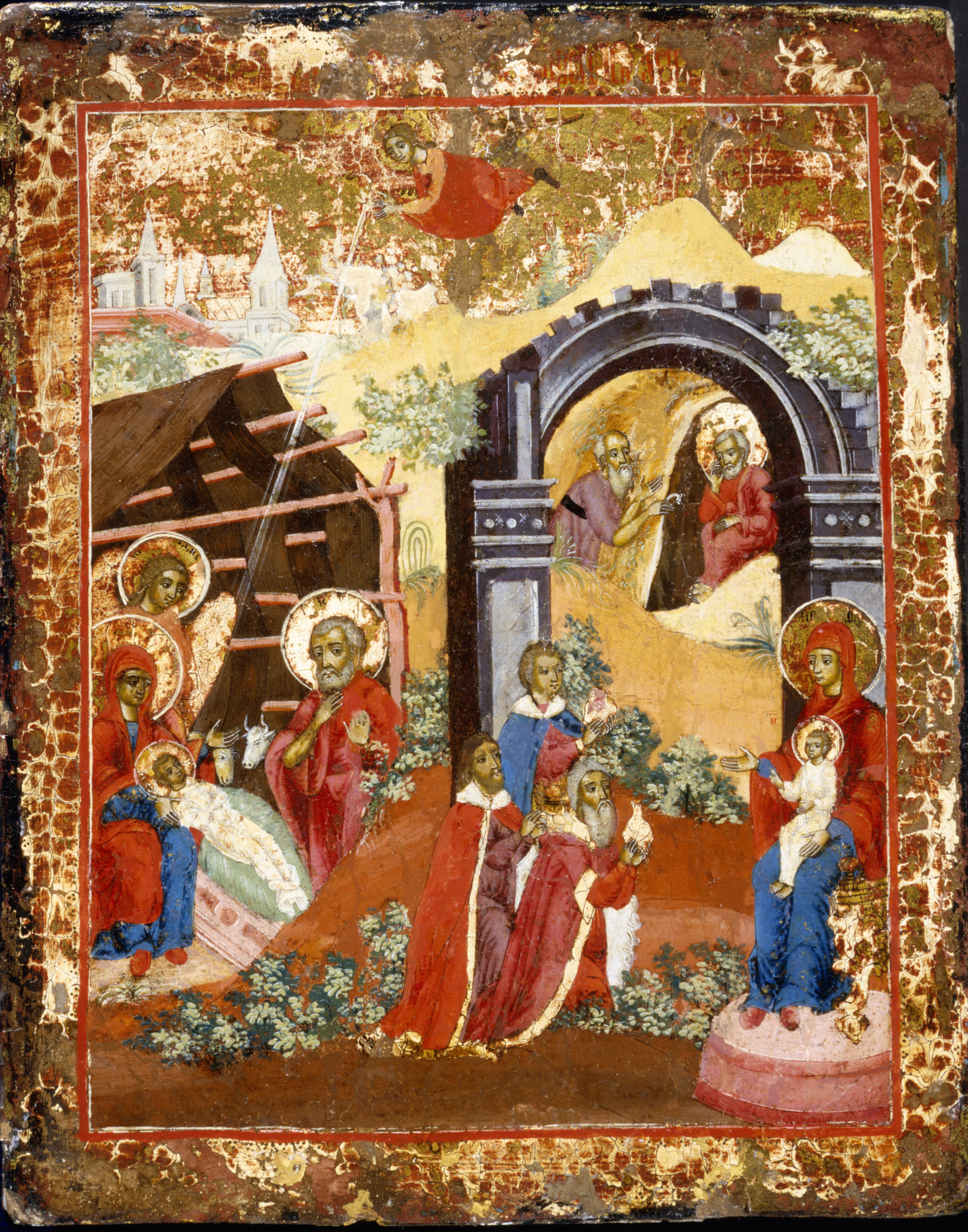
Scenes from the Life of Christ

Scenes from the Life of Christ

Russian Icon

Below the image, click play to listen.

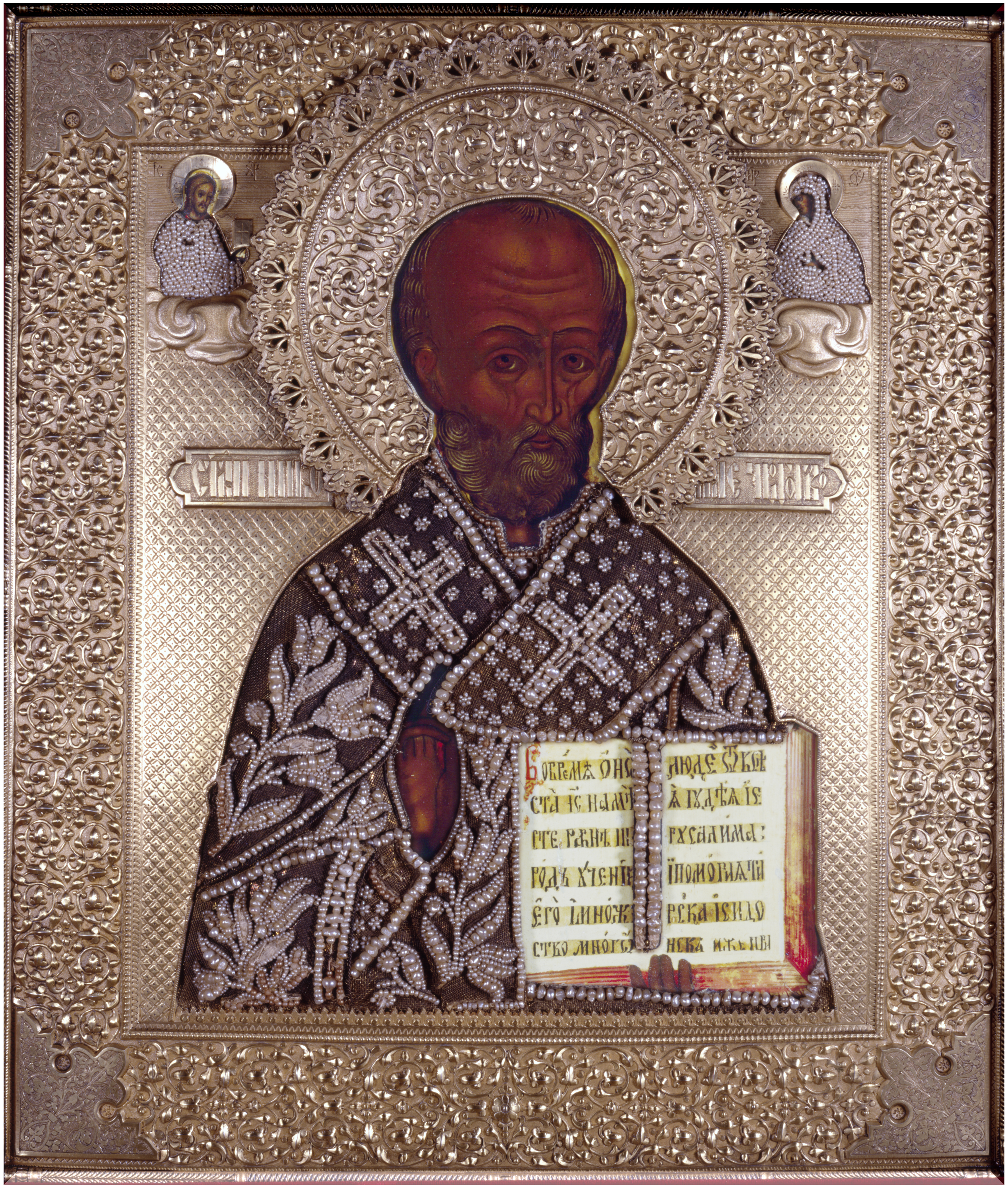
St. Nicholas, the Wonderworker

St. Nicholas, the Wonderworker

Moscow School

Below the image, click play to listen.

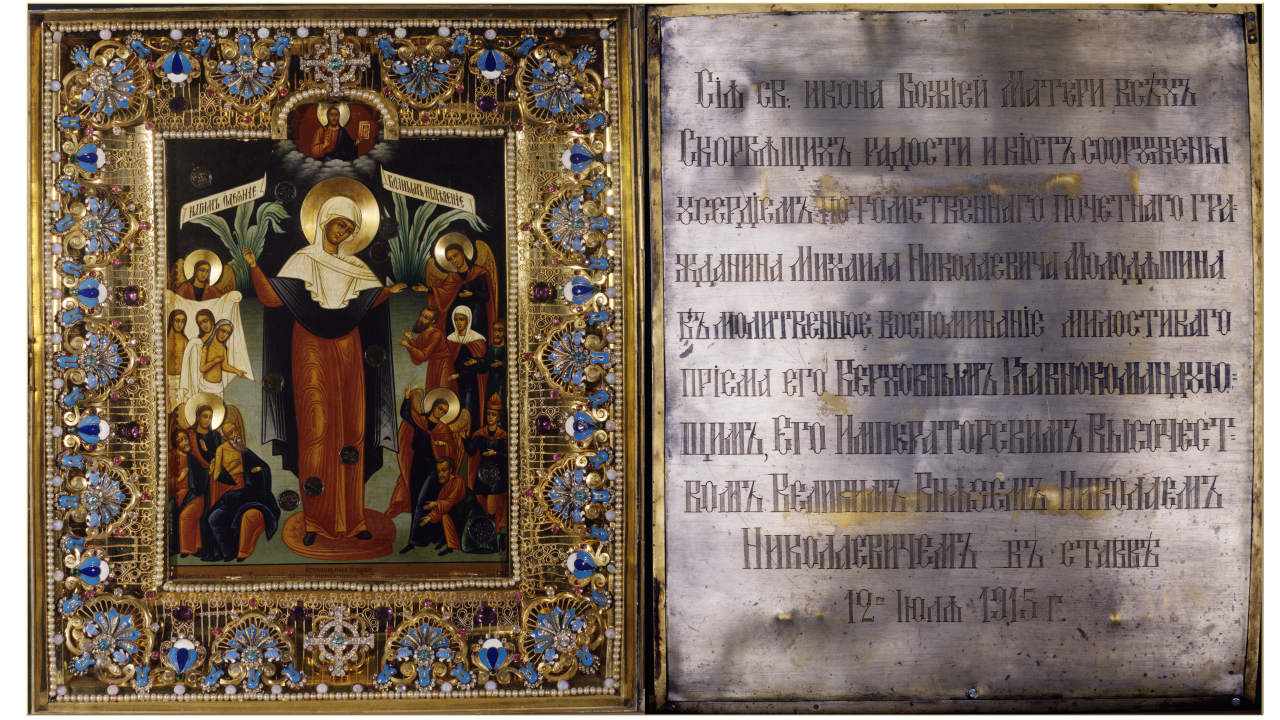
Michail Nicholaievich Molodeshin

Mary, Joy of All Who Sorrow

Michail Nicholaievich Molodeshin

Below the image, click play to listen.

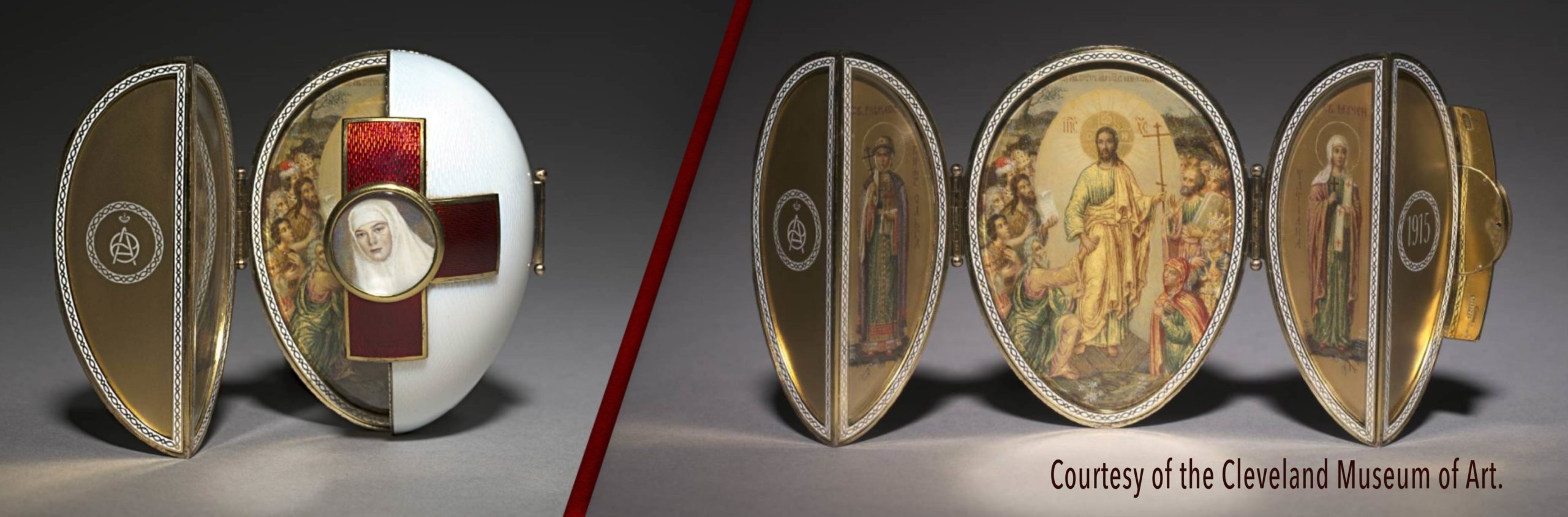
Peter Carl Fabergé

Imperial Red Cross Easter Egg, 1915

Peter Carl Fabergé (Russian, 1846-1920), Henrik Wigström (Russian, 1862-1923, House of Fabergé (Russian, 1842-1918)

Gold, silver, enamel, glass, ivory; overall: 8.6 x 6.4 cm (3 3/8 x 2 1/2 in.)

The Cleveland Museum of Art, The India Early Minshall Collection 1963.673


Below the image, click play to listen.

Vasiliy Fedotovich Il’in

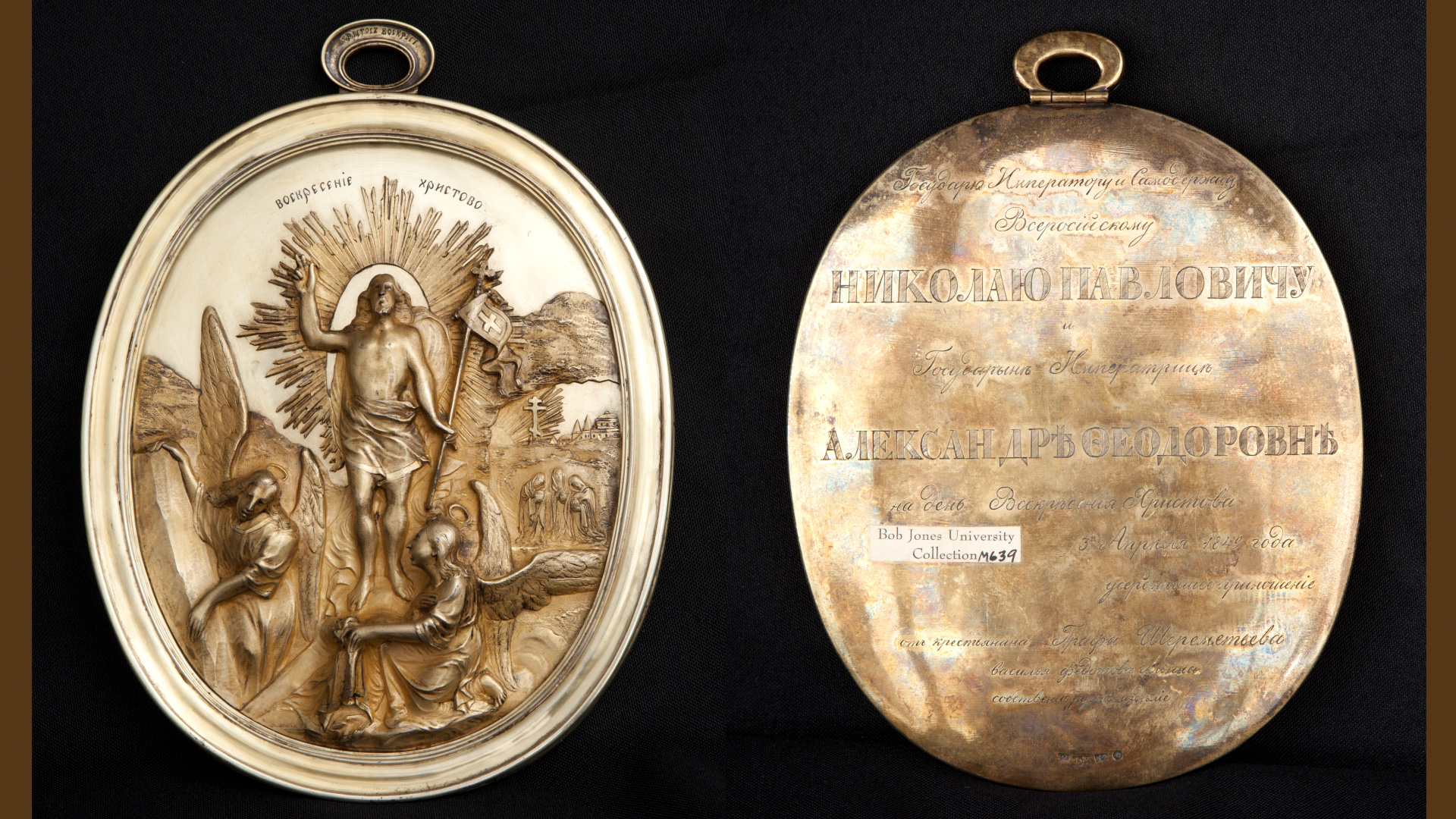
The Resurrection

Vasiliy Fedotovich Il’in and D. Tverskoy

Below the image, click play to listen.

Object of the Month: March 2019

The Resurrection

Gilt silver

Vasiliy Fedotovich  Il’in (active 1837–57), silver maker

D. Tverskoy (active 1834–50), assay master

St. Petersburg, 1849


For nearly 70 years, the Museum & Gallery has shared with communities at home and abroad its primary focus: a collection of European Old Master paintings ranging from the 14th–19th centuries. Yet, M&G is more than paintings. The Collection includes furniture, decorative arts, textiles, and objects of art as well as Middle-Eastern antiquities with examples from the reputed British Egyptologist, Sir Flinders Petrie.  Of special note and often overlooked, however, is the Russian collection, including icons from the 14th through early 20th centuries.

Unlike a Renaissance or Baroque painting of Western Europe idealizing the figures and blending realism and symbolism into the image, icons present an altogether different and somewhat mysterious approach to the same religious subjects. Frequently referred to as “otherworldly,” these meticulously executed images are rich in symbolism and create an awe and respect for the spiritual meaning of the depicted events and characters.  

In this example, the icon’s composition and naturalistic qualities reflect a Western treatment of the Resurrection, rather than the painted Orthodox versions. On its face is the inscription, Voskreseniye Christovo, meaning The Resurrection of Christ.  And, on the front hanger is inscribed: Christos Voskryes or Christ is Risen.

For its size of a mere 7 7/8″ x 5 5/16″, this beautiful gilt silver oval icon achieves unusual spatial depth. In the foreground is the resurrected Christ carrying the triumphal banner and two angels—one rolling the stone away from the tomb and the other holding the burial cloths. In the middle ground are the three Marys carrying the spices to the tomb on that first day of the week; and in the distance, St. Vladimir’s cross appearing in the rays of the morning sun next to the city of Jerusalem. 

In addition to the fine craftsmanship and sophisticated handling of the silver, the icon bears a historically significant inscription engraved on its reverse: To the Sovereign Emperor and Autocrat of all Russians, Nikolai Pavlovitch and the Sovereign Empress Alexandra Feodorovna, on the day of the Resurrection of Christ, April 3rd, 1849. This humble offering from the peasant of Count Sheremetiev, Vasiliy Fedotov Il’in, made by his own hand.

The icon’s inscription reveals that it was a gift to Tsar Nicholas I created by a serf-artist employed by the richest Russian landowner in the 19th century, Count Dmitri Sheremetev. Historical documents reveal that the count was attending a conference for Russian nobility in April 1849, and it was on this occasion that he presented the icon to the Romanov tsar for Easter.

At the bottom there is a hallmark of crossed anchors and a scepter, which means it was made in St. Petersburg. The number 84 denotes the Russian standard content of silver. There is also a documented hallmark for the maker: ФИ, transliterated as FI for the skillful silversmith Fedot Il’yin (active 1837–1857). He began as a serf for Sheremetev, but ultimately earned his freedom and owned his own workshop. He was a master craftsman for creating church accessories and the icon oklads and lampadas.

Historically, the Sheremetev family is recognized for its generous philanthropy, particularly for its contribution and promotion of art and culture in Russia by developing artists and founding and supporting theatres, orchestras, choirs, concert halls.  Dmitri, the patron of this icon, was the son of Count Nicholas Sheremetev who married his leading serf-actress Praskovia Ivanova Kovaleva, (her stage name was Zhemchugova). Dmitri’s mother died of tuberculosis 3 weeks after giving birth. Count Nicholas Sheremetev began a charitable institution—a shelter or hospital for the sick and homeless—in memory of his late wife. 

As heir to his father’s fortune, he inherited some 180,000 serfs and 15,000 square miles of land. Dmitri served in the military and later married Anna Sergeyevna Sheremeteva (1810-1849), lady-in-waiting to the Empress Alexandra Feodorovna.  Years following her death, he married again to Alexandra Melnikova Fosdick (1825-1874).  He devoted himself to philanthropic work like his father—investing in hospitals, churches, orphanages, and education. 

Erin R. Jones, Executive Director


Published in 2019