Commemorative Triptych
Oil on panel, inscribed: during the reign of Nicholas II in 1916, __ month, __ day
Moscow School, 20th century

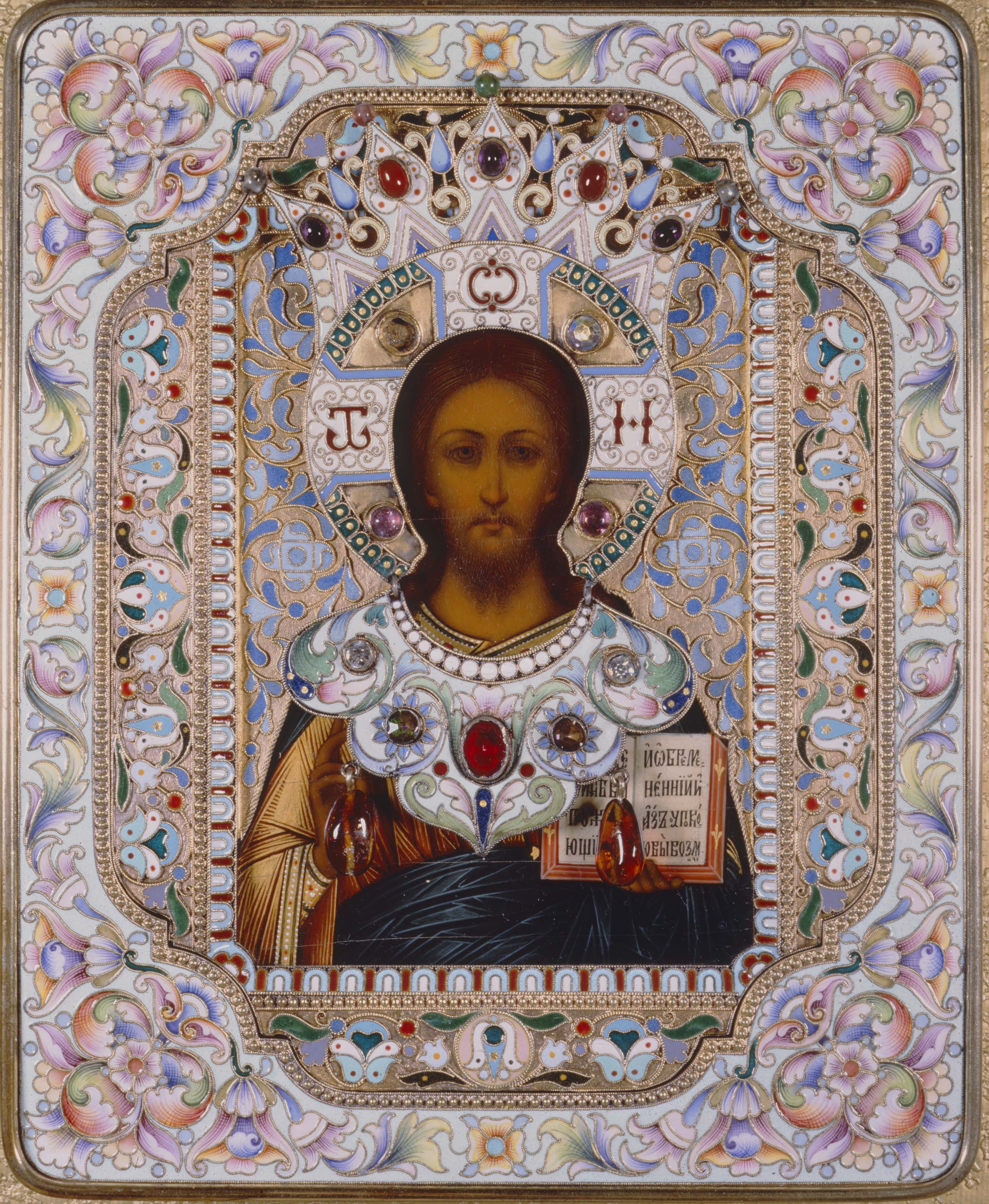
While building the foundations of an internationally important collection of European Old Master paintings in the 1950s, Dr. Bob Jones Jr. also intersected the Russian art trade in New York City with a series of fortuitous purchases of Russian icons, including this early 20th-century example.
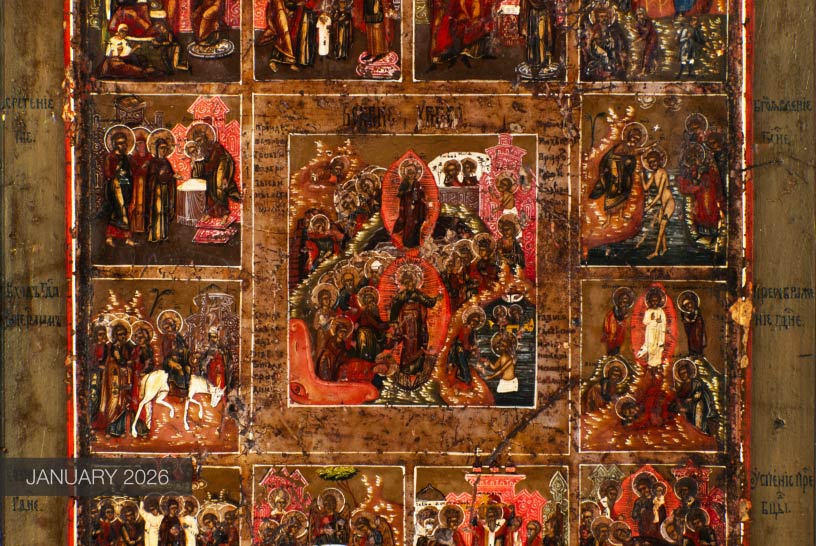
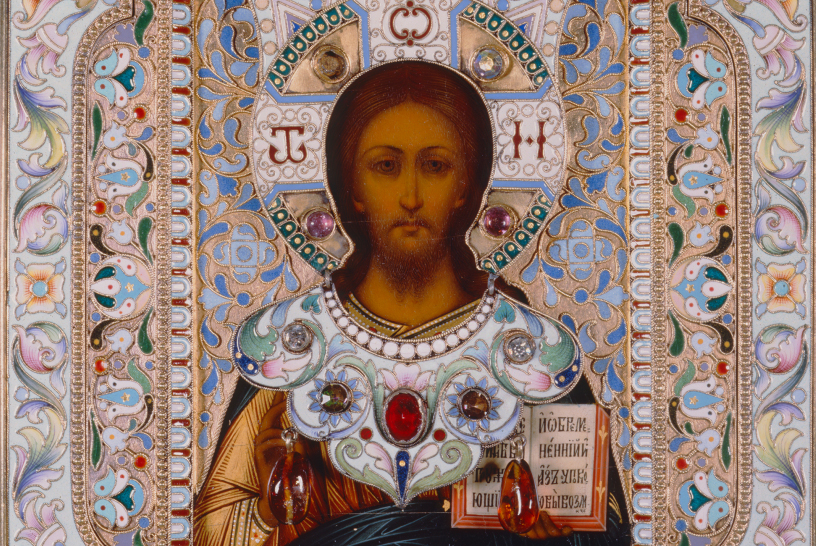
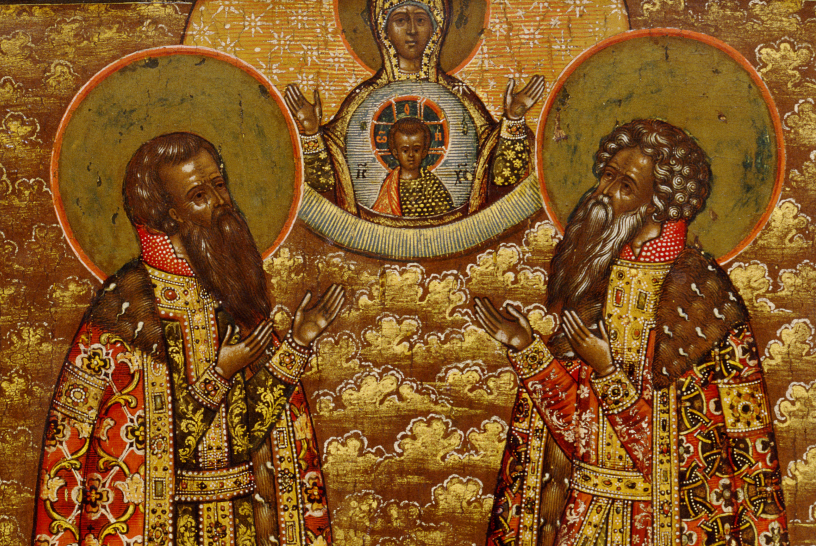
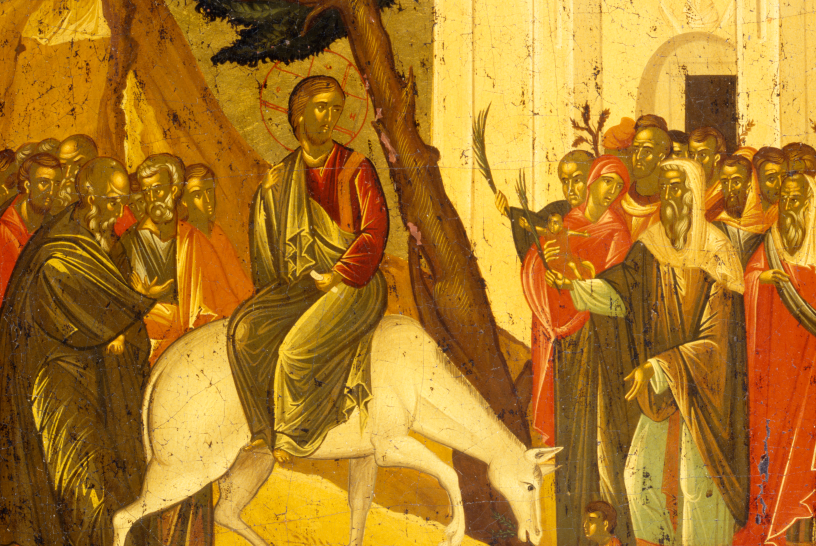
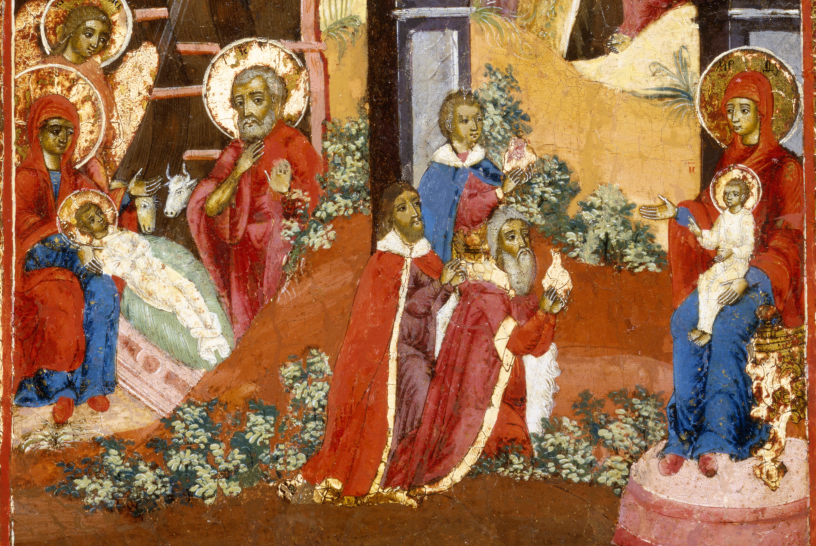
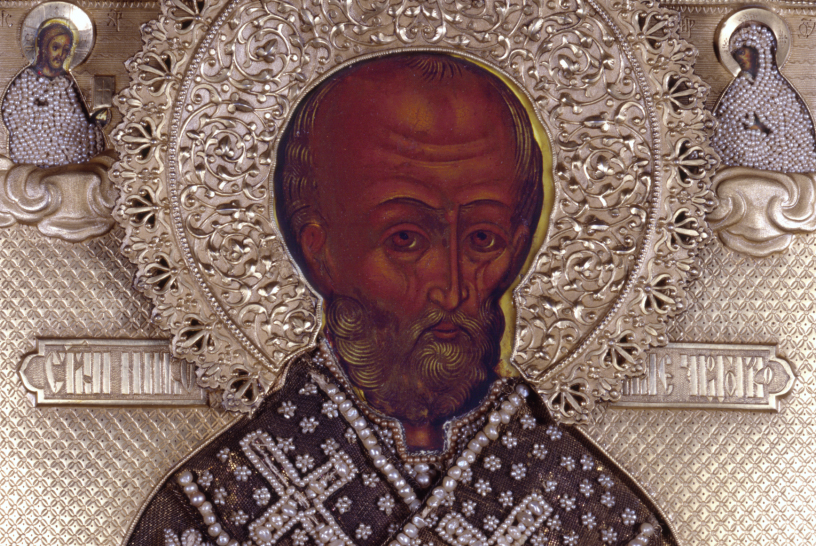
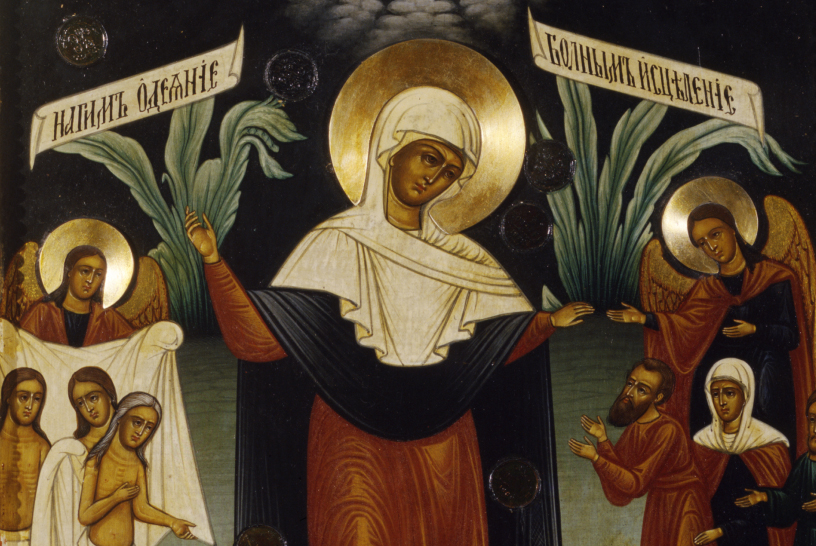
This incredibly brilliant and ornate iconostasis is indicative of the small screens used for private devotion in a family chapel or for travel. Unlike their larger church counterparts, these icons did not have the top patriarch tier, the lower “local saint” tier, or the royal doors. However, four of the traditional tiers are represented: the Trinity flanked by Michael the archangel and Gabriel, Christ the Pantocrator in the center with Mary on the left (His right) and John the Baptist on the right (His left), followed by rows of prophets and saints. When the doors are closed, the top forms the onion-shaped dome characteristic of Russian architecture.
In late 19th- and early 20th-century Russia, gift-giving and commemoration were a ubiquitous part of upper society tradition. As noted, the iconographic arrangement of this highly decorated triptych doesn’t follow the protocol of a standard or even a portable iconostasis. Instead, the icon’s purpose and origins are revealed through an intricate inscription* on the reverse, saying that it was made during the reign of Tsar Nicholas II in 1916, in commemoration of the war fought during 1914-1916. The first Rifle Regiment of His Majesty (personal guards to the Tsar, based in Tsarskoe Selo) commissioned it and listed the names of all of the ranking officials in the Regiment.
The icon was envisioned by the Priest Amfrosiy, who was chaplain of the Regiment at the village of Rudka-Scroda of Lomzha Province. It is likely that Amfrosiy had it sent to Tsar Nicholas II to commemorate the valiant efforts of his First Rifle Regiment. It was later placed in the Feodorovski Cathedral in Tsarskoe Selo, where Nicholas II and his family worshiped. The church, located near the family’s favorite residence, the Alexander Palace, included a private chapel with fifty personal icons of the tsar and also a burial crypt planned for Nicholas II and Alexandra.
In 1934 the Communist government ordered the cathedral closed and stripped it of its icons. It is likely that the Antikvariat (the Soviet agency that organized and sold art treasures outside of Russia), sold the icon to Armand Hammer shortly after this date. The paper label still attached to the reverse of the icon is from Hammer Galleries’ Exhibition of Russian Icons that took place in August 1937 in New York.
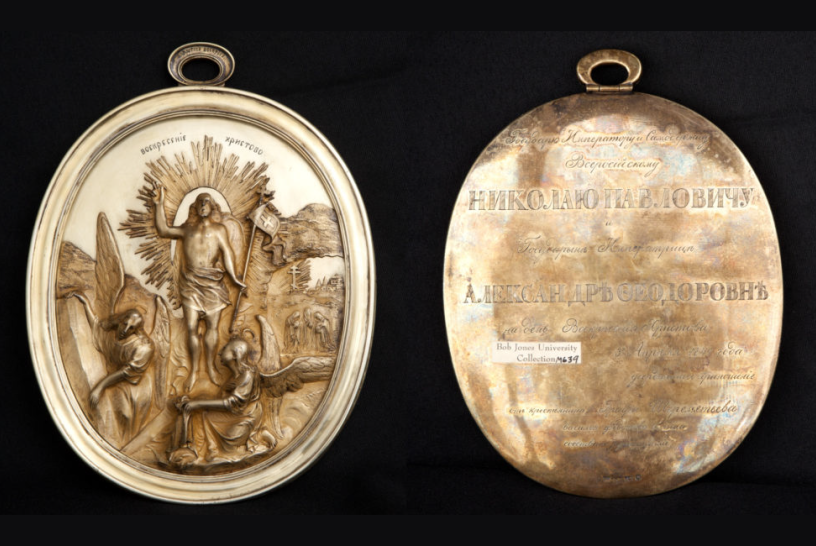
Additionally, the back of a folding icon often contains a circular emblem similar to this Commemorative Triptych. Symbols from the Passion of Christ are pictured. In the center is the Russian Orthodox cross with three cross beams (one slanted representing the spiritual position of the two thieves—one raised to heaven, the other sent to judgment), the spear, and the sponge on a long reed. The letters included are abbreviations for Jesus Christ, Son of God, Victor (or Conqueror), and Hill of Golgotha. The skull and bones are symbolic of Adam’s sin and death, which Christ (as the second Adam) overcame. Christ’s shed blood drops onto the skull, symbolizing His redemption of mankind.
M&G’s founder showed remarkable foresight in taking interest in collecting and displaying Russian art while at the same time assembling one of America’s great collections of Old Masters. It is perhaps the museum’s core focus on religious art that paved the way for these two very different artistic traditions to be presented together.
Excerpted and adapted by Erin R. Jones from Selected Masterworks from the Bob Jones University Museum & Gallery and Rublev to Fabergé: The Journey of Russian Art and Culture to America
*The full translation inscription says: “The Most Holy, the Source (Originator) of Life, Trinity, this icon was made during the reign of the Most Pious His Majesty Emperor Nicholas lI in 1916 (?) month (?) day, in memory of the war in 1914-1916, by the zeal of its participants: Major-General E. L. Levstrem, Colonel: K. I. Trishatniy, G. E. Knivlyakov?, N. A. Veryevkin, D. F. Baron Taube, Captain: G.A. Shesterikov, O. I. Pantyuhov, Second Captain: D. D. Lebedev, S.N. Shmidt, A. M. Glevatskiy, A.A. Ragosin, Lieutenant: V M. Bikov, V.V. Rudnev, M. A. Smirnov, A.G. Chubarok, N.V. Girshfeld, Adjutant-Major Lieutenant: N. N. Lieutenant: A. S. Kolosov, N.A. Petrov, A.A. Bashkirov, A. P. Derevitskiy. E.J. Bonch-Bogdanovskiy, Second- Lieutenant: I. V: Pokoevskiy, G. E Genyuk, Yu.V. Raykovskiy, 1st K.V. Raykovskiy, (II) Yu.A. Kovalskiy-de-Shmiden, A.A. Mozhayskiy, K. G. Rotkevich, M.A. Brzhezitskiy, G. N. Kirilin, V.Ya. Ratmirova, V.R. Reinhart, I. A. M?vskiy, G. K. Platonov, K. G. Mlodetskiy, Ensign : S. I. Syhotin, V.V. Foht, E. Ch. Dampel, V.V. Sabateli, A.V. Giryfeld, D.V. lpayyev, Head Doctor: P. I. Kozlovskiy, Doctors: A. N. Melikyanets, ch? A. F. Moscow rifle shooters, Lieb-Guard 1st Rifle His Majesty Regiment. This icon was envisioned by the Priest Amfrosiy, who was a Chaplain of the Regiment, at the village of Rudka-Scroda of Lomzha Province, at the Battlefield of the Regiment of the Acting Army”
Published 2026