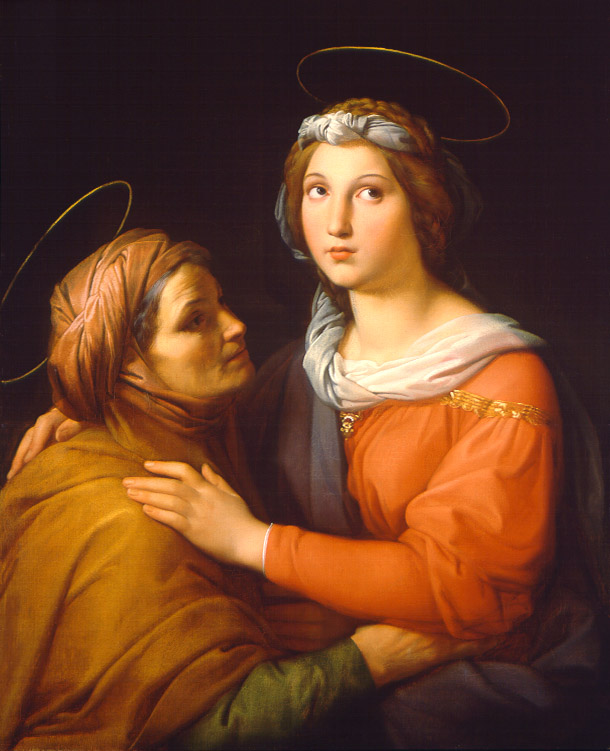
The Visitation
Johann Friedrich Overbeck
Below the image, click play to listen.
Johann Friedrich Overbeck
Below the image, click play to listen.
Benjamin West, P. R. A.
Below the image, click play to listen.
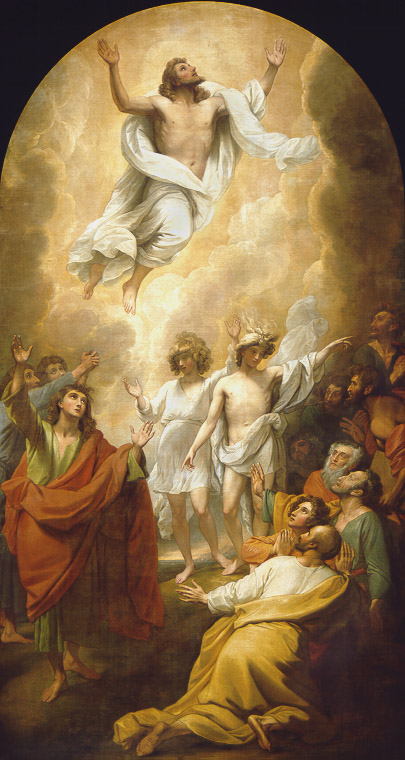
To learn more about the entire series to which this painting belongs, visit here.
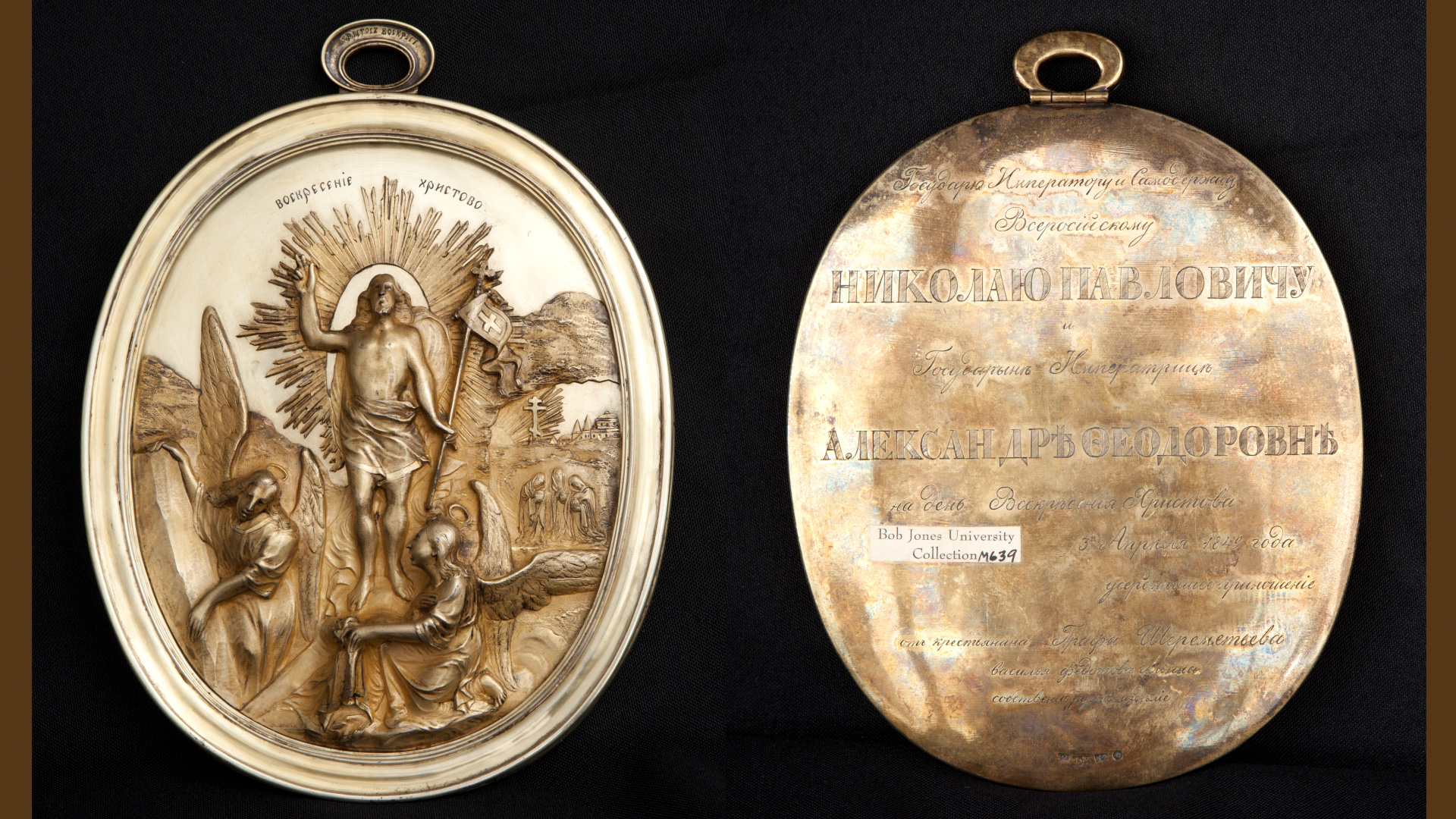
Gilt silver
St. Petersburg, 1849
For nearly 70 years, the Museum & Gallery has shared with communities at home and abroad its primary focus: a collection of European Old Master paintings ranging from the 14th–19th centuries. Yet, M&G is more than paintings. The Collection includes furniture, decorative arts, textiles, and objects of art as well as Middle-Eastern antiquities with examples from the reputed British Egyptologist, Sir Flinders Petrie. Of special note and often overlooked, however, is the Russian collection, including icons from the 14th through early 20th centuries.
Unlike a Renaissance or Baroque painting of Western Europe idealizing the figures and blending realism and symbolism into the image, icons present an altogether different and somewhat mysterious approach to the same religious subjects. Frequently referred to as “otherworldly,” these meticulously executed images are rich in symbolism and create an awe and respect for the spiritual meaning of the depicted events and characters.
In this example, the icon’s composition and naturalistic qualities reflect a Western treatment of the Resurrection, rather than the painted Orthodox versions. On its face is the inscription, Voskreseniye Christovo, meaning The Resurrection of Christ. And, on the front hanger is inscribed: Christos Voskryes or Christ is Risen.
For its size of a mere 7 7/8″ x 5 5/16″, this beautiful gilt silver oval icon achieves unusual spatial depth. In the foreground is the resurrected Christ carrying the triumphal banner and two angels—one rolling the stone away from the tomb and the other holding the burial cloths. In the middle ground are the three Marys carrying the spices to the tomb on that first day of the week; and in the distance, St. Vladimir’s cross appearing in the rays of the morning sun next to the city of Jerusalem.
In addition to the fine craftsmanship and sophisticated handling of the silver, the icon bears a historically significant inscription engraved on its reverse: To the Sovereign Emperor and Autocrat of all Russians, Nikolai Pavlovitch and the Sovereign Empress Alexandra Feodorovna, on the day of the Resurrection of Christ, April 3rd, 1849. This humble offering from the peasant of Count Sheremetiev, Vasiliy Fedotov Il’in, made by his own hand.
The icon’s inscription reveals that it was a gift to Tsar Nicholas I created by a serf-artist employed by the richest Russian landowner in the 19th century, Count Dmitri Sheremetev. Historical documents reveal that the count was attending a conference for Russian nobility in April 1849, and it was on this occasion that he presented the icon to the Romanov tsar for Easter.
At the bottom there is a hallmark of crossed anchors and a scepter, which means it was made in St. Petersburg. The number 84 denotes the Russian standard content of silver. There is also a documented hallmark for the maker: ФИ, transliterated as FI for the skillful silversmith Fedot Il’yin (active 1837–1857). He began as a serf for Sheremetev, but ultimately earned his freedom and owned his own workshop. He was a master craftsman for creating church accessories and the icon oklads and lampadas.
Historically, the Sheremetev family is recognized for its generous philanthropy, particularly for its contribution and promotion of art and culture in Russia by developing artists and founding and supporting theatres, orchestras, choirs, concert halls. Dmitri, the patron of this icon, was the son of Count Nicholas Sheremetev who married his leading serf-actress Praskovia Ivanova Kovaleva, (her stage name was Zhemchugova). Dmitri’s mother died of tuberculosis 3 weeks after giving birth. Count Nicholas Sheremetev began a charitable institution—a shelter or hospital for the sick and homeless—in memory of his late wife.
As heir to his father’s fortune, he inherited some 180,000 serfs and 15,000 square miles of land. Dmitri served in the military and later married Anna Sergeyevna Sheremeteva (1810-1849), lady-in-waiting to the Empress Alexandra Feodorovna. Years following her death, he married again to Alexandra Melnikova Fosdick (1825-1874). He devoted himself to philanthropic work like his father—investing in hospitals, churches, orphanages, and education.
Erin R. Jones, Executive Director
Published in 2019
Oil on canvas
German, 1789-1869
Friedrich Overbeck began art instruction at age 15 under the tutelage of Joseph Nikolaus Peroux. He then learned from artists in Hamburg and through close study of Italian Renaissance works on display. The move to Vienna in 1806 enabled him to study at the Akademie and learn the principles of drawing in the academic tradition. This traditional approach, however, led him to reject those principles and adopt the teachings of Eberhard Wächter, particularly in the area of moral tone. One of the fascinating concepts about the sister arts (writing, drawing, music, and sculpture) is that principles from one art often apply to another. So, the idea of moral tone, usually applied to literature, is quite appropriate to discuss in the area of painting. Overbeck infused his religious beliefs into his beginning work in oils, an emphasis which became a hallmark of his work, especially following his 1813 conversion to Roman Catholicism. His family heritage was religious as well; the three previous generations of men in his family were ministers. It was Friedrich who broke with the family calling.
Although, it would be wrong to say that he abandoned the ministry; his works “preach” in merely another medium. In 1809 he and friends began the group Brotherhood of St. Luke, also known as the Nazarenes. Living in an abandoned monastery and adopting a biblical style of hair and dress led to “Nazarene” becoming a derogatory term. The Brotherhood’s motivation to reject the sensuality and artistic virtuosity of artists beginning in the sixteenth century was accompanied by a belief that all art should serve a moral purpose. Their work emphasizes Christian symbolism and bright clear colors which are hallmarks of the later Pre-Raphaelite Brotherhood members such as William Holman Hunt and Frederic James Shields.
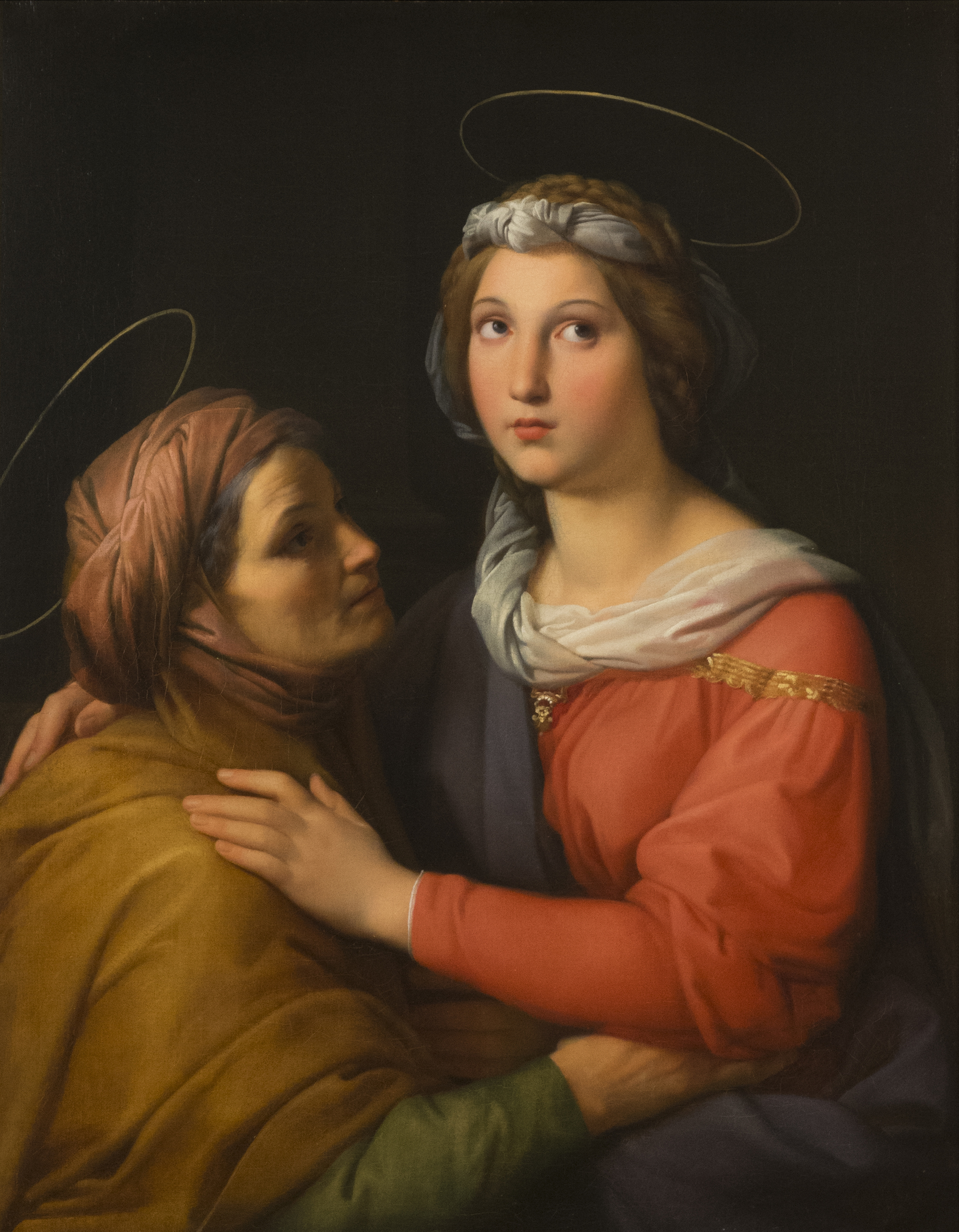
While Overbeck embraced the art before Raphael, he also admired Raphael’s style. A look at The Visitation drawn c. 1517 by Raphael (in the Prado since 1837), suggests that Overbeck may have seen the master’s composition. The headdress of Elizabeth is strikingly similar to that in Overbeck’s painting as is the hairstyle of the Virgin. But there are purposeful differences as well. Raphael’s Virgin has no ornamentation on her dress; however, Overbeck chooses to give Mary a gold band of ribbon or lace, contrasting her gown with the matronly garb of her elderly cousin, Elizabeth, and showing her superiority.
Overbeck also indicates Mary’s elevated position as the mother of the Lord Jesus Christ through the physical positioning of the figures. Though Elizabeth is heavily pregnant at the time of Mary’s visit, she is positioned kneeling toward her younger relative. Luke 1:39-56 details the interaction between the women. Filled with the Holy Spirit, Elizabeth proclaims a three-fold blessing on Mary: she is blessed as a chosen woman, she is carrying the blessing of mankind’s Savior, and she is blessed for her faith in the promise of the Lord through Gabriel. Then Luke records Mary’s praise of the Lord, the Magnificat. Appropriately enough, Elizabeth gazes into the distance while Mary looks heavenward in a sign of her understanding of the privilege and position she has been accorded by God. John’s movement in Elizabeth’s womb at the arrival of his Lord is undoubtedly one of those things that Mary will keep and “ponder in her heart.”
In another work, Overbeck features Mary and her cousin, Mary and Elizabeth with Jesus and John the Baptist. The title indicates the characters in the painting; yet the accepted iconography and religious symbolism of the time provides clear and immediate identification. Mary is found in her blue robe holding her missal. John the Baptist wears his clothing of camel’s hair and grasps a sheep, signifying his task of proclaiming that his cousin Christ is the “Lamb of God.” Christ, sitting on the lamb, could not be more closely identified as that “Lamb.” In addition, He holds John’s cross-shaped staff indicating the manner in which the “Lamb of God” will be sacrificed for the sins of the world. The background of this painting is more reminiscent of Raphael’s work with its Italian landscape; such scenery suits this family portrait. However, Mary’s Magnificat focuses on the Lord God, so this portrait-like composition of The Visitation directs the viewer’s attention to her message by eliminating a distracting setting.
Overbeck’s biographer, Joseph Beavington Atkinson (1822-1886) records the artist’s mission in life: “Art to me is as a harp of David, whereupon I would desire that psalms should at all times be sounded to the praise of the Lord.” The sacred mood and expression of Christian piety, the beautiful colors, and the clean lines found in The Visitation fulfill his mission well.
Dr. Karen Rowe, M&G Board Member and Volunteer Membership Coordinator
Suggested Reading: Overbeck by Joseph Beavington Atkinson
Published in 2018
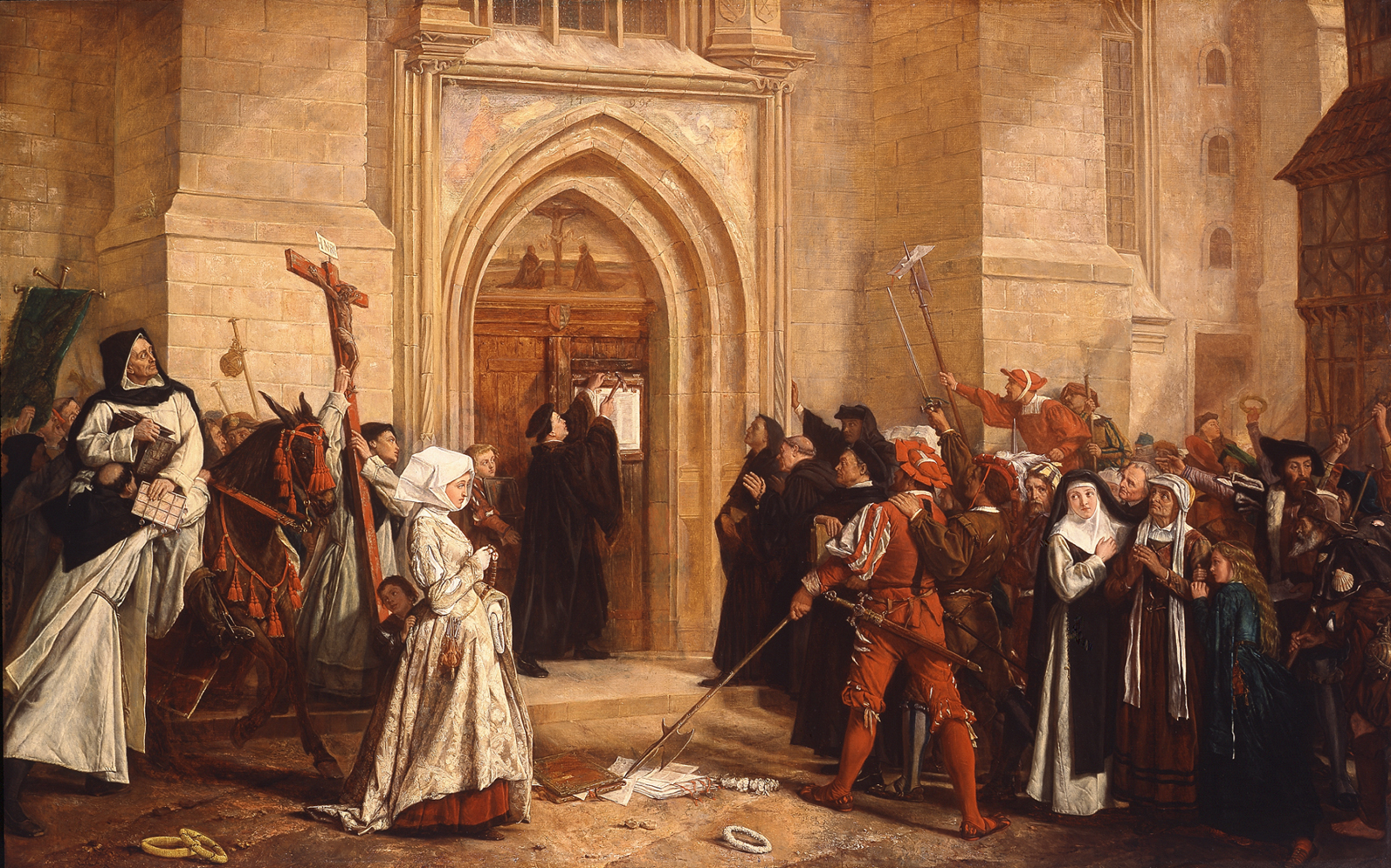
Wittenberg, October 31, 1517
Eyre Crowe, A. R. A.
Below the image, click play to listen.
The Ascension
Gustave Doré
Below the image, click play to listen.
Oil on canvas, Signed and dated, Félix Leullier, 1880
French, 1811–1882
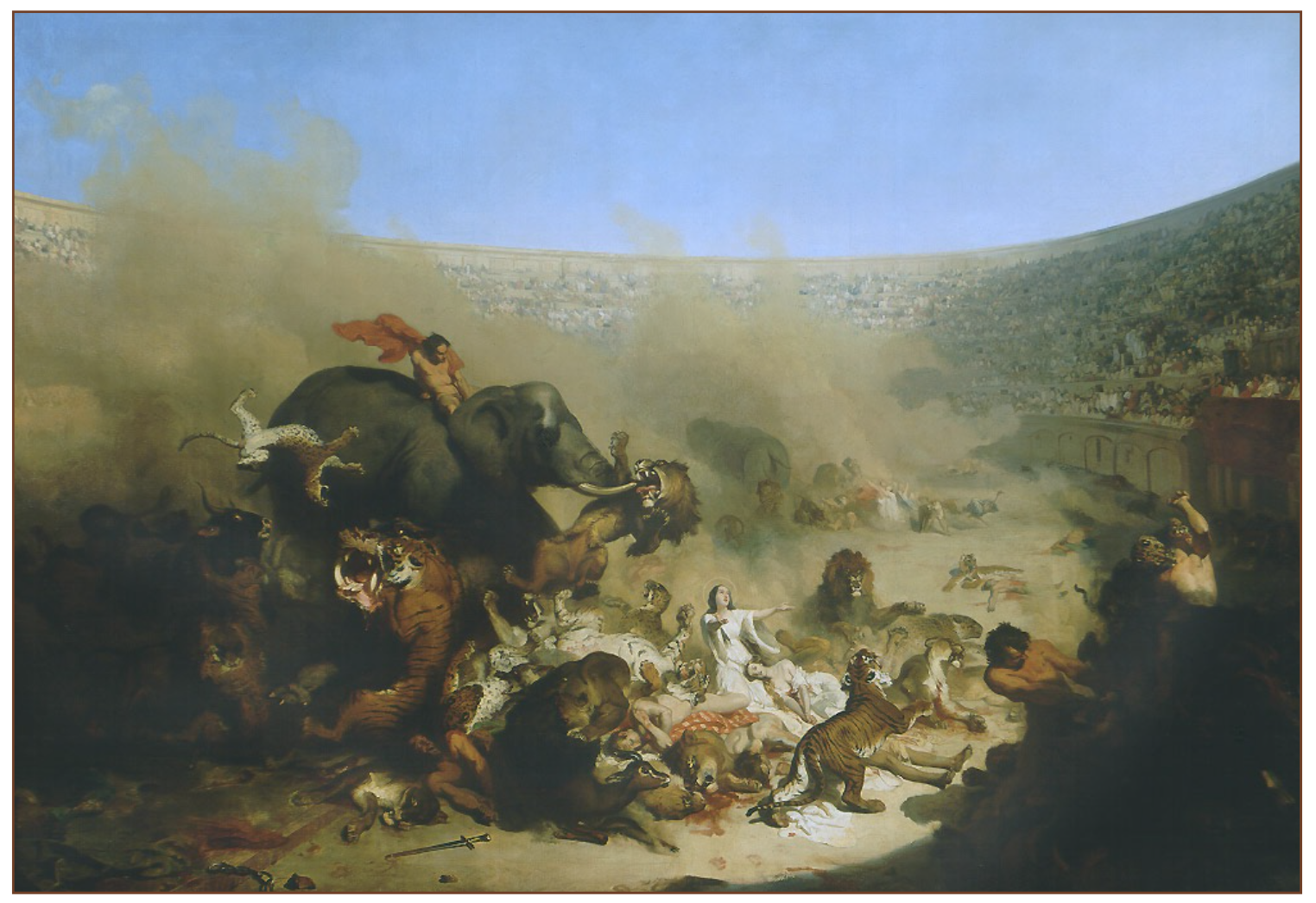
In this arresting example of the nineteenth-century Romantic style, Felix Louis Leullier uses all the forces of paint and position to create a gruesome depiction of one of the most famous martyrdoms of the Christian church. Little known outside of France, Felix trained with Antoine-Jean Gros, renowned for his depictions of some of Napoleon’s famous battles: Battle of Arcole, Napoléon on the Battlefield of Eylau, and Battle of Abukir. Gros leaves little to the imagination in the spheres of conflict and conquest, so it is no wonder that his student, Felix, would choose to depict a martyrdom in a context resembling the twisted forms often found on a battlefield.
The painting’s setting is the Roman Amphitheatre in Carthage, the North African center of Christianity in the early centuries following Christ’s death and resurrection; there is little more than an outline remaining today of the prominent structure that seated 30,000. Although Felix most likely did not travel to that part of the world, he could have easily participated in a Grand Tour, a customary excursion in the 18th and 19th centuries for men coming of age, to see and learn from the culture and histories of antiquity. Such a broadening and experiential trip included significant time in Rome, where the Colosseum was a chief point of interest and which is very similar to Carthage’s own great amphitheater. The combined influence of travel and exposure to prominent depictions like Granet’s Interior View of the Colosseum in Rome, 1804 and Towne’s The Colosseum, 1781, Leullier opts to create only a faint representation of an outdoor arena.
On March 7, 203 AD, under the rule of the Roman emperor, Septimius Severus, the noblewoman Vibia Perpetua, was executed with her handmaid, Felicitas, and fellow catechumens, Revocatus, Saturninus, and Secundulus. Just a few years earlier in 197 AD in his treatise Apologeticus, Tertullian had posited that “the blood of the martyrs is the seed of the church.” As providence would have it, Tertullian himself was eyewitness and later chronicler to the gripping event portrayed in this work.
In addition to Tertullian’s account and Perpetua’s own prison diary, Passio Perpetuae et Felicitatis, in which she captures much of the detail up until the hour of her entrance into the arena, many attempts to present the event have been created in various media formats. It is contained in older volumes like Foxe’s Book of Martyrs (1563), as well as in more recent accounts like Thomas J. Heffernan’s The Passion of Perpetua and Felicity (2012). It is visible in paintings, drawings, mosaics, stained glass and illuminated manuscripts like Menologion of Basil II; and it has been presented in investigative journalism in the PBS Frontline series, From Jesus to Christ (1998).
Leullier’s visual rendering is indeed grand both in presentation and size, measuring nearly seven feet high by nine feet wide. Though literary works relate that Perpetua and Felicitas were martyred separately from the men, Leullier deviates from the historical account and instead depicts the entire company—the martyrs, the men that assaulted them, and the many animals that mauled them. By placing the massacre in the forefront of the work, the purity and testimony of these Christians’ story cannot be ignored.
Bonnie Merkle, M&G Database Manager and Docent
Published in 2018
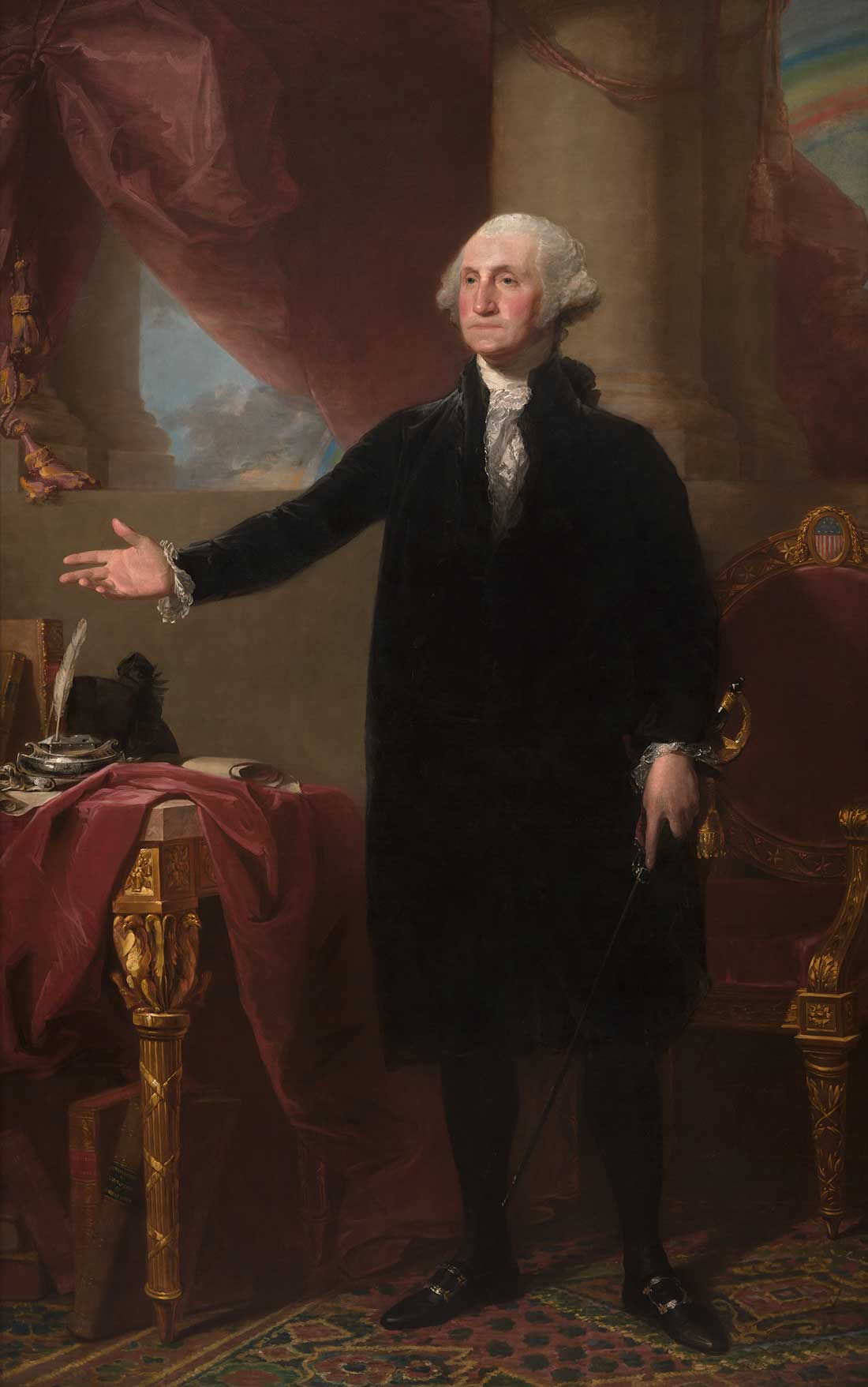
George Washington (Lansdowne portrait) 1796
Gilbert Stuart
Below the image, click play to listen.
Edward Matthew Ward, R. A.
Below the image, click play to listen.
Oil on canvas, 1883
French, 1832–1883
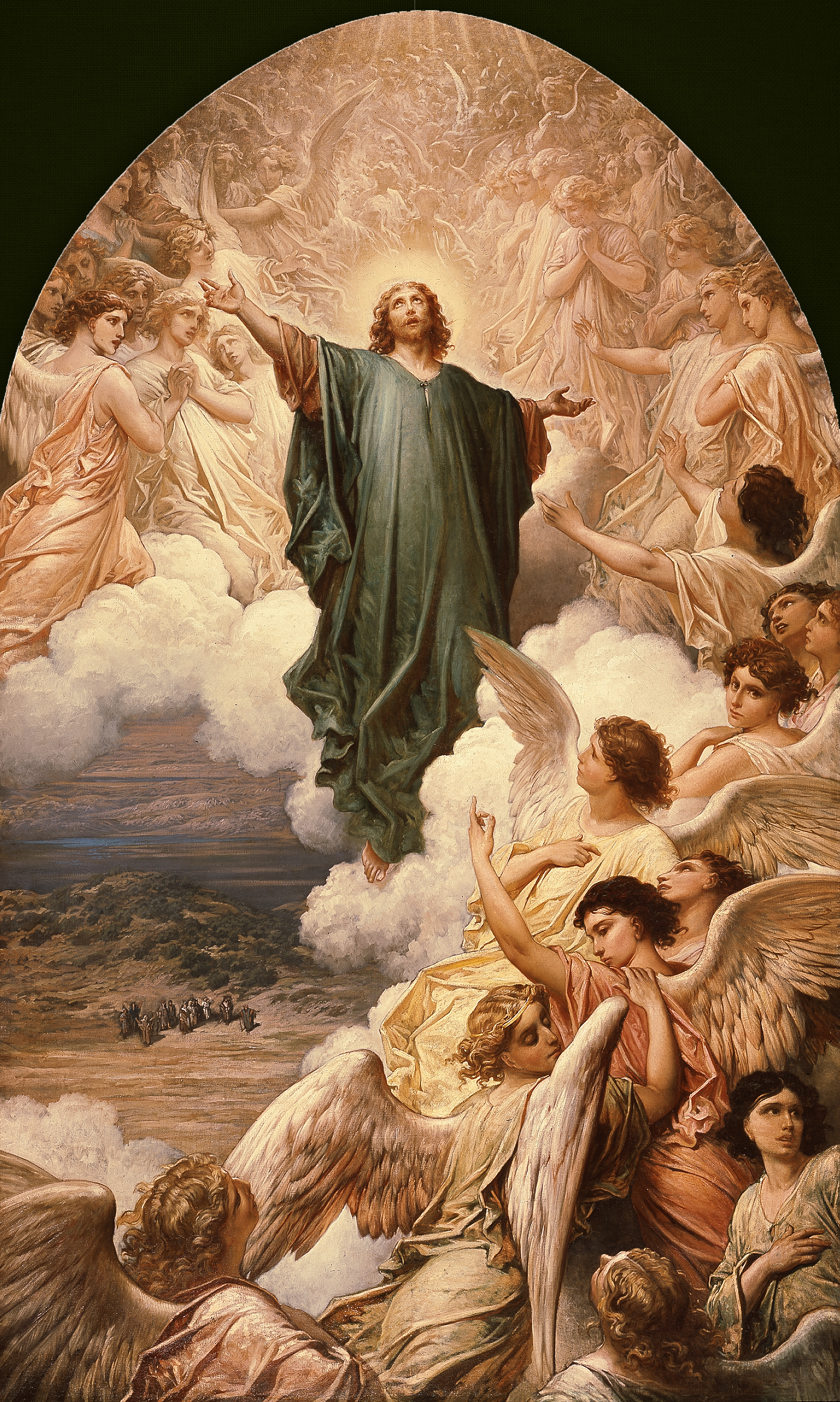
Louis Auguste Gustave Doré (1832-1883) is justly known as the greatest illustrator ever. His genius was recognized when he was a child, and his photographic memory allowed him to include minor details often overlooked by others.
He began his prolific professional career at the age of 15 as an illustrator for the humorous magazine Journal pour Rire. During his relatively short life, he produced at least 8,000 wood engravings, 1,000 lithographs, 700 zinc engravings, 100 steel engravings, 50 etchings, 400 oil paintings, 500 watercolors, 800 mixed-media sketches, and 30 major works of sculpture.
While many admire Doré’s work, few people actually recognize his art, even having grown up seeing his pictures. His New and Old Testament illustrations became the most widely used and familiar images in twentieth-century Bible literature. He also created several large series of engravings for classics including The Rime of the Ancient Mariner, Don Quixote, Paradise Lost, Perrault’s Fairy Tales, The Divine Comedy and more.
Historically, illustrators have received little recognition for their artistic careers compared to their “fine art” counterparts. Doré was equally productive in creating oil paintings and sculpture, and his greatest ambition was to be respected primarily for his painting career; however, he is best remembered as an illustrator.
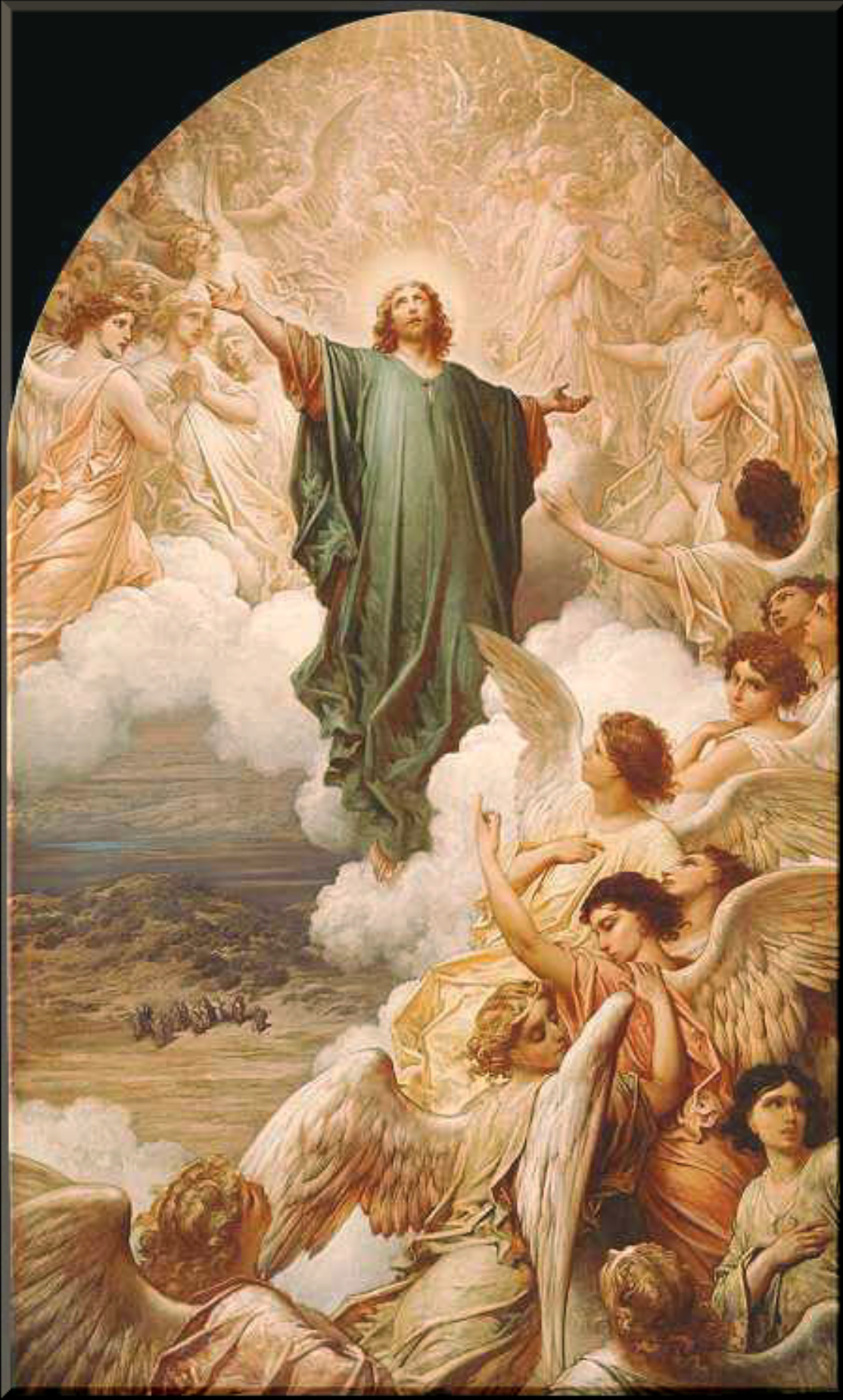
M&G’s Collection has two of his most important religious paintings—The Ascension and Christ Leaving the Praetorium, both completed in 1883.
As is typical of many artists, Doré created multiple versions of his works. His first version of The Ascension was completed in 1879 and measures almost twice the size of M&G’s painting, which is an imposing 11’ 11” tall by 7’ 8” wide! The original Ascension hung with other religious works in the German Gallery of London (later called the Doré Gallery) where the great preacher Charles Haddon Spurgeon frequented and encouraged his congregation to visit.
Sketches that Doré made while riding the newly invented hot-air balloon with his photographer friend, Felix Nadar, probably inspired The Ascension’s aerial perspective—the viewer is on the plane of the ascending Christ with the disciples small and distant standing on the ground. The rich greens and golds in Doré’s thick brushstrokes create excitement and energy at the end of Christ’s earthly ministry and the beginning of His heavenly role. The angels’ response in Acts 1:11 voices the painting’s story, “Ye men of Galilee, why stand ye gazing up into heaven? This same Jesus which is taken up from you into heaven, shall so come in like manner as ye have seen him go into heaven.”
John Good, Docent and Security Manager
Erin R. Jones, Executive Director
Published in 2018
M&G at BOB JONES UNIVERSITY; 1700 Wade Hampton Blvd - Greenville, SC 29614
