The Birth of St. John the Baptist
Unknown Greek, 1884
Below the image, click play to listen.
Tempera on panel
18th century
Russian icons have been part of M&G’s collection since our inaugural opening in 1951. Our founder, Dr. Bob Jones Jr., collected these uniquely symbolic works along with the Old Masters throughout the decades, including this interesting panel acquired in 1996—the year before his passing.
The central scene is surrounded by twelve smaller scenes identified by inscriptions and portraying the twelve major ecclesiastical feasts of the Eastern Orthodox Church, which are celebrated throughout the year. This type of icon is referred to as a calendar icon—a suitable focus as we turn the page on the New Year and a year in which M&G celebrates our 75th anniversary.
An image like this is read from left to right. Beginning with the top row (left corner), the illustrated events are:
Finally, the centerpiece features the victorious, resurrected Christ, which is celebrated on Easter Sunday. All of the other feasts lead up to or follow this great event. Additionally, the central image includes a number of elements from the Harrowing of Hell as described in the apocryphal book of Nicodemus (part II).
Observe the incredible amount of detail crowded into this central scene! Just below the risen Christ, He is shown again as standing triumphant over Hell (represented here as the realm of the dead) with the broken gates underfoot. On the left, He welcomes Adam and Eve and other Old Testament saints in a procession of people exiting the red mouth of Hell (lower left with a few visible teeth) toward the entrance of Paradise on the top right. To the right of Christ are Abel (murdered by Cain), Kings David and Solomon, and John the Baptist led by the good thief crucified with Christ, who is showing his cross to Enoch and Elijah as justification for his entrance into Paradise.
The lower right corner pictures the Biblical narrative of Jesus walking on the water to the disciples in the boat and Peter sinking after his failed attempt to stride the waves. On the top left, Peter peers into the empty tomb discovering the burial garments. Just below him are the angels led by Michael the archangel helping protect the procession of saints to Paradise.
Like the Western European audiences who viewed Old Master paintings, so the Byzantine and later Greeks and Russians were largely illiterate, relying on the pictures at church for scriptural understanding and church teachings. An icon like this one would have been made personally for the home of the devout. In a traditional Russian home, families would place their icons on a special shelf in a corner, known as the “beautiful corner.” By including an icon of the annual feasts in the display, every day would be lived in light of Christ’s victory over sin, Satan, and death.
Erin R. Jones, M&G Executive Director
Published 2026
The Old Master Painting Collection
The Museum & Gallery’s Old Master painting collection provides a rare viewer experience outside European cities and metropolitan areas with beautiful masterworks by recognized artists and their students—all of which are aesthetically exhibited with period furniture, sculpture, and tapestries to lend a period ambiance to the galleries and give patrons a panoramic view of ages past. Of special note, M&G’s baroque paintings represent some of the most important artists and their works in the country.
The Collection is one of the largest and most interesting collections of European Old Master paintings in America. These works of art from the 14th through the 19th centuries beautifully trace the religious, artistic, and cultural history of Western Europe. Included are important works of many major artists such as Vannuccio, Botticelli, Cranach, Gerard David, Rubens, van Dyck, Reni, Domenichino, Guercino, Murillo, Ribera, Honthorst, and Doré. For a glimpse, view this virtual tour.
Patrons can also enjoy M&G’s Bowen Collection of Antiquities with artifacts that span 37 centuries and represent every day life from ancient Egyptian, Roman, and Hebrew cultures; and the Benjamin West Collection, a series of paintings housed in the War Memorial Chapel (on the campus of Bob Jones University).
M&G’s Russian Icon Collection, which dates from the 14th through 20th centuries and includes several icons once owned by members of the Romanov family, the last tsars of Russia.
While not all of the collections are available online, we continue to add more monthly. You can see some of the individual works and objects through articles, short video clips, and audio stops. OR view the variety of Collection objects currently available online here.
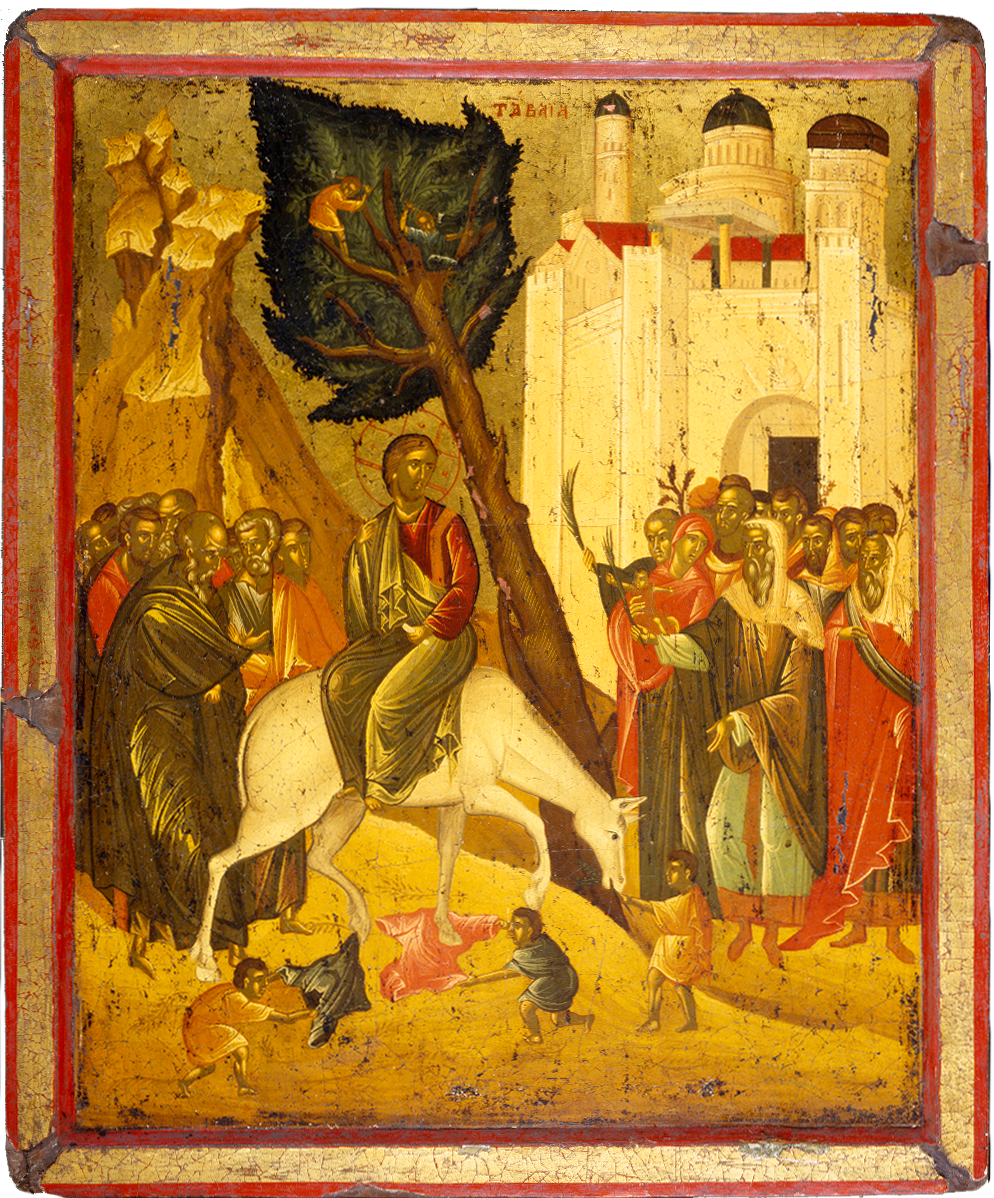
M&G’s collection of icons (about 50) presents the history of icon painting from the 14th through the early 20th centuries. Various icons represent the Novgorod School, the Suzdal and Moscow Schools (including the followers of Rublev), and the work of the Stroganov family.
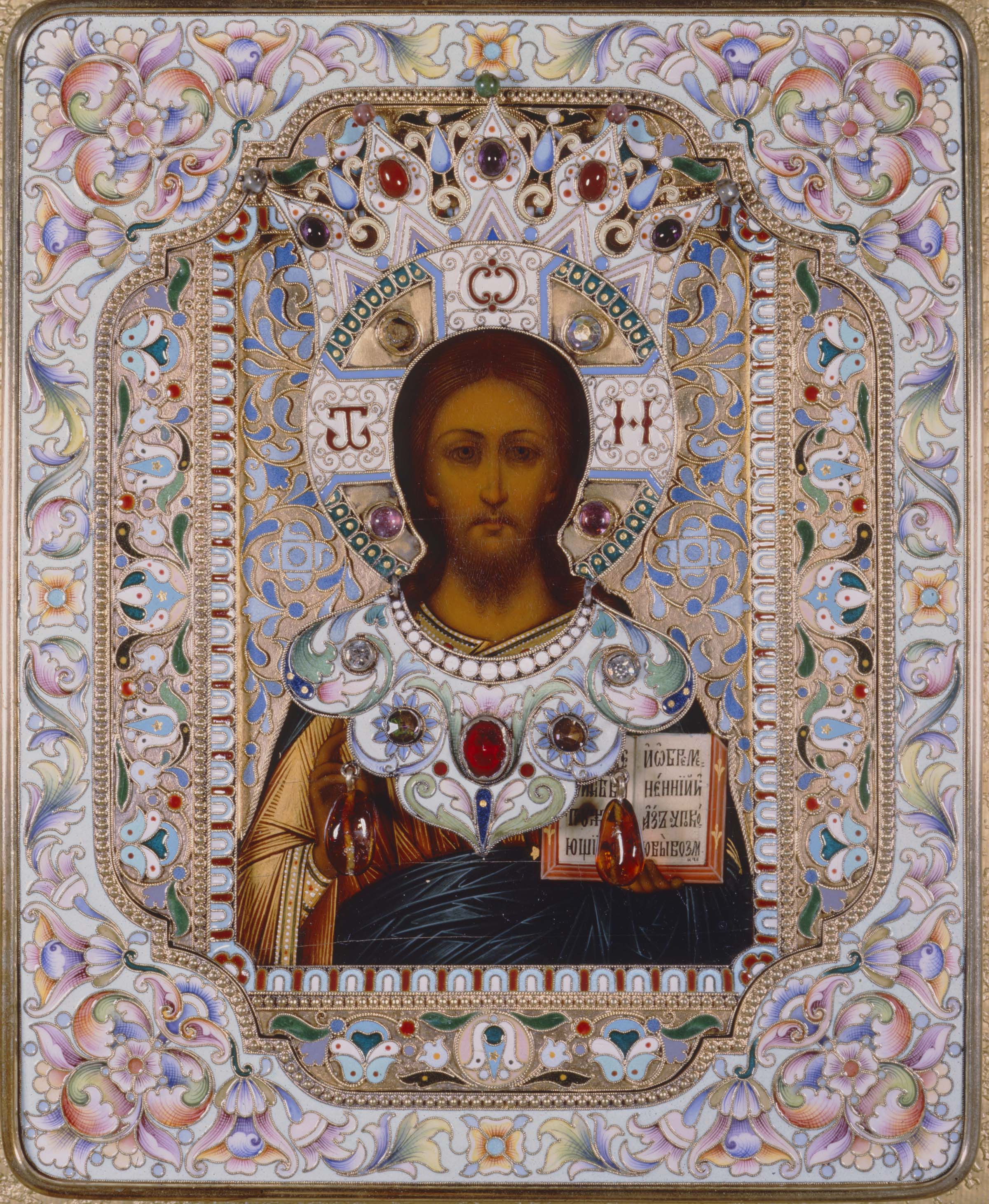
While some icons lack their protective covering, others still have their oklad—some simple and understated and others highly decorated with seed pearls, enamel, semi-precious stones, and filigree.
Many people are familiar with the Fabergé firm; however a number of other jewelry firms produced objects of the same quality for the royal family including Pavel Ovchinnikov (image on left), who earned the privilege of using the Imperial seal: the Romanov double-headed eagles.
A few of the icons in the collection come from Greece including a beautiful and intricate carving of The Annunciation in boxwood by an artisan monk from Mount Athos. Of special note are twenty-two icons with a provenance linked to members of the Romanov family—the last of the Russian Tsars.
Sign up here to receive M&G’s monthly update and collection news!
We can speak for your retirement group, civic club, church fellowship, or book club. Contact us here or at 864-770-1331.
Make a Gift to M&G to help our current work and future plans.
M&G at BOB JONES UNIVERSITY; 1700 Wade Hampton Blvd - Greenville, SC 29614