This intriguing painting of Peter’s martyrdom highlights the Northern painters’ penchant for fantastic backgrounds.
Tag Archives: 1500s
Marietta Robusti’s Allegory of Wisdom is an excellent example of how Renaissance artists used both Christian and mythological iconography to explore a theme.
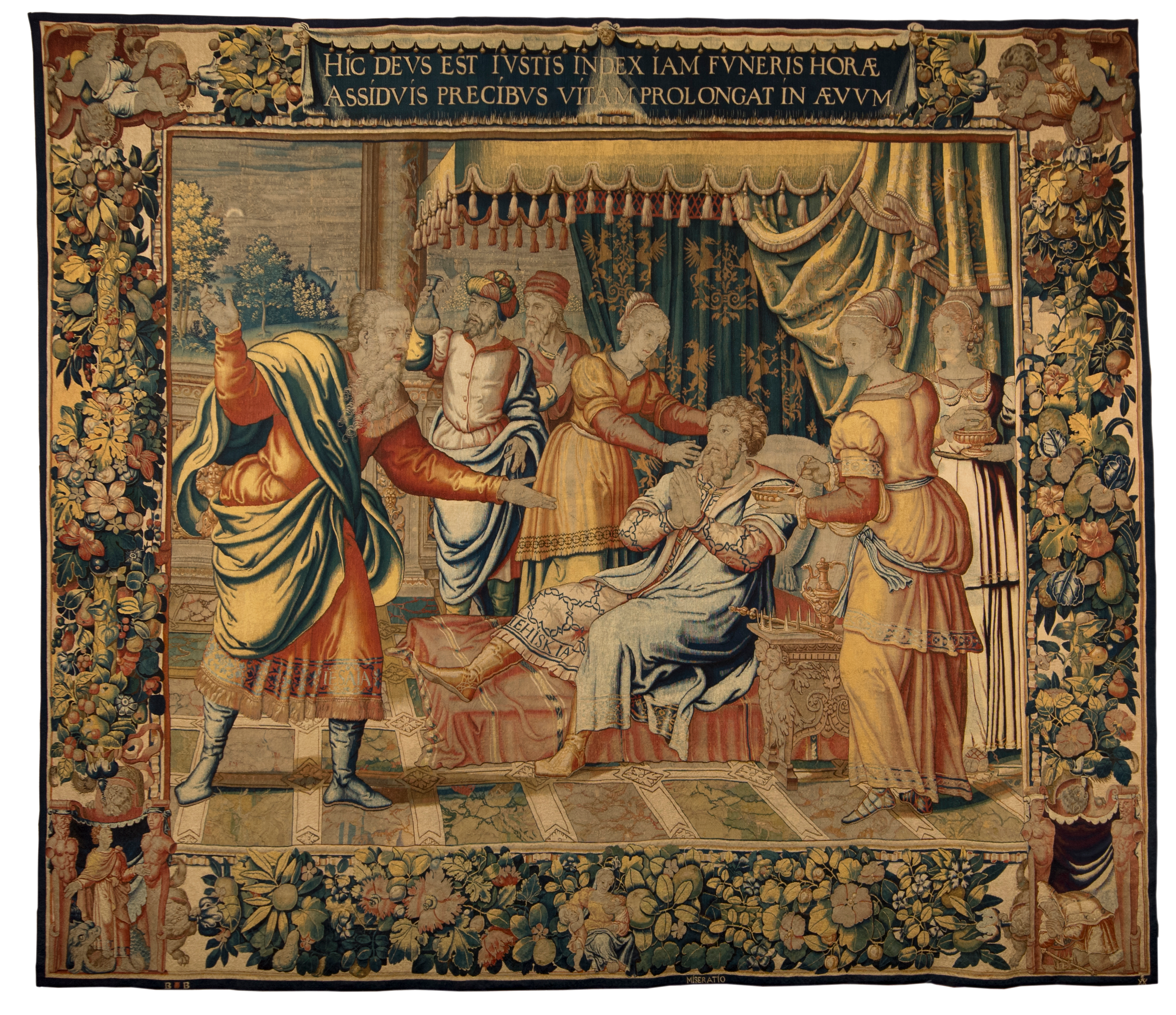
The Life of Hezekiah Is Prolonged Fifteen Years
Weaver of the Hezekiah Series
Brussels, c. 1530
Below the image, click play to listen.
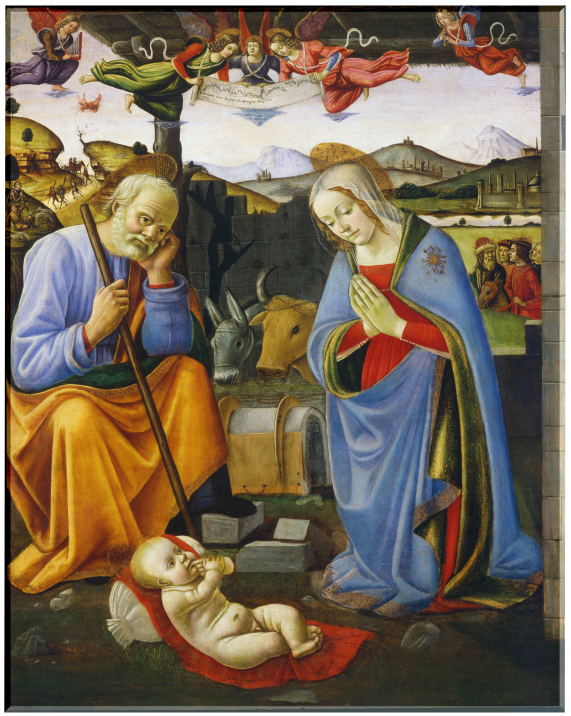
The Nativity
Master of the Borghese Tondo
Below the image, click play to listen.
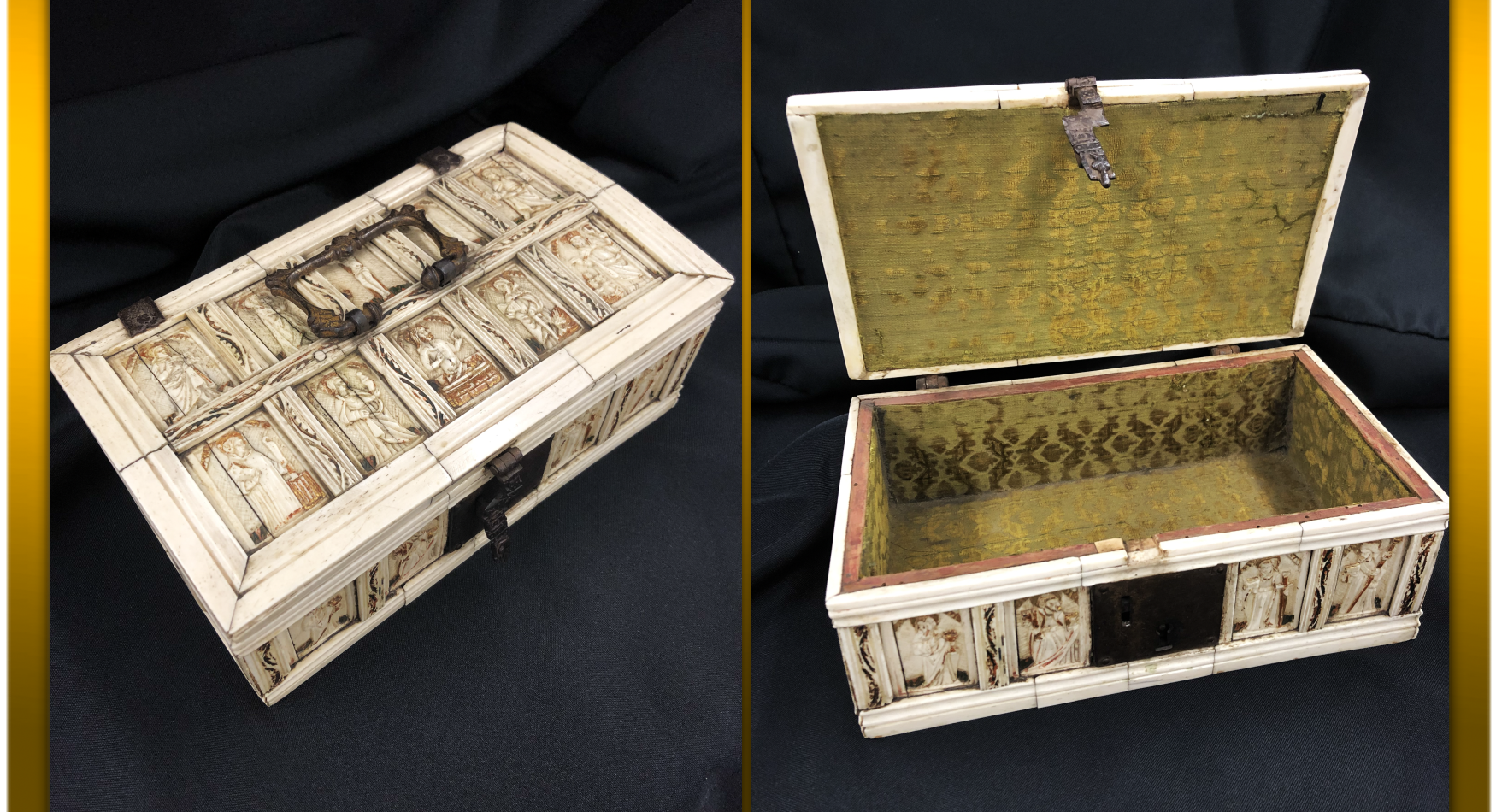
Casket
Unknown Flemish, 15th century
Below the image, click play to listen.
Praying Hands
Albrecht Dürer
Below the image, click play to listen.

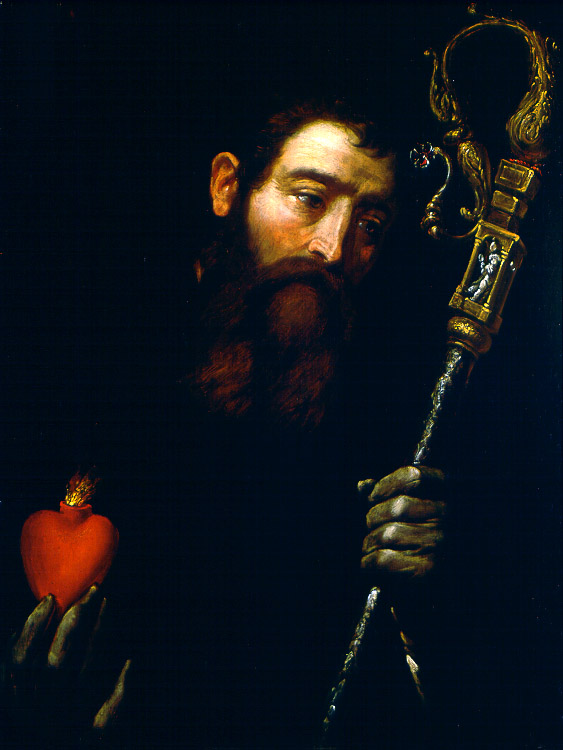
St. Augustine
Gaspar de Crayer
Below the image, click play to listen.
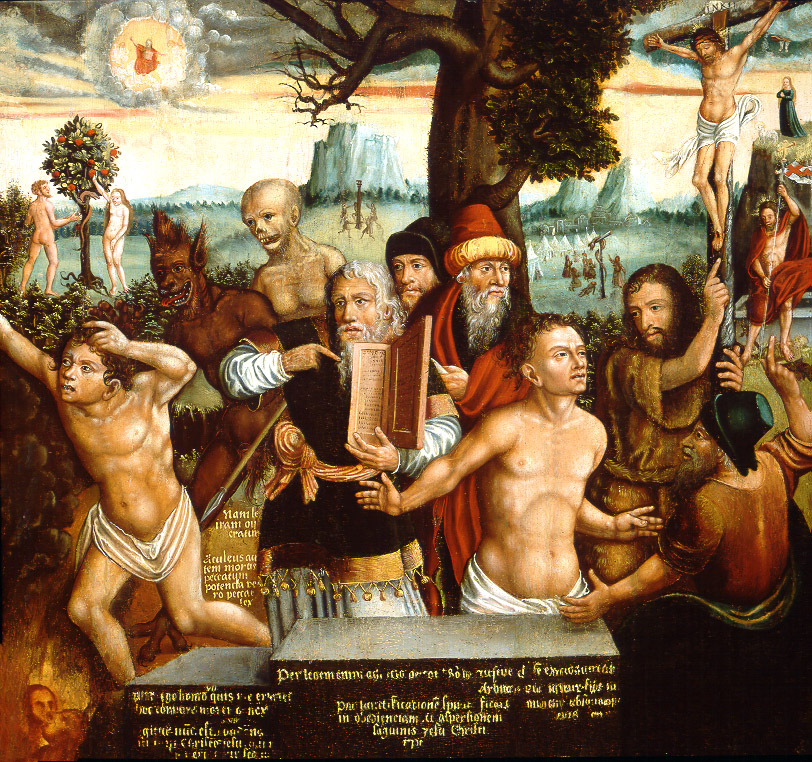
Allegory of the Fall and Redemption of Man
Lucas Cranach, the Younger
Below the image, click play to listen.
The Adoration of the Magi
Frans Francken, the Younger
Below the image, click play to listen.
The Adoration of the Shepherds
Oil on panel
Hans von Aachen
German, 1552-1615

At Christmas, our thoughts naturally turn to gifts. Given a choice, would you choose a large package or a small one? Perhaps it would be wise to remember the adage, “Good things come in small packages.” That sentiment is certainly true of M&G’s Object of the Month, a small painting (9.25” x 7”) that is like a precious jewel in a small gift box.
In addition to the Holy Family and the shepherds, the crowded scene includes women, another child, barn animals, the requisite angels tumbling from heaven, and a huge mastiff. Other innovative additions include bagpipes and a shovel. Far in the background the light of the angelic host can be seen illuminating the hillside. The painting is housed in a tabernacle-type frame with decorative gold tooling and stone insets. Tabernacle frames often held large pieces of art; this version captures the architectural features in miniature.
Aachen lived in Italy from 1574–1588, studying the great Italian masters, and in 1592 he became Court Painter to Holy Roman Emperor Rudolf II in Prague, a prestigious position that entailed diplomatic as well as artistic responsibilities. Rudolf was the greatest patron of the arts of his time, acquiring works by Dürer, Brueghel, and Veronese as well as works of contemporary northern Mannerist artists such as Aachen, Archimboldo, Spranger, and Savery.
The provenance, or history, of the painting can be traced to English ownership in 1834. English collectors of the nineteenth century amassed great quantities of art, much of it available because of wars and unrest in Europe. This work was part of an 1834 bequest to the Fitzwilliam Museum of Cambridge University; they retained ownership until 1959 when it was sold at Sotheby’s and acquired by the museum.
Anne Short, Former Research Supervisor
Published in 2013
