Give Now


Tag Archives: oil on panel

Object of the Month: August 2026

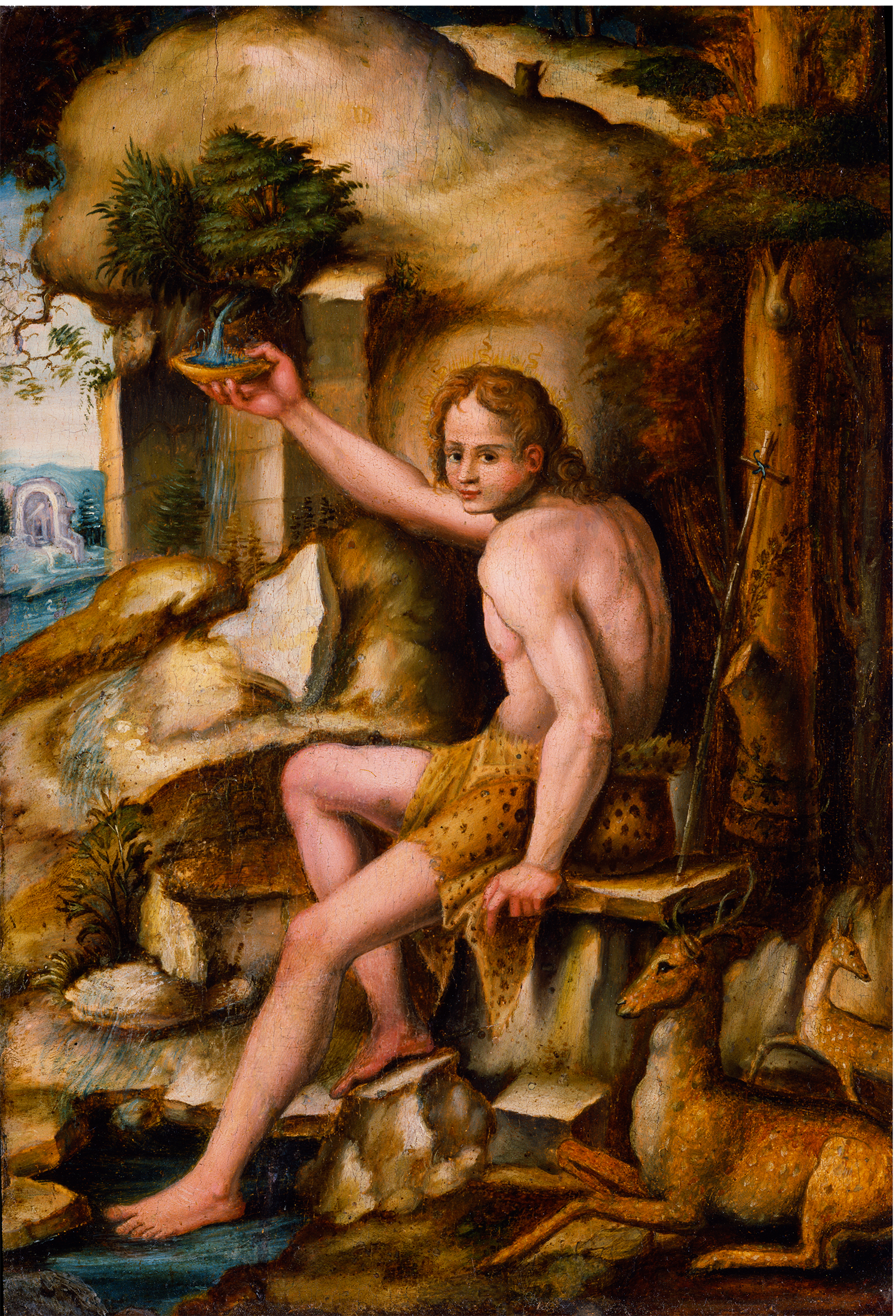
St. John the Baptist in the Wilderness

Oil on panel, c. 1521-23

Francesco Ubertini, called Il Bacchiacca

Florentine, 1494–1557
A 1961 Baltimore Museum of Art catalog for an exhibition entitled, Bacchiacca and His Friends, stated that the featured artist’s work had only been seriously studied for the previous 80+ years and had never before been drawn together for a special exhibition despite the artist being described as “charming,” “ingenious,” and “a diligent painter, especially of small figures, which he did perfectly.”

On loan for this first exhibition of works by Francesco Ubertini, called Bacchiacca, was the Museum & Gallery’s painting, St. John the Baptist in the Wilderness. The painting was a 1951 accession—in the inaugural year of M&G, and it aligned well with the Collection’s focus on sacred art by the Old Masters and placed M&G in the company of other museums with works by Bacchiacca, such as the Uffizi Gallery (Florence), Getty Museum (Los Angeles), National Gallery of Art (Washington, D.C.), and the Metropolitan Museum of Art (New York).

Bacchiacca came from a Florentine family of at least five other artists, including his father (a goldsmith), two brothers (painters), his son (painter) and his nephew (an embroiderer). He learned in the studio of Perugino, collaborated with his friend, Andrea del Sarto, and was peers with the most influential early Mannerists in Florence. Known for his mastery of small figure compositions, he borrowed portions from his mentor, as well as artists like Michelangelo, Leonardo, Fra Bartolommeo, and even Albrecht Dürer and other Northern European masters. He painted in the early decades of the emerging Mannerist style yet successfully married its purposeful distortions and crowded surfaces with the order and balance of the Renaissance style.

Bacchiacca was meticulous in his depictions of flora, fauna, fabrics and other small details. Some have been disdainful of Bacchiacca’s borrowing figures and other elements in his paintings, as well as his production of decorative elements for furnishings in private studies, palaces and public spaces (such as his designs for two series of tapestries now held in the Palazzo Vecchio and the permanent collection of the Uffizi Gallery in Florence). While some critics imply that Bacchiacca’s borrowing and his focus on small pictures reflects an incapacity for grander things, and that the use of his gifts for decorative purposes beyond the canvas (or panel) somehow cheapens his seriousness as an artist, those opinions do not reflect his estimation as an artist in his own day. In fact, these very aspects of his work speak to the breadth of his gifts, and his reputation was high enough to elevate him to the attention and payroll of Duke Cosimo I de’ Medici, for whom he became court painter.

Approximately 60-70% of Bacchiacca’s works have religious subjects. He painted at least three works depicting a young John the Baptist alone in the wilderness. Leonardo da Vinci and Raphael were two of the first artists to focus on John in this way, but others quickly followed their lead. Bacchiacca’s rendering of the young John was painted shortly after Raphael’s, demonstrating how quickly this trend spread among painters.

This artistic focus on John the Baptist is appropriate, given his importance in the Bible. He is one of only seven men whose very names were prophesied in Scripture before their birth. Each of the Gospels (the first four books of the New Testament) mentions John’s ministry. He was the last of the Old Testament prophets, arriving on the scene some 400 years after the final words of Malachi’s message. Preparing for, and overlapping with, Jesus’ ministry, John is also the first of the New Testament prophets.

Also unique about John is the nature of his ministry. We do not know precisely when John made the wilderness his home, but it’s clear that he was in that remote place when God called him to the message that would define the remainder of his brief ministry (Luke 3:1-6). His mission was to reach his Jewish countrymen with the announcement of Messiah’s imminent coming, calling them to repentance from their sins, followed by baptism.

Though crowds came from surrounding cities to observe his ministry, John clarified that he was not the One they were anticipating (based on Old Testament prophecies about Messiah). John said very plainly that his work was merely in preparation for and secondary to the One he proclaimed (Matthew 3:11-12; John 3:25-30). His entire purpose was to point his listeners to Jesus (John 2:29-31, 35-37).

Like M&G’s St. John the Baptist in the Wilderness, artists often represent John with easily recognizable clues to his identity (referred to as iconography in art). These are drawn both from specific biblical passages about John and distilled themes from his ministry. Scripture passages about John mention that he was clothed in camel’s hair, a leather belt, in a wilderness setting. Bacchiacca and his peers at times had to depict things beyond their personal experience, such as a garment made from the skin of animals they didn’t know, employing something more familiar (perhaps a leopard or cheetah skin in place of camel’s hair).

Other identifiers of John in this painting need a bit of investigation:

  • There are two deer: These likely refer to the psalmist’s comparison of his soul’s thirst for God to deer who pant for a spring (Psalm 42:1-2).
  • A spring of water, a cup, and a river: These refer to John’s signature ministry of baptizing all who heeded his call to repentance. Also pivotal is John’s baptism of Jesus Christ, which was requested by Christ Himself, despite the protestations of John that he, not Jesus, stood in need of baptism (Matthew 3:13-17).
  • A cross made of reeds: This refers to a specific exchange between Jesus and his audience (Matthew 11:7), in which Jesus asks his audience what they expected to witness when they flocked to the Jordan River to see John. John’s entire ministry had pointed to Jesus the Messiah and now, when John was in prison and asked for reassurance about Christ, Jesus tells the crowd that John was not weak or buffeted like a reed. On the contrary, John’s whole ministry, which was always based upon God’s revelations to John about Jesus’ identity, pointed unbendingly to the Lamb that would be slain for sin.

A collection of sacred art has tremendous value, with viewers’ appreciation growing with their understanding of each piece. Works of art have always elucidated each artist’s era. Sacred artworks, when based accurately on God’s Word, can also deepen biblical understanding. They can expose our needs, deepen our affections, and exhilarate our souls—the very purpose and mission of M&G.


Dr. Stephen B. Jones, M&G volunteer


Sources

virtualuffizi.com

britishmuseum.org

Breeskin, A., Rosenthal, G., and Merritt, H. S. (1961). Bacchiacca and his Friends: Florentine Paintings and Drawing of the Sixteenth Century.

Wright, Christopher. (1992). The World’s Master Paintings from the Early Renaissance to the Present Day; A ComprehensiveLlisting of Works by 1300 Painters and a Complete Guide to Their Locations Worldwide. Routledge, England

Brinkmann Pimentel, U. M., Peterson, E. A., Seiner, M. A., & Garrett, M. (2000). Italian Art at the Utah Museum of Fine Arts.

Nolan, John M., Hess, Donnalynn, and Jones, Stephen B. (2001). John the Baptist and the Baroque Vision.Bob Jones University Museum & Gallery, Inc.

Published 2026

St. Peter Released from Prison

St. Peter Released from Prison

Benjamin Gerritsz. Cuyp

Below the image, click play to listen.


Madonna and Child with Saints and Cherubs, Francesco Menzocchi

The Renaissance interest in realism and naturalism even influenced how works of art were framed!

Gaspar de Crayer: St. Augustine & St. Ambrose

In these two portraits, Flemish artist Gaspar de Crayer highlights Augustine, one of western civilization’s most noted philosophers, and Ambrose, the bishop who would bring this great scholar to Christ.

Pentecost: Vincente Juan Macip, called Juan de Juanes

While this artist’s paintings are well represented in Spain, rarely is he found outside his native country. M&G’s Pentecost is considered the finest example of Juan de Juanes’ work in America.

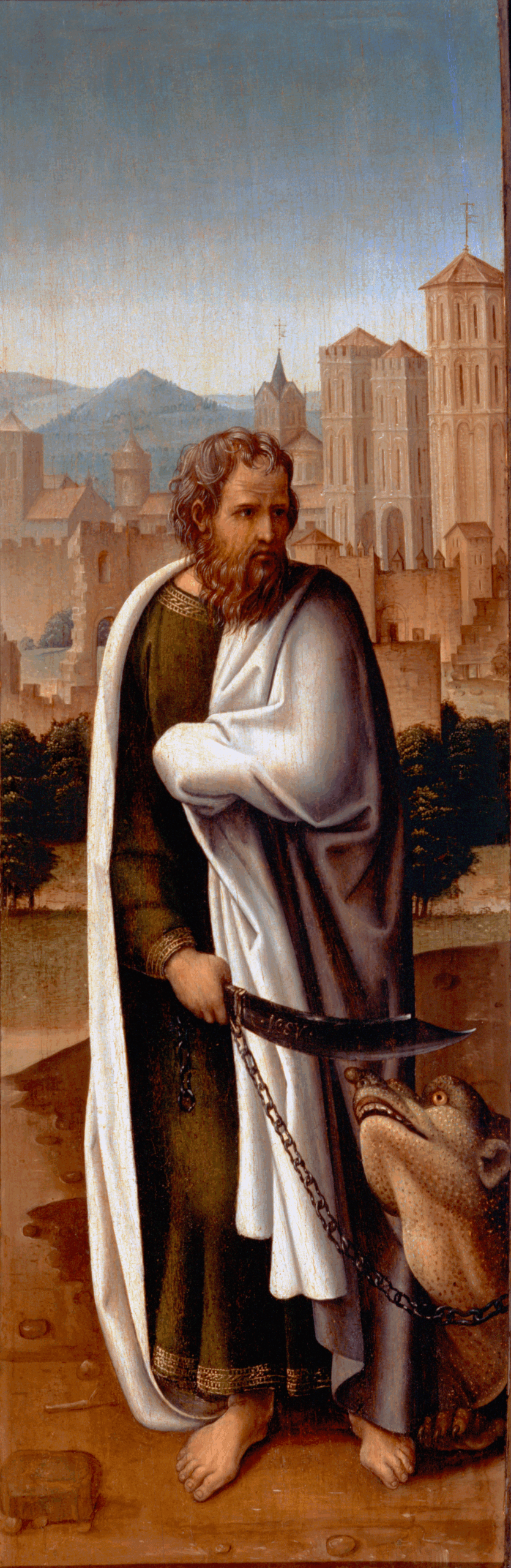
St. Bartholomew

St. Bartholomew

Jean Bellegambe

Below the image, click play to listen.

Madonna and Child: Ambrosius Benson

In this lovely painting, Ambrosius Benson captures the innovative spirit of the Renaissance and Reformation painters.

Object of the Month: August 2025

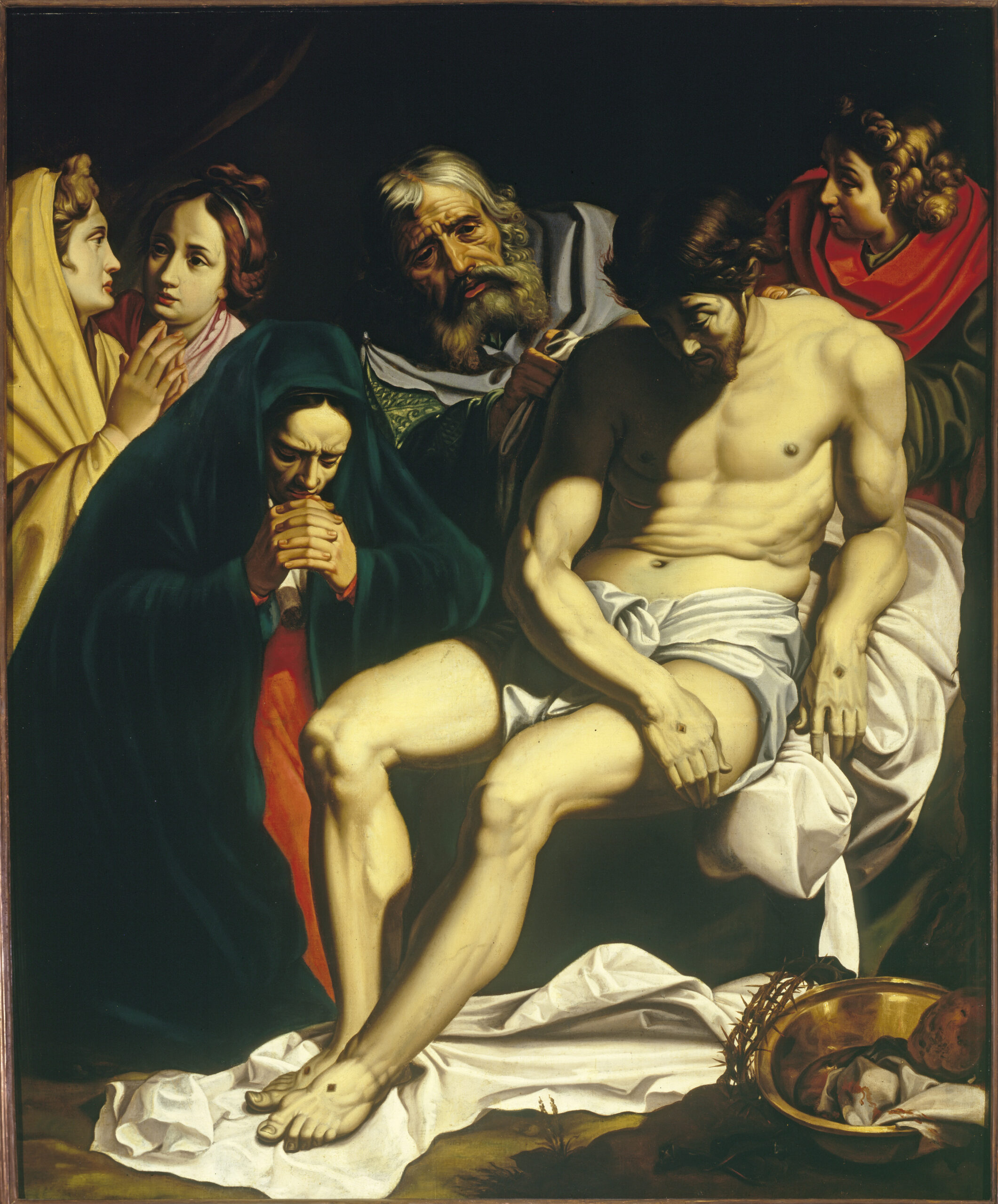
Lamentation over the Dead Christ

Oil on panel, c. 1610–12

Abraham Janssens

Flemish, c. 1575–1632


When the word “baroque” is mentioned, there are two names that people associate with this art history movement—Italian artist Michelangelo Merisi da Caravaggio and Flemish artist Peter Paul Rubens. Both artists dominated Europe with their dramatic scenes, rich colors, chiaroscuro, accomplishments, and larger-than-life personalities. In the shadow of these masters and their artistic masterpieces, other artists have done their best to imitate or infuse their own style with these titans’ techniques. One such artist is fellow countryman to Rubens, Abraham Janssens.

Janssens’s work had impressive range. Throughout his career, his subject matter included biblical, historical, and allegorical scenes as well as occasional portraits. His stylistic changes are perhaps the most interesting. The first paintings of his oeuvre would be labeled Flemish Mannerist. Then after a trip to Italy in the early 1600s, he began to adopt a more Caravaggesque approach. Finally, his work became more Rubenesque after Rubens returned home and began to command the Flemish art scene. Janssens’s shift in his different styles can be seen in one specific subject matter—the Lamentation of Christ.

The Lamentation of Christ is an extra-biblical subject that portrayed groups of people mourning around the dead Christ. As mentioned in the gospels (Matthew 27:59-61, Mark 15:46-47, Luke 23:53-56, and John 19:38-42), this group usually included His mother, Mary, and various others. It is the perfect subject matter to compare Janssens’s stylistic shift since it shows strong emotion, sculptural figures, and a dramatic biblical narrative.

First, is Janssens’s Lamentation of Christ painted between 1600 and 1604. This work shows typical Mannerist characteristics with its bright colors and elongated figures. There is emotion, but it is not the intense drama of the Baroque. Since Janssens was in Rome from 1598-1601, it is interesting to note that he did not immediately adopt Caravaggio’s style. According to 17th-century Dutch painting scholar, Justus Müller Hofstede, most of Caravaggio’s early innovations in Italian painting (ca. 1593-1598) such as half-figure compositions, still-life painting, and secularization of religious themes were already in use in Antwerp. Hofstede concludes that Caravaggio’s early pioneer work wouldn’t have impressed Janssens.

It wasn’t until 1607 that Janssens began incorporating Caravaggio’s technique. This style is wonderfully shown in the Museum & Gallery’s Lamentation Over the Dead Christ, painted between 1610-1612. There is a marked stylistic shift to baroque characteristics compared to the first Lamentation. There is a sculptural, monumental quality to his figures, which would become a trademark of Janssen’s career. The lighting is harsh and dramatic and reminiscent of Caravaggio’s best works. This Lamentation also shows an extreme depth of sorrow. The furrowed, anguished brow on Mary is a contrast to the first Lamentation’s rather passive Mary.

Finally, Janssens began adapting to a Rubenesque approach. His later The Lamentation over the Dead Christ painted in 1621-22 includes similar elements from M&G’s Caravaggesque example. However, it does not have the same harshness or extreme sorrow. You can see Rubens’s influence in the rich coloring and more dramatic movement throughout the composition. Janssens still maintains his trademark stiffness and sculptural feel to his figures. According to historian Irene Schaudies, it is Janssens’s focus on his figures looking like classical statues rather than painting from empirical observation like Caravaggio and Rubens that kept Janssens in their shadow. Nevertheless, by looking at these three paintings, one can appreciate what a master Janssens was with his different stylistic portrayals of one of the most emotive scenes in Scripture.


KC Christmas Beach, M&G summer art educator


Published 2025

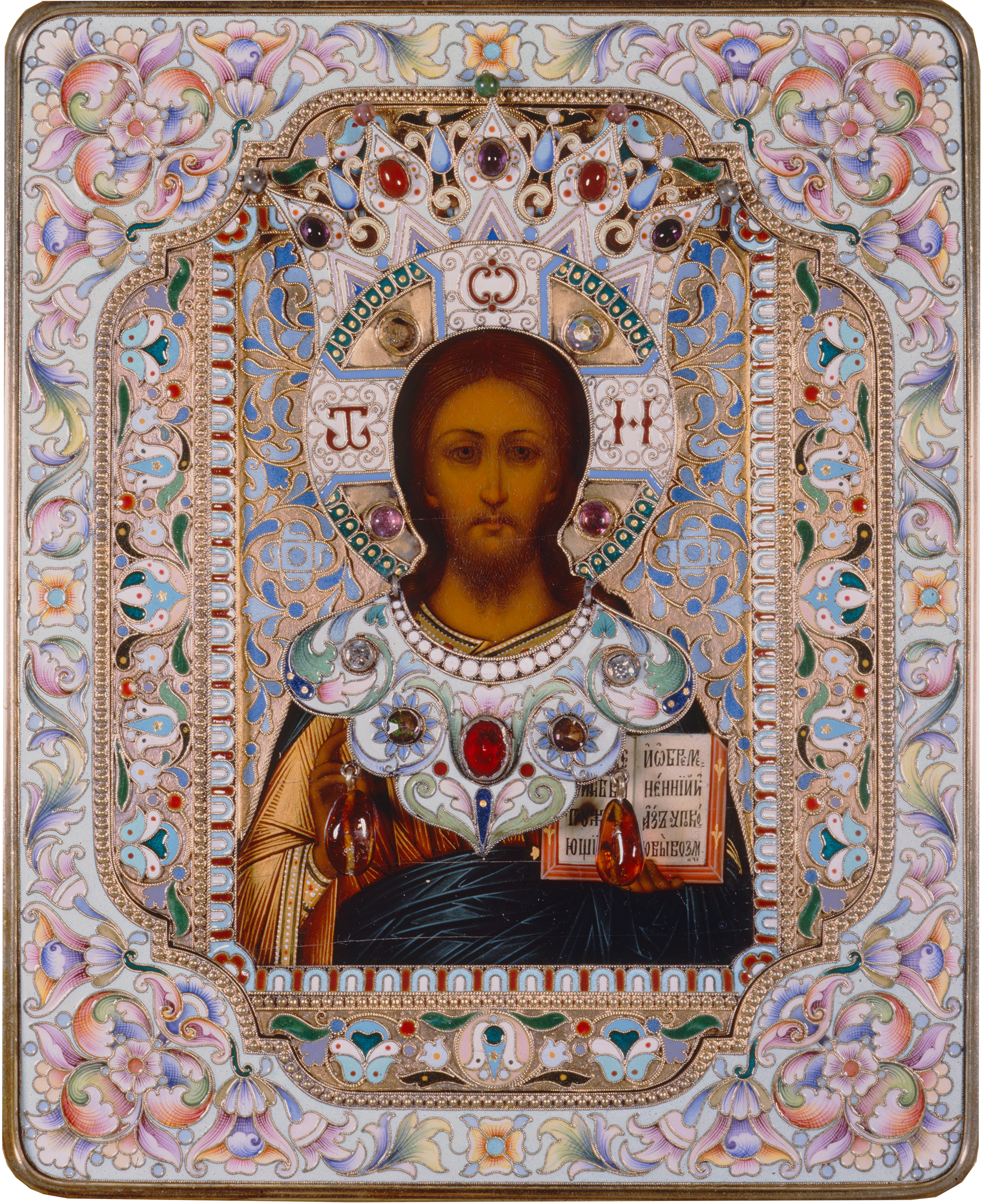
Pavel Ovchinnikov

Christ, the Pantocrator

Pavel Ovchinnikov

Below the image, click play to listen.


Object of the Month: July 2025

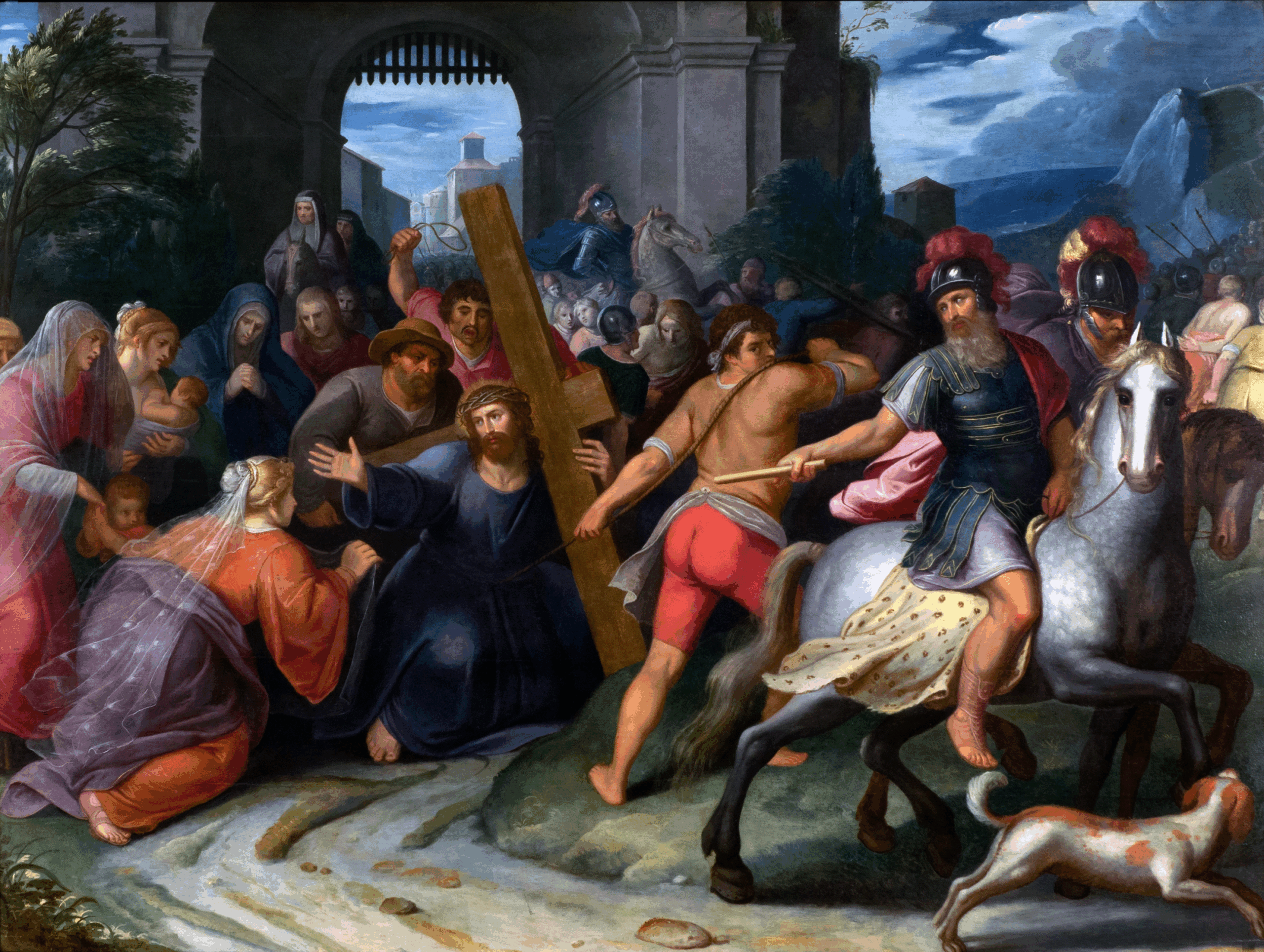
Procession to Calvary

Oil on Panel

Otto van Veen

Flemish, c. 1556–d. 1629


Otto van Veen was a classically trained humanist artist or pictor doctus, a concept created by the ancient writer Horace in his Ars Poetica signifying the attempt by artists to regain the social standing of the ancients. Otto van Veen succeeded. A renowned court painter to several rulers, he led the Antwerp art scene, diminishing only when his pupil Peter Paul Rubens returned from his travels in 1608. He paid tribute to Horace by creating two series of emblematic art which coupled Horatian proverbs with an illustrative image. A Romanist painter, he continued the traditions of the church through his work, including this one in M&G’s collection.

Using the usual cast of characters—Roman soldiers, weeping women, Simon of Cyrene, and a jeering mob—van Veen pictures the procession to Calvary just outside the city gate. A woman in the foreground holds up a piece of cloth to Christ who has stumbled under the cross and brought the procession to a momentary halt. St. Veronica offers her veil to Christ to wipe his brow. Traditionally, He accepts her kindness and a likeness of His face appears on the veil when it is returned to her. Scholars debate whether the woman is named Veronica or that the replication of Christ’s “true image”—vera icon—contributed to her name. She is part of a trio of women; the others have children with them, which reminds the viewer that Christ welcomed little children to come to Him. Just slightly behind these women are Mary with clasped hands in her usual blue robe and John, already attentive to her wellbeing.

Van Veen visually divides the scene with the positioning of the cross. On one side is the sympathetic crowd; on the other is the iron hand of Rome. The right side of the panel draws the viewer’s eye to the white horse ridden by a Roman soldier and the muscular figure pulling Christ up the hill with a rope. The dress of this man and the man behind the cross who whips Simon and Christ indicates that they are not part of the military structure of Rome. Instead, they seem to be commoners employed by Rome for the occasion. Combining this fact with the intense, backward gaze of the prominent soldier on horseback creates a personal interaction between the viewer and the scene. The sinfulness of every man compels an atonement be made for a restoration of relationship with God. In the foreground, the open area at this stopping point on the way to Golgotha provides room for the viewer to be included in the picture’s events and to consider which “side” of the scene he will be part of: sympathetic or condemnatory.


Dr. Karen Rowe Jones, M&G board member


Published 2025

Additional Resources:

For additional information on an etching by N. Muxel made after Otto van Veen’s Procession click here.

To see an image of Otto van Veen’s Christ Meeting St. Veronica from the Royal Museums of Fine Arts of Belgium click here.