Roughly the same size, these beautifully rendered panels painted by Pietro Negroni most likely came from an altarpiece in a convent church in the Calabrian city of Cosenza.
Tag Archives: oil on panel
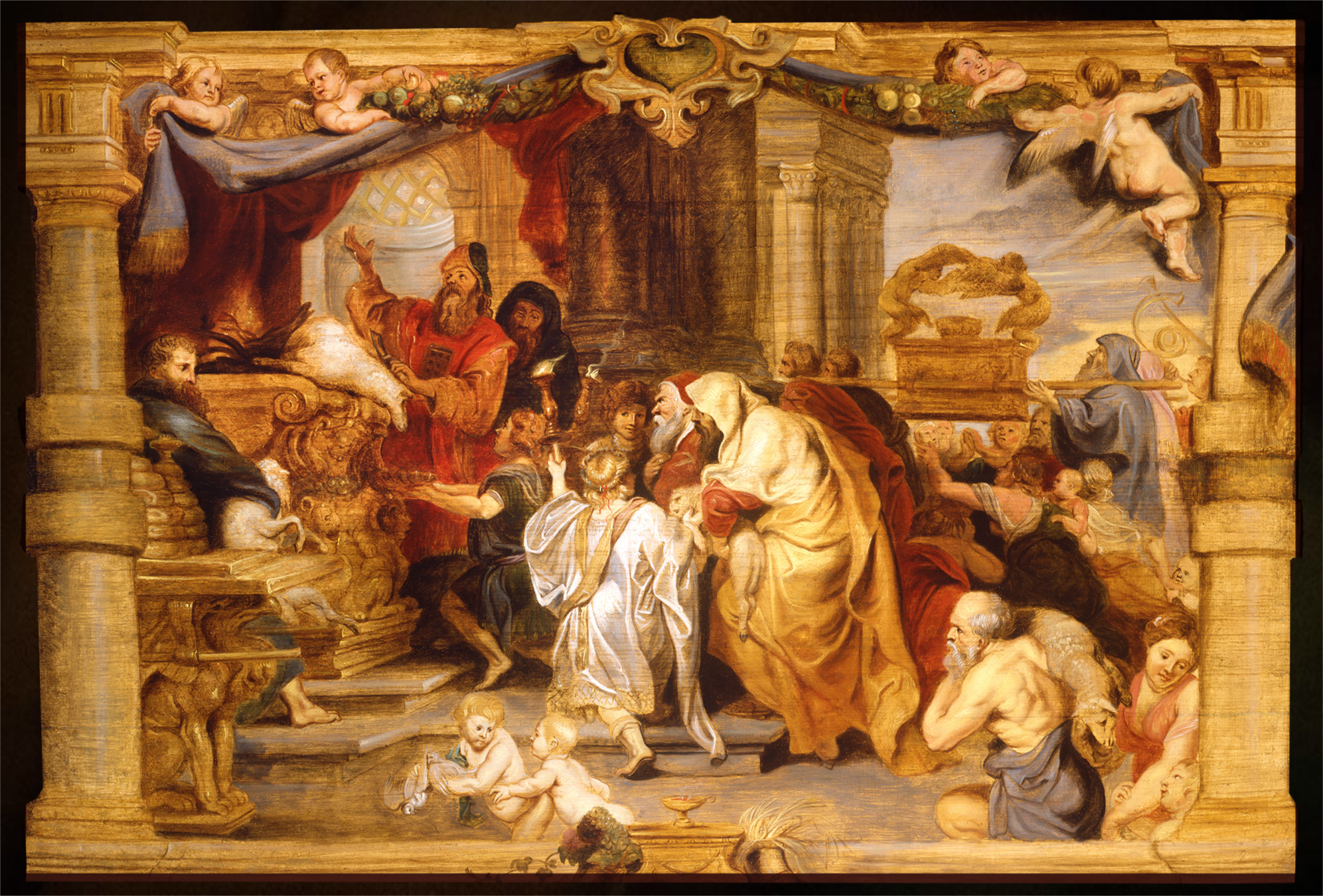
Bringing the Ark to Jerusalem
Peter Paul Rubens (and studio)
Below the image, click play to listen.
Roelandt Savery’s lifelong interest in studying and painting exotic animals and topography made him one of the most imaginative artists of the late sixteenth-early seventeenth centuries.
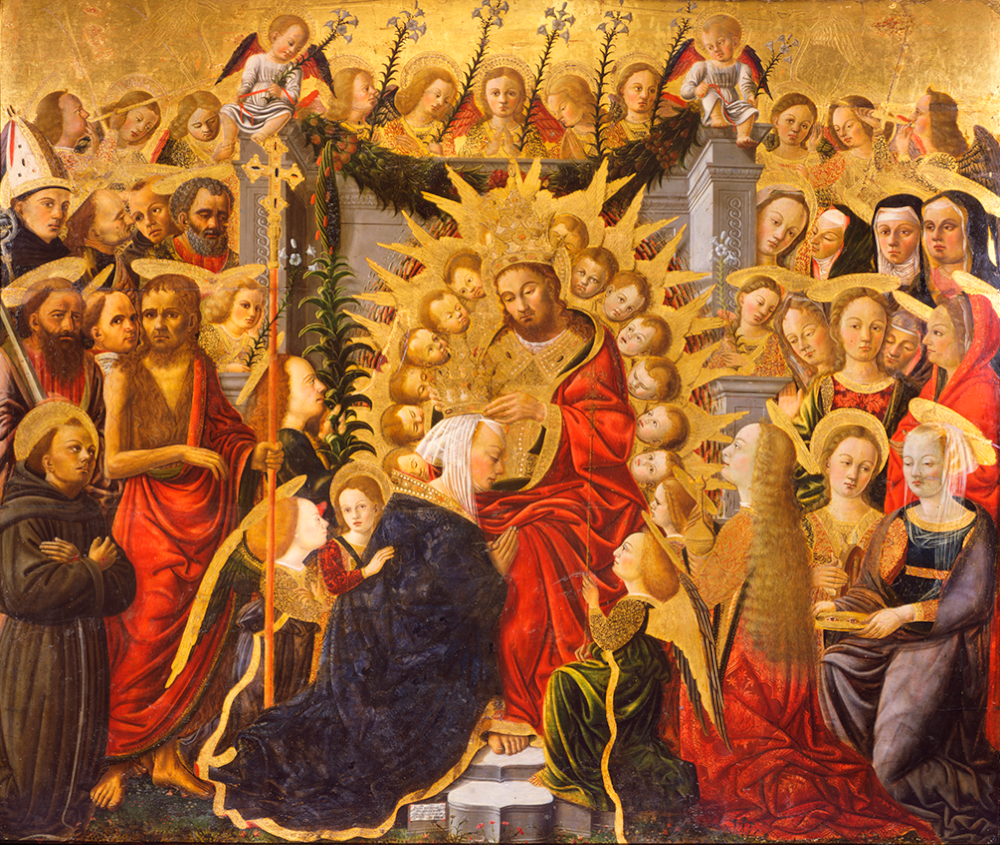
The Coronation of the Virgin
Antonio Checchi (called Guidaccio da Imola)
Below the image, click play to listen.
In this altarpiece featuring the Madonna and Christ child, the artist includes several details to embellish the scene, including a child playing a lute. Learn more about this popular Renaissance instrument HERE.
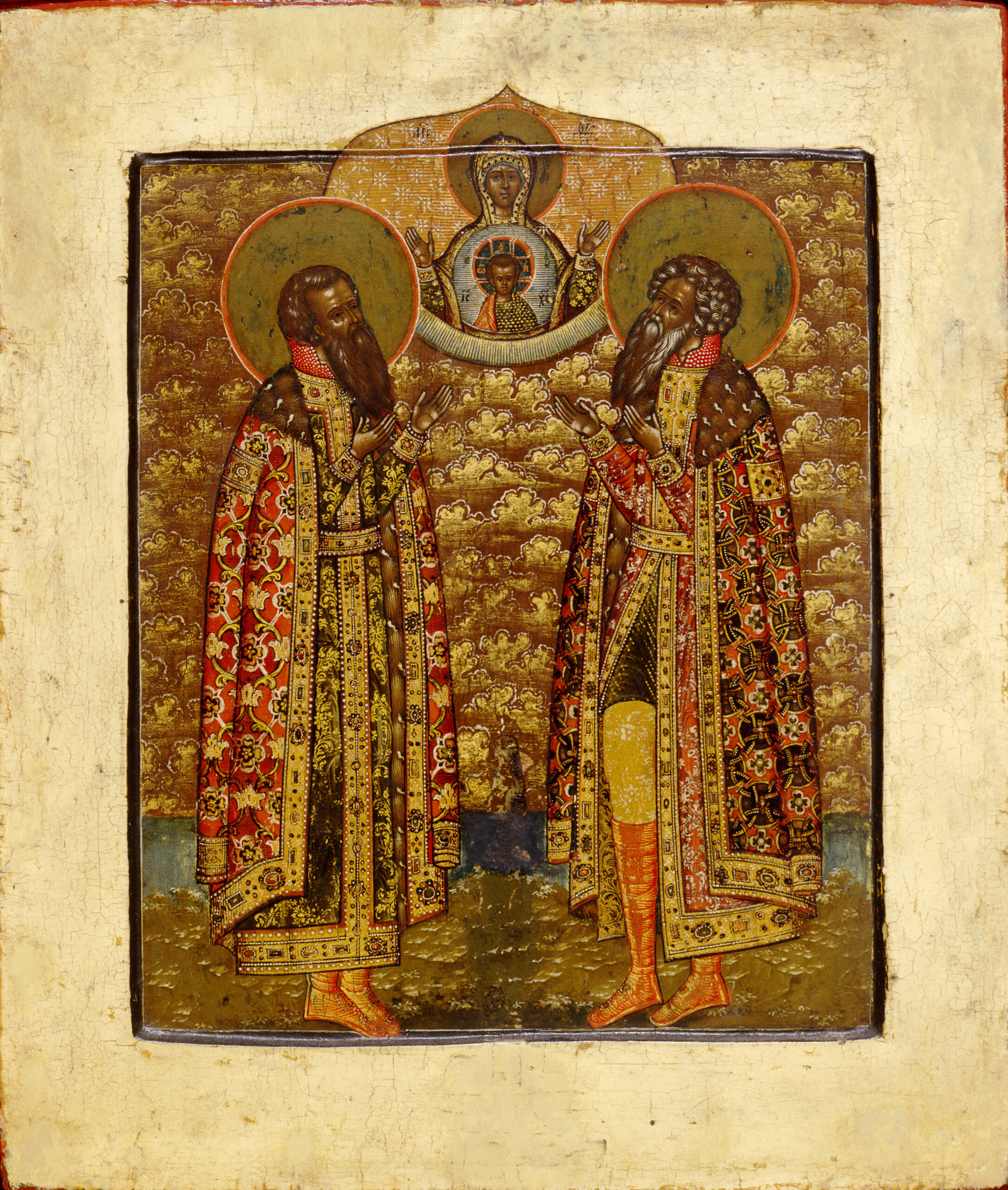
The Princes St. Basil and St. Constantine of Yaroslavl
Yaroslavl School, 17th century
Below the image, click play to listen.
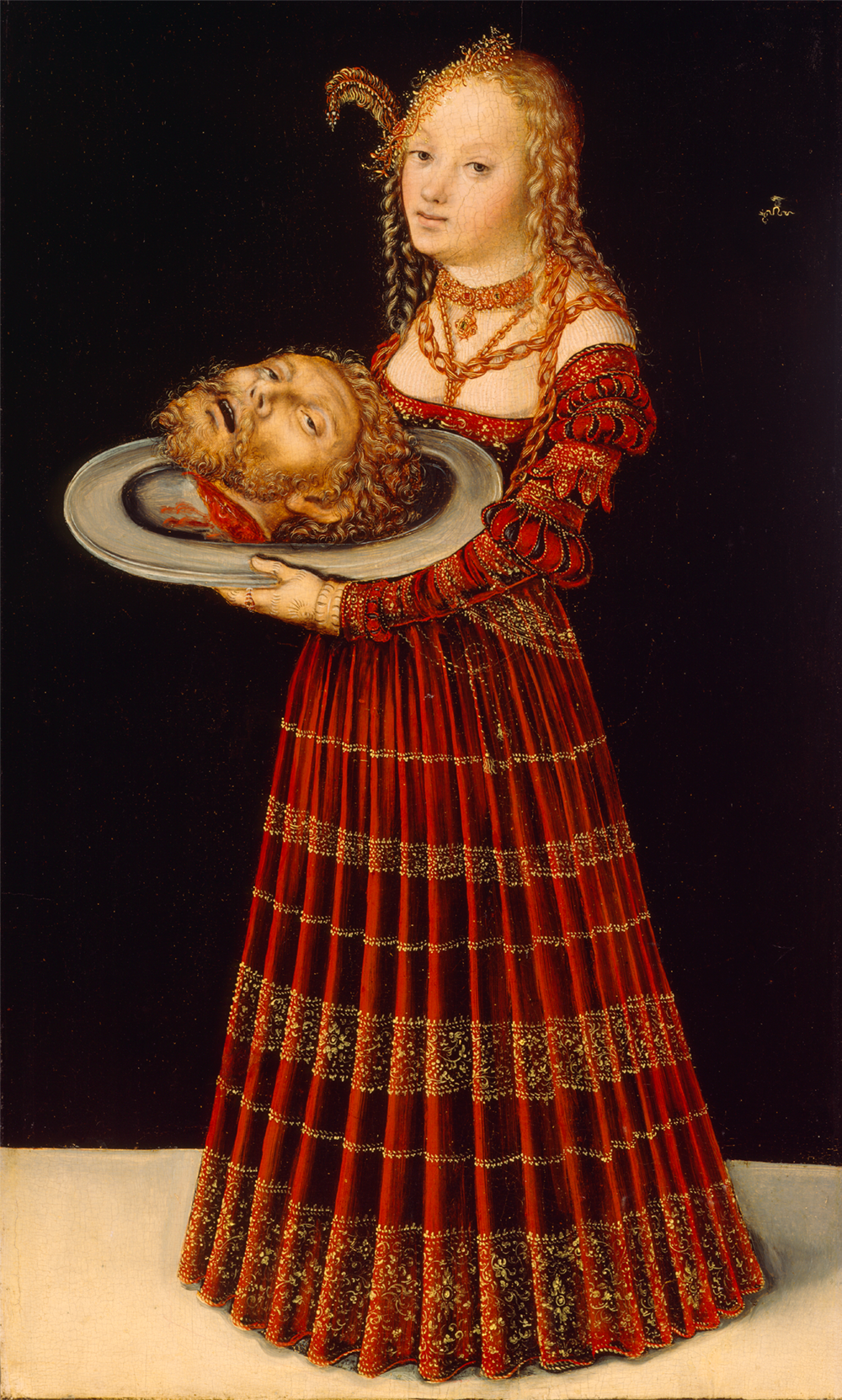
Salome with the Head of St. John the Baptist
Lucas Cranach the Elder
Below the image, click play to listen.
Scenes from the Apocalypse
Oil on panel
Unknown French, mid-16th century
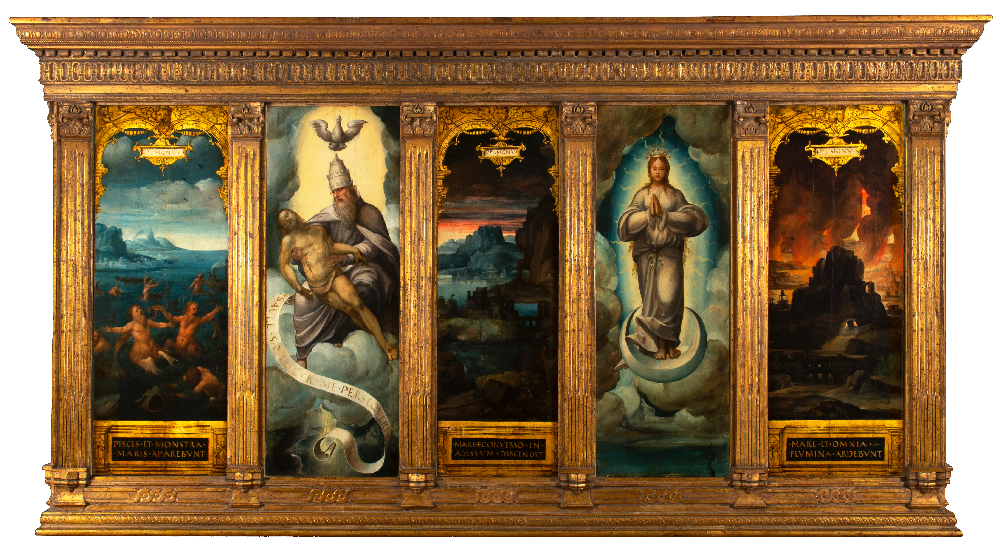
These M&G panels are painted sections from a winged altarpiece, positioned on, above, or behind the church’s altar. The wings or hinged doors would be opened for liturgical feasts and events. When the wings were closed, the side facing the audience was often painted in monochrome colors depicting various saints’ lives; as the wings were opened, the interior (including the other side of the doors) revealed more colorful pictures with a large feature painting in the center.
The Scenes from the Apocalypse by an unknown 16th-century French artist illustrates the medieval tradition of the Signs of the Apocalypse (drawn from Mark 13 and Revelation). These five separate panels were once joined in a single winged altarpiece with a total of fourteen or fifteen panels detailing the Signs and with the central interior panel possibly featuring the Last Judgment. Viewing these works from left to right,
- Panel 1 is the Third Sign: sea monsters that ravage the seas.
- Panel 2 is the reverse of Panel 1, being once united as a single panel.
- Panel 3 is the Second Sign: the seas disappearing into the earth.
- Panel 4 is the reverse of Panel 5, being once united as a single panel.
- Panel 5 is the Fourth Sign: the burning of the seas and rivers.
Two ideas are fundamental to understanding this altarpiece. First, these panels illustrate the Word of God. According to Pope Gregory the Great (lived c.540-604), “Illiterate men can contemplate in the lines of a picture what they cannot learn by means of the written word.” Seeing the horrors of the End Times should motivate the viewer to take action to avoid them. These panels become visual conviction.
The Bible portrays man’s sinfulness and presents the atoning work of Christ as the remedy. The panels’ subject matter confronts the viewer with the penalty for sin even before the Last Judgment arrives. Juxtaposing these panels directly with the altar argues that Christ’s sacrificial death on the cross, accepted by God the Father as payment for man’s sin and ratified by Christ’s resurrection from the dead, is man’s rescue from the Apocalypse. In view of these coming events, the physical placement of these panels prompts the viewer to appropriate for himself Christ’s sacrifice.
Secondly, the reverse of the panels—scenes from the lives of Old and New Testament figures—argues for the ability of humans to react properly to the revelation of God’s Word.
- Panel 2 references the conversion of Saul of Tarsus when confronted with the crucified Christ. The presence of the Holy Spirit as the dove and the holding of the slain Christ by God the Father clearly teaches the unity of the Trinity: Saul’s persecution of followers of Christ is persecution of the God that his pharisaical upbringing revered. The panel directly challenges the viewer to answer the Trinity in the same way Saul did: “What would you have me to do, Lord?”
- Panel 4 is the Woman Clothed with the Sun. She is labeled in the Revelation as a sign (12:1), but not included in the medieval list of signs. The artist portrays the Woman just as the Scripture does: “clothed with the sun, and the moon under her feet, and upon her head a crown of twelve stars.” Though many critics identify this Woman as the Virgin Mary, a continued reading of the biblical text—and a careful examination of the panel—shows that this Woman symbolizes the nation Israel whose annihilation the Dragon seeks in the Last Days. Note the dragon tail just visible at the bottom of the panel. The Jewish child is Christ who escapes the Dragon. But “the woman fled into the wilderness, where she hath a place prepared of God that they should feed her there a thousand two hundred and threescore days” (12:6). Mary is not present at the end of the world, but the nation that brought forth the Messiah is. This panel, too, points to Christ as the provision of salvation from destruction of the Last Days.
Like the Pricke of Conscience, a series of stained-glass windows also based on the Signs of the Last Days, M&G’s panels challenge the viewer to consider the Apocalypse from a personal point of view.
Dr. Karen Rowe Jones, M&G board member
Published 2023
